
5, September 2019
Biya losing relevance in Southern Cameroons 0
The latest failure by the regime in Yaoundé to get schools in Southern Cameroons up and running again shows that the Ambazonia Interim Government still enjoys massive support among the people of Southern Cameroons and this should serve as a wakeup call to the international community to put their houses in order and accept the reality that Biya and his French Cameroun political elites are fast losing relevance.
Ever since the Yaoundé Military Tribunal sentenced the Ambazonia leader President Sisiku Ayuk Tabe and nine of his top aides to life in prison, Southern Cameroonians have rallied behind their exiled government which now enjoys the trust of the people on Ground Zero. The Ambazonia leader, Sisiku Ayuk Tabe enjoys greater support in both the rural and urban areas in the Federal Republic of Ambazonia.
Cameroon Concord News Group understands that the people in Ground Zero trust the Ambazonia President more than the influential Roman Catholic religious leaders in the country. We also gathered that Southern Cameroonians advocating for decentralization and federalism are the least trusted.
Reacting to the failed attempt at getting Ambazonia children back to school in 2019, Vice President Dabney Yerima urged the European Union and the United Nations Security Council to take the outcome of this year’s so-called back to school seriously, introspect and accept the stark reality that they are fast losing touch and are simply encouraging the French Cameroun genocidal campaign in Southern Cameroons.
Vice President Dabney Yerima observed that the international community should listen more to the people of Southern Cameroons, rather than assume the defensive mode constantly being employed by the French Cameroun government in Yaounde. Dabney Yerima hinted that the back to school boycott in Ambazonia commands attention and respect and any attempt by the United Nations Central Africa Regional Representative to ignore the Ambazonia collective action will not be helpful.
The Cameroon Radio and Television (CRTV) aired conflicting reports on the back to school in Southern Cameroons which the Ambazonia Interim Government noted that they were part of a grand French Cameroun conspiracy.
The leadership of the Ambazonia Interim Government opined recently that the international community needs to understand the Southern Cameroons terrain in which they are operating and map out strategies to facilitate the independence of Southern Cameroons.
The boycott of schools and the success of the lockdown in Southern Cameroons also indicate that President Biya and French Cameroun are of no relevance in Ambazonia. The fractious nature of the Southern Cameroons revolutionary groups have led to the plummeting fortunes of the resistance. However, on the other hand, President Sisiku Ayuk Tabe has consistently provided responsible leadership and maintained unity in the Ambazonia Interim Government despite upheavals linked to the corrupt former acting leaders.
What is clear from this year’s school boycott is that Sisiku Ayuk Tabe is the central figure and embodiment of the Southern Cameroons resistance, while Biya and his consortium of CPDM crime syndicates are losing relevance both in Southern and French Cameroun.
By Soter Tarh Agbaw-Ebai














6, September 2019
Robert Mugabe, Zimbabwe ex-president, dies aged 95 0
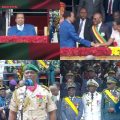
Robert Mugabe, Zimbabwe’s first post-independence leader, has died aged 95.
He died after battling ill health, his family confirmed to the BBC. Mr Mugabe had been in hospital in Singapore since April.
He was ousted in a military coup in November 2017, ending three decades in power.
He won Zimbabwe’s first election after independence, becoming prime minister in 1980. He abolished the office in 1987, becoming president instead.
Mugabe’s early years were praised for broadening access to health and education for the black majority. But his controversial land reform programme sparked an economic collapse and his latter years were marked by rights abuses and corruption.
His successor, Zimbabwean President Emmerson Mnangagwa, expressed his “utmost sadness”, calling Mr Mugabe “Zimbabwe’s founding father” and “an icon of liberation”.
Mr Mnangagwa had been Mr Mugabe’s deputy before replacing him.
‘Liberation icon’
Mr Mugabe was born on 21 February 1924 in what was then Rhodesia.
He was imprisoned for more than a decade without trial after criticising the government of Rhodesia in 1964.
In 1973, while still in prison, he was chosen as president of the Zimbabwe African National Union (Zanu), of which he was a founding member.
Once released, he adopted a militant stance, heading to Mozambique and directing guerrilla raids into Rhodesia. But he was also seen as a skilled negotiator.
Political agreements to end the crisis resulted in the new independent Republic of Zimbabwe, elections for which were first held in 1980.
Mr Mugabe, with his high profile in the independence movement, secured an overwhelming victory.
Robert Mugabe – key dates
1924: Born
Later trained as a teacher
1964: Imprisoned by Rhodesian government
1980: Wins post-independence elections
1996: Marries Grace Marufu
2000: Loses referendum, pro-Mugabe militias invade white-owned farms and attack opposition supporters
2008: Comes second in first round of elections to Tsvangirai who pulls out of run-off amid nationwide attacks on his supporters
2009: Amid economic collapse, swears in Tsvangirai as prime minister, who served in uneasy government of national unity for four years
2017: Sacks long-time ally Vice-President Emmerson Mnangagwa, paving the way for his wife Grace to succeed him
November 2017: Army intervenes and forces him to step down
Culled from the BBC