Featured
 Ambazonia Crisis: latest on Sisiku Ayuk Tabe’s arrest, trial and conviction
 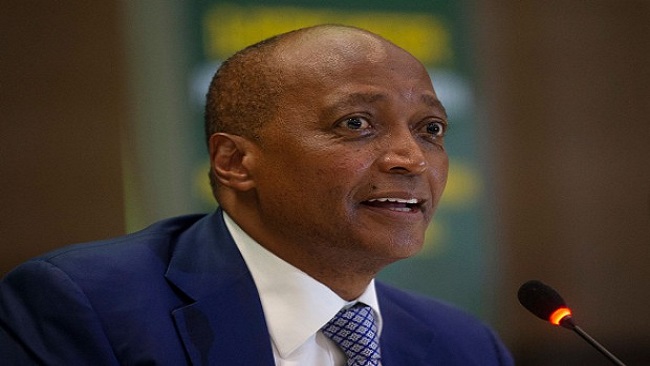 2025 Africa Cup of Nations: Patrice Motsepe should go and go now!
 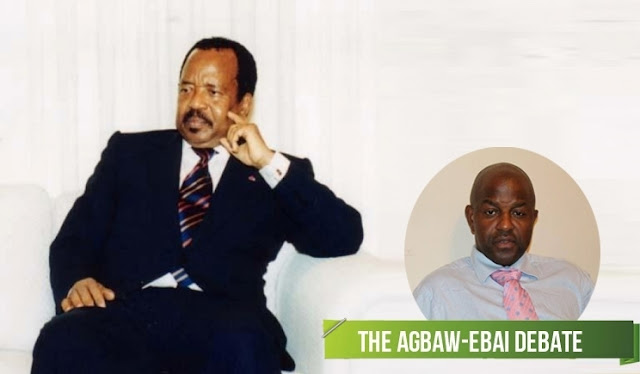 Changes in the Senate and National Assembly: who becomes next head of state?
 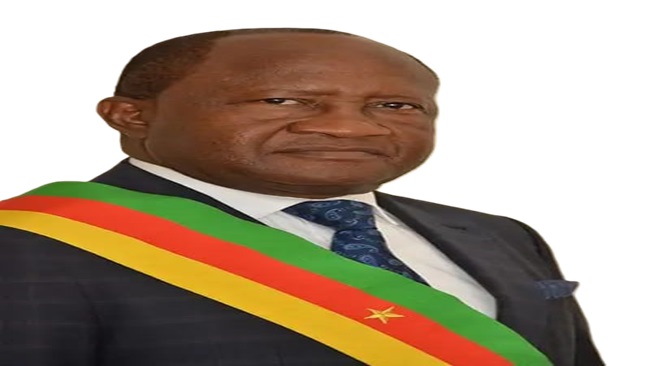 Yaoundé: Hon. Theodore Datoua is new Speaker of the National Assembly
  Ambazonia Interim Gov’t reacts to Pope Leo’s visit
Most Commented Posts
 4 Anglophone detainees killed in Yaounde
18 comments Chantal Biya says she will return to Cameroon if General Ivo Yenwo, Martin Belinga Eboutou and Ferdinand Ngoh Ngoh are sacked
13 comments The Anglophone Problem – When Facts don’t Lie
12 comments Anglophone Nationalism: Barrister Eyambe says “hidden plans are at work”
12 comments Largest wave of arrest by BIR in Bamenda
10 comments
Featured
-
Senegal’s President to visit Spain, migration among key issues
-

Iran will obliterate energy infrastructure in region if its power plants attacked
-

Football: Arsenal is keen to sign Cameroonian teenager
-
Iran says 55 enemy targets go up in smoke as it unleashes 70th wave of Op. True Promise 4
-

CPDM Crime Syndicate: regime delays parliamentary elections, lawmakers to stay until end 2026
-

Iran debuts multi-warhead ‘Nasrallah’ missile to strike Israel’s oil refineries
-

Smarter Water Use Could Feed 10 Billion and Create Nearly 250 Million Jobs
5, July 2017
Russia may deploy troops to police Syria’s de-escalation zones 0
Russia has announced that it may deploy troops to de-escalation zones in Syria after agreement from Turkey and Iran. Russian negotiator Alexander Lavrentyev made the announcement during talks being held in the Kazakh capital Astana on Tuesday.
“Overall, (the agreement) provides for the presence of Russian military police in the buffer zones, but once again this matter has not been agreed yet…Depending on when the documents on safe zones are signed, I think one should expect concrete measures on the deployment of forces within 2-3 weeks,” he said.
“So far it is hard to talk about presence of the Russian observers and representatives of the Russian defense ministry. But nevertheless overall there are plans for the Russian military police presence in the buffer zones. But still this matter has not been fully agreed yet. It will be related to the question about the status of de-escalation monitoring forces,” he added.
The final document pertaining to the de-escalation zones are expected to be signed on Wednesday, he added, noting that the principles of the zones have already been agreed upon in the former rounds of the talks.
In May, Russia, Iran and Turkey agreed to establish four “de-escalation zones” in Syria. Lavrentyev added that Russia and its partners are still engaged in negotiations concerning detailed maps and other conditions related to the Idlib province and southern regions while the borders of two other zones, in Homs province and near Damascus, had been agreed upon.
“One thing is to work with maps and another one is to apply it to reality on the ground which is rather complicated. And this process of course takes a long time. But nevertheless I would like to say that we have practically determined the contact lines and borders of the second and third de-escalation zones. We still have questions on Idlib and the southern zone,” he added.
The fifth round of Astana talks kicked off earlier on Tuesday. More than 2.5 million people are believed to be living in the general area of the four zones. The Syrian army unilaterally announced a halt to fighting until midnight July 6 in one of the zones that spans the southern provinces of Dara’a, Quneitra, and Sweida.
Source: Presstv