9, September 2026
Club 40 Solidarity Antwerpen celebrates 5th Anniversary, reaches out to widows affected by Anglophone Crisis 0
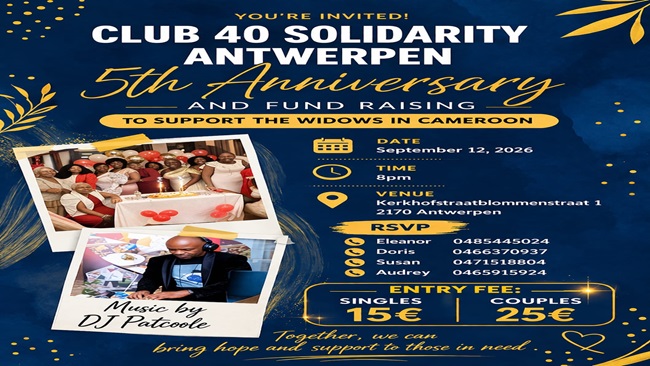
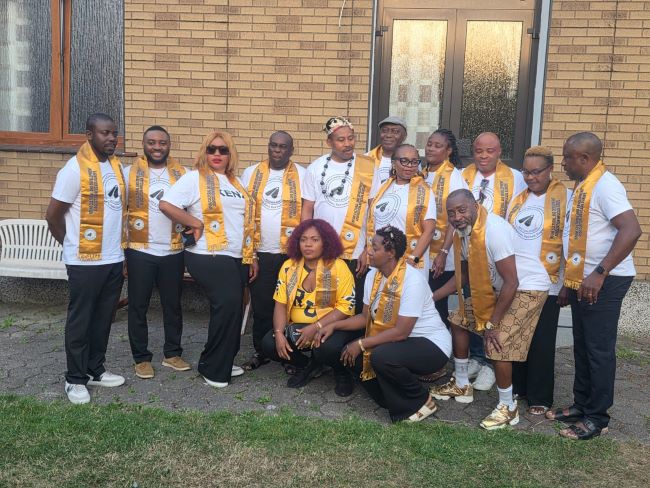
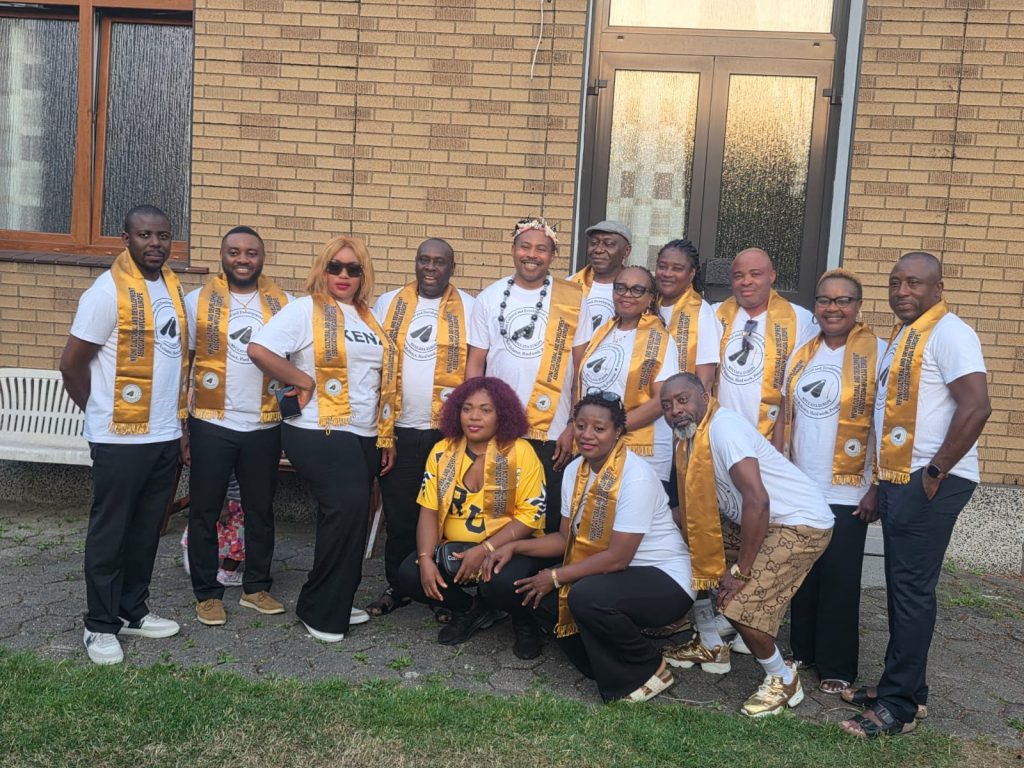
Club 40 Solidarity Antwerpen, a Cameroonian women’s organisation dedicated to fostering unity, cooperation and solidarity among Cameroonian women living in Antwerpen, is set to celebrate five years of existence with a special fundraising gala night on Saturday, September 12, 2026.
The anniversary celebration, which will take place at Kerkhofstraatblommenstraat 1, 2170 Antwerpen, beginning at 8:00 p.m., is expected to bring together Cameroonians, Africans, friends and well-wishers for an evening of entertainment, fellowship and humanitarian solidarity.
What makes this year’s celebration particularly significant is the decision by Club 40 Solidarity Antwerpen to use the occasion not only to celebrate its remarkable five-year journey, but also to raise funds to support widows affected by the ongoing crisis in the Anglophone regions of Cameroon.
The initiative is a commendable demonstration of compassion and social responsibility. At a time when many families in conflict-affected communities continue to struggle with loss, displacement and economic hardship, remembering widows and vulnerable families is a powerful expression of solidarity.
By dedicating part of its anniversary celebration to such a humanitarian cause, Club 40 Solidarity Antwerpen has demonstrated that community organisations can go beyond social gatherings to make a meaningful difference in the lives of people facing difficult circumstances back home.
The organisation deserves special commendation for keeping alive the spirit of community and extending its solidarity across borders. Its initiative is a reminder that celebrating success becomes even more meaningful when it is accompanied by an effort to uplift those in need.
Speaking about the event, Club 40 Solidarity Antwerpen President Lady Lia Eleanor Ndi appealed to Cameroonians and Africans in Antwerpen and beyond to turn out in large numbers and make the anniversary gala a memorable occasion.
The evening will also feature entertainment from renowned DJ Patcoole, promising guests an atmosphere of music, dancing, celebration and conviviality.
As Club 40 Solidarity Antwerpen reaches this important five-year milestone, its members deserve congratulations for their commitment to unity, cooperation and community building. Five years of existence is a significant achievement and the organisation’s decision to mark the occasion with a humanitarian fundraising initiative makes the milestone even more worthy of celebration.
The September 12 gala is therefore more than an anniversary party. It is an opportunity for the Cameroonian and wider African community in Antwerpen to come together, celebrate an organisation that has served its community for five years, and extend a helping hand to widows whose lives have been profoundly affected by conflict.
Cameroonians, Africans, friends of Cameroon and well-wishers are encouraged to attend the gala massively, support the fundraising effort and make their presence count.
As Club 40 Solidarity Antwerpen celebrates five years of sisterhood and solidarity, the organisation has shown that true celebration is not only about looking back at achievements, but also about reaching out to those who need a helping hand.
Happy 5th Anniversary to Club 40 Solidarity Antwerpen and congratulations for turning celebration into an opportunity for compassion and humanitarian support.
By Soter Tarh Agbaw-Ebai
















22, September 2026
Southern Cameroons Crisis: Dion Ngute pushes for safer school return 0
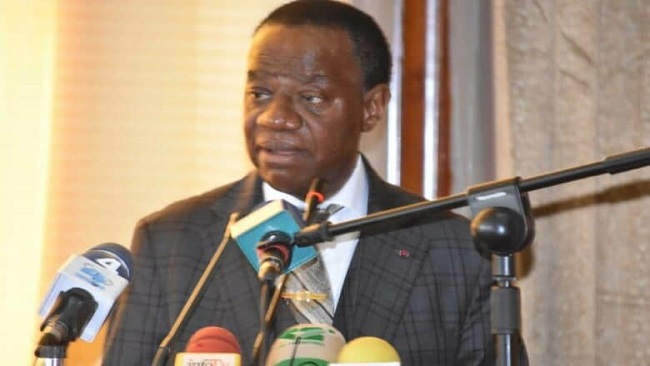
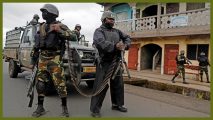
Prime Minister Joseph Dion Ngute has called for stronger security around schools in Cameroon’s North-West and South-West regions, where several incidents have marked the start of the academic year and 223,749 children remain completely out of school.
Dion Ngute chaired a meeting on September 17, 2026, to assess security conditions and the resumption of classes in the two Anglophone regions.
In the North-West, Governor Adolphe Lele Lafrique said the security situation was generally under control, with security forces deployed around schools, according to a report on the meeting published by Cameroon Tribune. Several incidents have nevertheless occurred since classes resumed.
In Wum, a police commissioner was killed on September 8 during an attack on the Government Teachers’ Training College. Five teaching staff members were abducted and later freed following an operation by security forces. Other incidents were reported in Bamenda, Bui and Benakuma.
About 53,000 primary school pupils and 26,000 secondary school students had been registered in the North-West. Donga-Mantung and Mezam recorded attendance rates above 60%. The governor also cited teacher shortages and the circulation of vehicles without traceable license plates among the challenges authorities face.
About 300 of 400 Schools Operating in the South-West
In the South-West, Governor Bernard Okalia Bilai said about 68,000 students had returned to public and private schools by September 15. Around 300 of the region’s 400 schools were operational. Dion Ngute instructed administrative authorities to continue efforts to bring children back to school and ensure that teachers and other public employees report to their posts.
He also called for traditional leaders, local elected officials, religious leaders and civil society organizations to take part in the effort.
More Than 2,400 Schools Remain Closed
The figures on students who have returned to class only tell part of the story. The Anglophone crisis continues to keep a large number of schools closed and hundreds of thousands of children out of the education system.
In an article published on September 11, 2026, UNICEF, citing regional basic education authorities, reported that 2,463 schools remained non-operational across the North-West and South-West.
The North-West accounted for 2,005 of those schools, while 458 were in the South-West. UNICEF also reported that 223,749 children were completely out of school across the two regions.
Source: Sbbc