17, August 2026
Women’s Africa Cup of Nations: enfin, we are champions 0
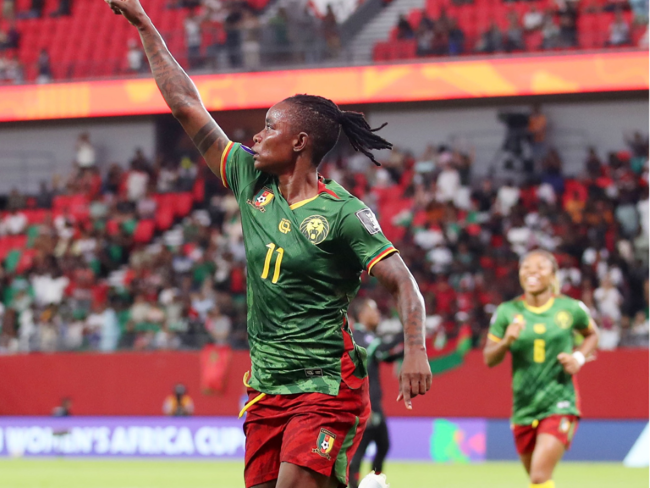
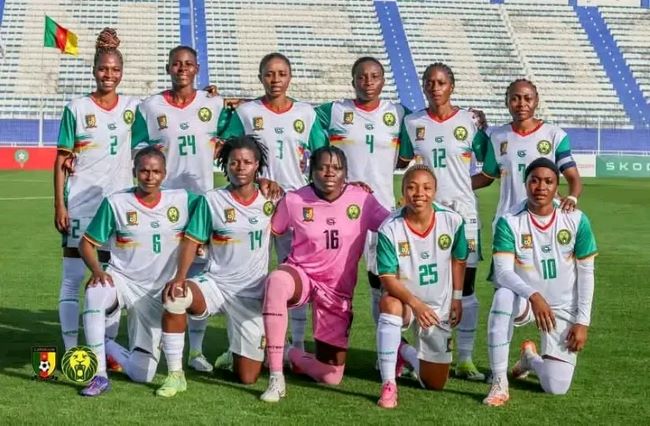
Cameroon, who failed to qualify for the 2026 Women’s Africa Cup of Nations only to get a second chance, beat fairytale finalists Malawi 3-0 on Sunday to be crowned champions.
Marie Ngah scored twice and Naomi Eto once in the final in Rabat as the Indomitable Lionesses became queens of African football for the first time after finishing runners-up on three occasions.
Cameroon lost at home and away to Algeria in the final qualifying round, but the organisers later increased the number of teams for the tournament from 12 to 16.
The four highest ranked losers, led by Cameroon, were added for the two-yearly competition, which Morocco hosted for the third consecutive time.
It was a sad climax for Malawi, ranked 153rd in the world, who had reached the title decider with the Chawinga sisters, captain Tabitha and Temwa, scoring nine goals between them.
Among those who saw Cameroon succeed after losing the 2004, 2014 and 2016 finals to Nigeria without scoring was embattled FIFA president Gianni Infantino.
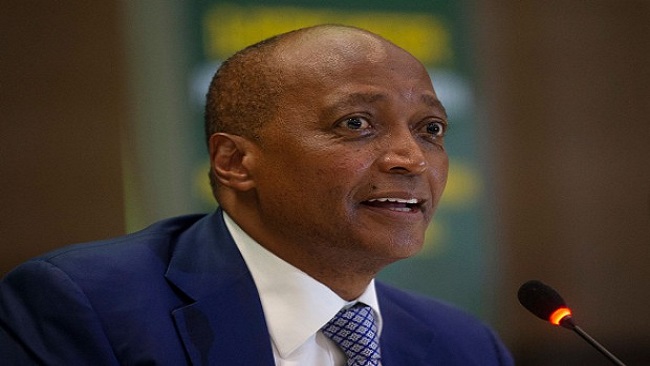
He was flanked by Confederation of African Football president Patrice Motsepe from South Africa and first vice-president Fouzi Lekjaa.
The CAF leadership have backed Infantino, who is fighting to save his job after a barrage of criticism for his aborted plan to sell stakes in the World Cup to private investors.
Debutants Malawi defied being the lowest ranked nation at the marquee African women’s football event to reach the final after beating defending champions Nigeria, Egypt, Ghana and Algeria.
The Scorchers started the final impressively, with the power and pace of the Chawingas creating several threatening situations.
But Malawi failed to score and, as the opening half progressed, so did the performance of Cameroon, who took a 20th-minute lead.
A cross was headed off Malawi goalkeeper Mercy Sikelo onto the crossbar and Ngah nodded the rebound into the net for her fourth goal of the tournament.
As they became increasingly adventurous, Cameroon doubled the lead on 29 minutes when Eto, with her back to goal, swivelled and struck the ball into the corner of the net.
Ngah netted again three minutes into added time at the end of the opening half, heading an Eto cross into the net.
After scoring twice in the opening half, Ngah should have completed a hat-trick early in the second period but, after taking the ball past Sikelo, fired wide.
Malawi contained Cameroon as the second period progressed and Temwa Chawinga was just wide with a low shot after a goalmouth scramble.
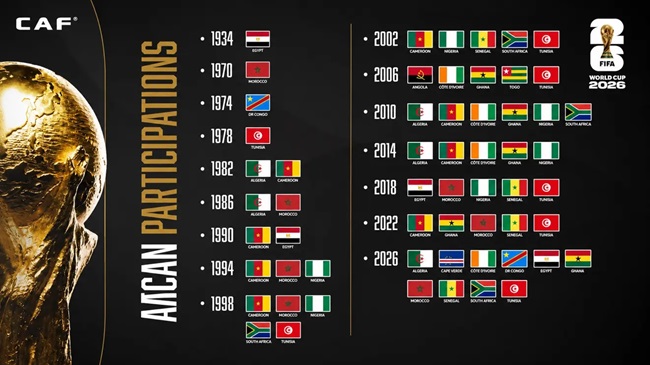
By reaching the semi-finals, Cameroon, Malawi, third-placed Algeria and Morocco qualified for the 2027 Women’s World Cup in Brazil.
The number of African qualifiers could swell to six as losing WAFCON quarter-finalists South Africa and Ghana have secured places in inter-continental play-offs.
Source: AFP












21, August 2026
Football: Djibouti federation accused of misusing funds 0
The tiny Horn of Africa nation of Djibouti is embroiled in a football corruption row after a government audit accused its federation, largely funded by FIFA, of favouritism and inadequate competitive bidding.
The recent success of Cape Verde — which reached the knockout stage of this year’s World Cup — has shown that tiny African nations can succeed with the right organisation.
So Djibouti footballers are furious at their federation over allegations it has misused money from the world football governing body, which provides the vast majority of its funding.
Funds provided by Saudi Arabia for a new headquarters for the Djibouti Football Federation are also said to have been misused.
One local club manager, speaking on condition of anonymity, told AFP his team would boycott this year’s league unless there was a change in leadership.
“The (Djibouti federation’s) resources are not used for the development of football,” he said.
“When I see what Cape Verde is capable of achieving… I tell myself there is a structural problem within our federation,” he added.
The allegations stem from a 2024 government inspector’s report, recently obtained by AFP, that accuse the federation of “favouritism” in awarding the contract for the headquarters, and overpricing for many elements of the contract.
FIFA, which along with the Confederation of African Football (CAF) provides more than $1 million a year to Djibouti’s federation, did not respond to queries from AFP.
A member of Djibouti’s federation, Mohamed Elmi Farah, resigned from its executive committee on August 12, expressing “concerns regarding the management and use of the federation’s resources”. He did not respond to questions from AFP.
Souleiman Hassan Waberi, the longtime head of the Djibouti Football Federation, told AFP it had been cleared of all wrong-doing by FIFA.
“FIFA has officially confirmed to us that, to date, its monitoring mechanisms have revealed no indication of wrongdoing regarding the funds it disbursed,” said Waberi, who also serves on the FIFA Council as a representative of CAF.
CAF is a major supporter of FIFA boss Gianni Infantino, who has recently courted controversy with plans to open FIFA to private investors.
Waberi acknowledged “shortcomings regarding competitive bidding” in “certain operations”, but blamed the limited availability of many items in Djibouti, which has a population of just one million, and said procedures had since improved.
The government did not respond to AFP queries.
Djibouti, ruled by President Ismael Omar Guelleh since 1999, ranks 124th out of 182 countries on Transparency International’s corruption perception index.
Source: AFP