5, November 2026
Parliamentary and Municipal Elections: Cameroon needs a new president not another election cycle 0
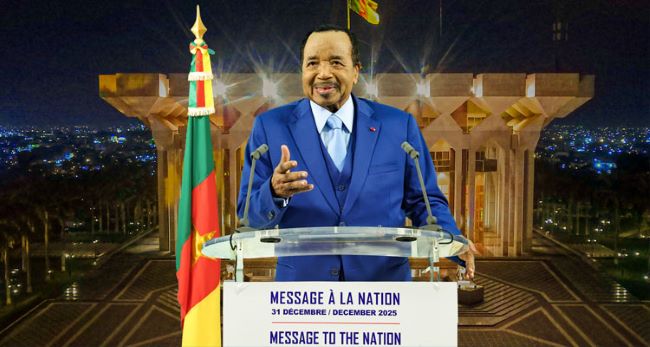
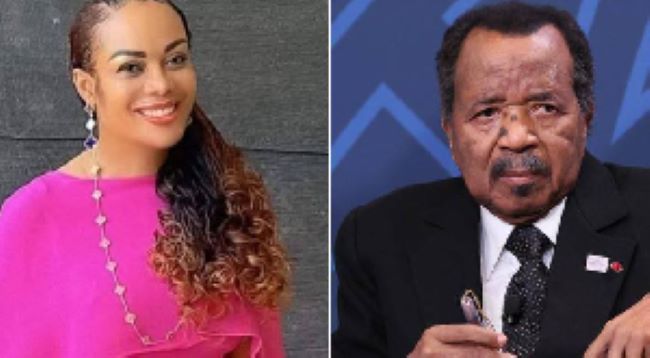
After meeting Prince Albert of Monaco, President Biya appears determined to move ahead with parliamentary and municipal elections, putting aside the possibility of another postponement that had been discussed amid financial constraints and concerns within his ruling Cameroon People’s Democratic Movement (CPDM) about retaining its parliamentary majority.
Cameroon Intelligence Report sources in Yaoundé the nation’s capital hinted that the prospect of another delay was being ruled out; while a ruling CPDM party official recently suggested that a presidential decree convening voters could be issued on November 6. The elections are expected in 2027, although the formal timetable remains subject to official confirmation.
But beyond the political calculations, the financial considerations and the manoeuvres within the ruling CPDM, there is a much bigger question that deserves national and international attention: Will these elections change anything fundamental about the way Cameroon is governed? The honest answer is that they are unlikely to. Biya, his Minister of State-Secretary General at the presidency Ferdinand Ngoh Ngoh including Prime Minister Dion Ngute are very much aware that the problem in Cameroon is bigger than Parliament and town councils.
Cameroon’s political difficulties cannot be reduced to the composition of the National Assembly or the distribution of municipal council seats. They are rooted in a system of governance that has remained largely unchanged for more than four decades.
Since 1982, Biya has occupied the highest office in the land. During this extraordinary period, generations of Cameroonians have been born, educated, entered the workforce and raised families under the same presidency.
The country has witnessed political, economic, technological and demographic transformations across the world. Yet its central political leadership has remained remarkably resistant to renewal. This is the fundamental contradiction at the heart of Cameroon’s political predicament.
Parliamentary elections can produce new legislators. Municipal elections can bring new councillors and mayors into office. Opposition parties can win seats, and the ruling CPDM party can retain its majority. These are important democratic exercises. But they do not automatically transform the political architecture within which those institutions operate.
When Biya and his kinsmen remain overwhelmingly dominant! When institutions including the Cameroon Football Federation struggle to exercise genuine independence and when political accountability remains inadequate, changing the occupants of parliamentary and municipal offices risks becoming an exercise in political rearrangement rather than national renewal. We of this publication believe that our nation does not simply need different faces in familiar offices but a fundamentally different approach to leadership and governance.
Much of the political conversation surrounding the forthcoming elections appears preoccupied with whether the CPDM will retain its parliamentary majority. That is understandable from the perspective of a governing party seeking to preserve its political influence. But the interests of a political party must never be confused with the interests of an entire nation.
The central question should not be whether the CPDM wins more seats or whether the opposition manages to take a greater share of parliamentary representation. It should be whether the political process produces institutions capable of addressing the everyday concerns of ordinary Cameroonians.
Can the next Parliament guarantee stronger oversight of public expenditure? Can it hold the executive accountable? Can it confront corruption without political interference? Can it create an environment in which public resources serve the public rather than privileged interests?
Can municipal councils deliver better roads, sanitation, healthcare infrastructure, employment opportunities and essential services? These are the questions that matter.
A National Assembly and a Senate that merely endorses executive decisions, regardless of the number of opposition legislators it contains, will not deliver the democratic transformation Cameroon needs. Equally, municipal councils that lack meaningful autonomy and adequate resources cannot be expected to revolutionise local development. Cameroon needs institutions that work, not simply institutions that exist.
There is something profoundly troubling about a nation of more than 30 million people continuing to organise its political future around the leadership of one incompetent individual who has occupied the presidency since the early 1980s. Political renewal is not an insult to that individual. It is a democratic necessity.
Cameroon needs help from its diaspora and a new generation of political leadership with fresh ideas. Cameroon needs a head of state who understands that leadership is not measured by the number of years spent in office, but by the quality of life citizens enjoy under that leadership. Cameroon needs a decent man or woman as head of state that places national development above party survival. Above all, Cameroon needs a president who recognises that public office is a responsibility entrusted by the people, not a permanent possession. A new head of state therefore is the beginning of the conversation, not the end of it. A change of president in Yaoundé must therefore represent more than a change of personality. It must mark a change of political culture.
It is evidently clear that the current presidency does not understand the pain of being unemployed, the frustrations of young graduates, the struggles of small businesses, the deteriorating conditions of public services and the legitimate demand for greater political participation. Cameroon cannot continue to postpone its future while repeatedly rearranging the institutions of its present.
Parliamentary and municipal elections remain important. Cameroonians should not be discouraged from participating in them, nor should the significance of representation at the national and local levels be dismissed. However, the population must not be persuaded that another electoral exercise, by itself, constitutes the political transformation the country requires. The national debate must go further.
Cameroon must begin to think beyond the political arrangements that have defined its past four decades. It must confront the question of succession, leadership renewal and the kind of country it wants to become over the next generation. The future cannot indefinitely remain hostage to the political calculations of one party or the decisions of one individual popularly known as “we thank the head of state”.
Another Parliament may emerge, another Senate may be born and another generation of mayors may take office. The CPDM may even retain its so-called majority, or the opposition may make gains. But unless these developments are accompanied by a fundamental change in the country’s political direction, the ordinary Cameroonian may wake up the morning after the elections to discover that very little has changed.
Biya and his gang must therefore recognise the distinction between holding elections and achieving democratic renewal. Our nation needs more than another electoral calendar. It needs more than another parliamentary majority. It needs more than a reshuffling of political positions. It needs a new head of state, a new political vision and a new social contract with its people.
After more than four decades under the same president, the argument for political renewal is no longer premature. It is a legitimate and urgent national conversation. The next chapter of Cameroon’s history must be about the country and its people, not the indefinite continuation of one man’s political era.
By Soter Tarh Agbaw-Ebai






7, November 2026
44 years of Biya: a nation held hostage by unanswered questions 0
If there is one nation on earth that does not lack problems, that nation is Cameroon. Cameroon has lived with problems for so long that failure in public administration has increasingly become part of the national experience.
On November 6, 2026, President Biya marked 44 years at the helm of the country. Forty-four years is not a short political chapter. It is an entire lifetime. It is enough time to build institutions, transform an economy, modernise infrastructure, strengthen healthcare, educate generations and create opportunities for millions of citizens.
Yet, after 44 years, Cameroon is still confronted with fundamental questions about security, employment, healthcare, infrastructure, corruption, accountability and the quality of life of its people.
The central issue is not whether Cameroon has recorded any achievements during this period. It is whether those achievements measure up to the enormous opportunities, resources and time available to a government that has been in office for more than four decades.
What makes the situation particularly troubling is that these are not entirely new problems. They are longstanding challenges that successive government programs, declarations and promises have failed to resolve.
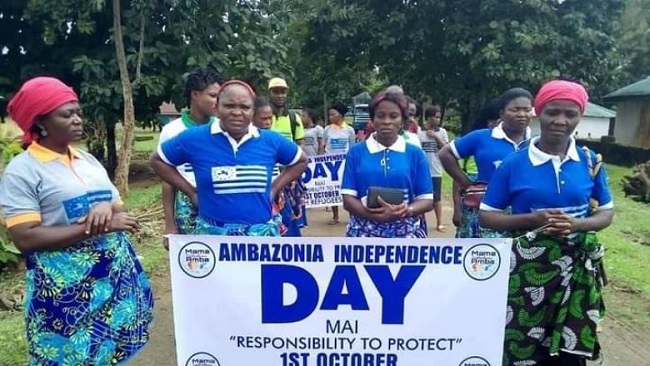
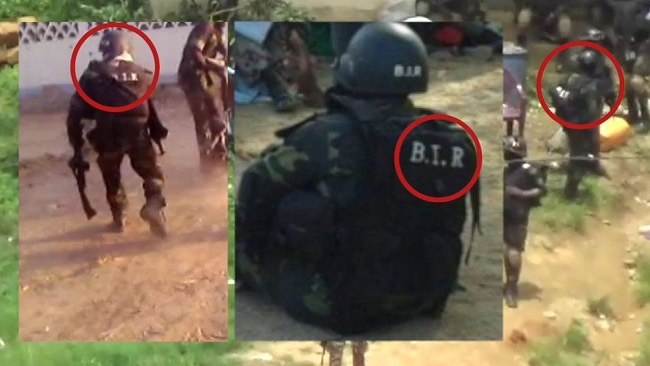
The Anglophone crisis, which escalated in 2017, continues to devastate communities in the North-West and South-West. The Far North remains exposed to attacks by Boko Haram and other armed groups. Families have been displaced, children have lost access to education, businesses have collapsed and countless lives have been disrupted. The humanitarian consequences are documented by international organisations.
This begs the question: What future does a country offer its young people when economic growth does not translate into sufficient decent jobs? The World Bank’s 2024 poverty assessment estimates that approximately four in ten Cameroonians live below the national poverty line. This is a sobering reality for a nation endowed with agricultural potential, natural resources, human capital and strategic economic opportunities.
Bad roads, unreliable electricity, inadequate public services and limited access to essential facilities continue to frustrate ordinary citizens and constrain economic activity. These are not merely inconveniences. They are obstacles to national development.
Healthcare, too, raises difficult questions. Why should access to quality medical treatment remain such a struggle for ordinary families? Why should citizens have to contemplate travelling abroad for specialised treatment when the country should be building stronger institutions capable of serving them at home?
Then comes corruption, weak accountability and the concentration of political power. A country cannot sustainably develop when public institutions are not sufficiently responsive to citizens and when accountability remains a persistent concern.
We of the Concord Group believe that the greatest tragedy of these 44 years is the normalisation of hardship. Cameroonians have become accustomed to struggling with things that should be basic expectations in a functioning state.
Cameroonians including those big men and women in Yaoundé call the ministers wake up every morning worrying about electricity, water, transportation, security, employment and the cost of living. Parents struggle to pay school fees. Graduates roam the streets searching for opportunities. Patients and their families worry about hospital bills. Traders struggle against an unforgiving economic environment. And the question must be asked: At what point does a government accept responsibility for the cumulative consequences of its policies, priorities and decisions?
Forty-four years in power means that the government has had time to understand the country’s problems, identify their causes and implement lasting solutions. It cannot indefinitely blame colonial history, external economic shocks, opposition politicians or isolated administrative failures for every national difficulty.
Leadership is not about how long one occupies the presidential palace. It is about what changes in the lives of ordinary citizens because one has occupied that office.
A president’s legacy should not be measured by the number of state banquets attended, monuments inaugurated, speeches delivered or anniversaries celebrated. It should be measured by the quality of roads, hospitals, schools, jobs, institutions and opportunities left behind.
There is something deeply troubling about a country in which political longevity appears to have become more remarkable than developmental transformation.
Forty-four years should have been enough to build a country where a young person does not need political connections to find employment; where a pregnant woman does not have to fear the consequences of inadequate medical facilities; where farmers can transport their produce without losing much of their investment to terrible roads; where citizens can live without the constant fear of violence; and where public resources translate into visible improvements in people’s lives.
Cameroon is not short of intelligent people, natural resources or development potential. What remains a pressing national concern is the gap between that potential and the lived reality of millions of citizens. And this is why November 6 should be more than an anniversary of political longevity. It should be an occasion for national reflection, public accountability and an honest examination of the country’s development trajectory.
The question is no longer simply how long Paul Biya has been president. The more important question is what Cameroon has become after 44 years of his presidency.
How many more anniversaries must pass before the ordinary Cameroonian begins to experience the dividends of governance? How many more generations must inherit the same problems? How much longer must a nation endowed with so much potential continue to wait for the future it deserves?
A country cannot live forever on promises. Its people cannot eat political speeches. Its young people cannot build their futures on presidential anniversaries. Forty-four years is a monumental period in the life of any nation. It demands more than celebration. It demands answers. And above all, it demands accountability.
Cameroon deserves a government measured by results, not merely by the number of years it has remained in power.
By Soter Tarh Agbaw-Ebai