11, November 2025
Biya’s continued stay in power: journalist Hans Achomba missing since November 5 0
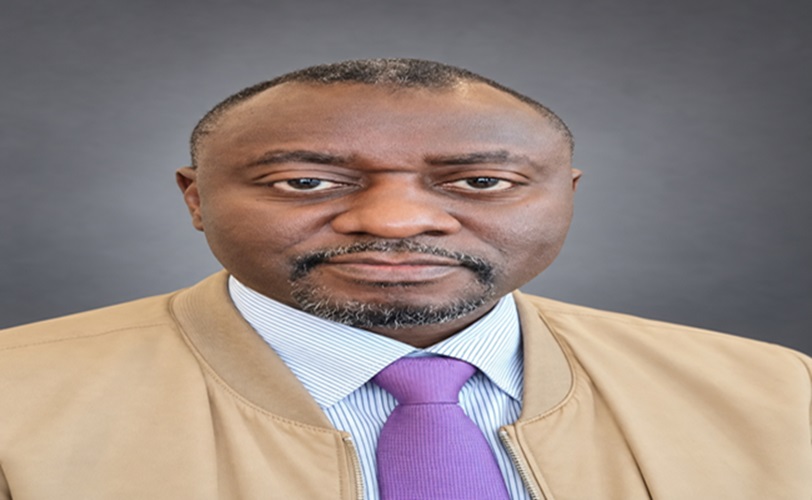
We, the undersigned organisations, express our deep concern over the disappearance of freelance journalist Hans Achomba since November 5, 2025. To date, his whereabouts remain unknown. We urge the police to investigate the matter and ascertain his whereabouts swiftly.
Before his disappearance, Achomba was questioned by the police on Monday, November 3, over his reporting and social media posts in the build-up to the October 12 elections in Cameroon. Following the elections, protests erupted, resulting in widespread violence, with at least four people killed allegedly by security forces, dozens injured, and hundreds more arrested across the country, according to Human Rights Watch.
When he was questioned by the police on November 3, the police are also reported to have confiscated Achomba’s National Identity Card and Passport. Achomba was supposed to return to the Bamenda Police Station with his lawyer on November 6 at 10:00 am. However, he did not appear at the police station. His lawyer also updated that an attempt was made to verify if he was in police custody, but the police indicated that he had not been detained. Efforts by his family, colleagues, and his lawyer to ascertain his whereabouts have been unsuccessful.
While it is not clear whether Achomba’s disappearance is related to his professional work, these circumstances raise serious concerns about the safety of journalists and the state of media freedom in Cameroon.
In 2017, Achomba was also arrested and detained for several months on accusations of complicity in hostility against the fatherland, secession, propagation of false news, insurrection, incitement to civil war, and complicity in acts of terrorism. He had been seen speaking to a cyclist about why he was on the streets during a time when there were a series of protests, strikes, and shutdowns in the country’s English-speaking regions. He was later released in September 2017 after the office of President Paul Biya announced that Cameroon was ending criminal proceedings against those detained during the period of unrest.
We continue to stand in solidarity with the journalists and the media community in Cameroon, and hope for Achomba’s safe return.
African Freedom of Expression Exchange (AFEX)
Africa Freedom of Information Centre (AFIC)
Bloggers Association of Kenya (BAKE)
Committee to Protect Journalists (CPJ)
Consortium of Ethiopian Human Rights Organizations (CEHRO)
Initiative for Embracing Humanity in Africa
International Press Institute (IPI)
Kenya Union of Journalists
MISA Mozambique
Moxii Africa (Rebranding from Media Monitoring Africa)
Panos Institute Southern Africa
Robert F. Kennedy Human Rights
South African National Editors’ Forum (SANEF)
Southern Africa Editors Forum (SAEF)
The African Editors Forum (TAEF)
West African Editors Society (WAES)
Zambia Free Press Initiative


12, November 2025
Cameroon apparently under a de facto federalism 0
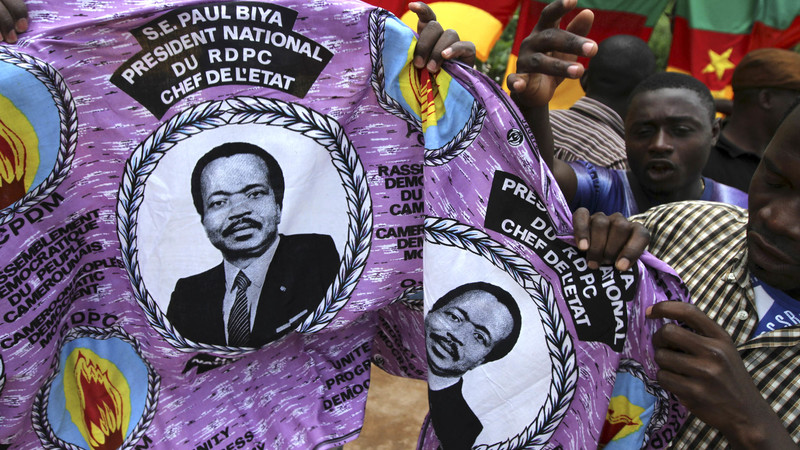
When the CPDM crime syndicate called for elections in 2025, it never knew there could be massive surprises hiding somewhere.
In the minds of members of the crime syndicate, their victory was a foregone conclusion. But nature has a way of throwing some under-the-belt blows to criminals who think they are masters of the world.
The 12 October presidential election was one moment nature and the people of Cameroon used to humiliate a government which has been around for 43 years with nothing to show for its long stay in power.
The trouble started when exit polls clearly indicated that the leading opposition figure, Issa Tchiroma, was leading in major cities across the country by a wide margin. The Biya regime could not believe its eyes. Cameroonians had sanctioned a regime which has elevated corruption and sex into a political system.
Despite efforts by the beleaguered government to silence the opposition, Cameroonians were already aware of the truth. The cat was out of the bag and the government had to deal with a bloodshot eye.
The election results clearly pointed to a different era in the country, triggering a wave of tension as Mr. Tchiroma insisted that he was the people’s choice.
The country was headed towards a fragmentation, contested legitimacy, rising tensions and regionalized instability. Indeed, the country was navigating into a massive legitimacy and governance crisis.
Cameroonians were impatient. They wanted the incumbent, Paul Biya, who has ruined everything in the country and has no remorse for his destruction of a country which was destined for greatness, to quit the presidency.
Before the corrupt and ineffective constitutional council could deliberate and publish the fake results, thousands of Cameroonians poured into the streets to defend their victory which was being stolen by a regime that is known for its brutality and incompetence.
When the constitutional council finally formalized its lies by declaring the ailing 96-year-old (he had reduced his age by 4 years) the victor, there were spontaneous demonstrations across the country, with young Cameroonians destroying anything in their path.
As the protests gathered momentum across the nation, the unpopular Yaoundé regime resorted to violence, the only game it understands, arresting thousands of young men and women whose dreams had been dashed to the rocks.
The opposition had to change its strategy, calling for its supporters to avoid the streets. It immediately instituted a 3-day civil disobedience and the winner of the elections, Issa Tchiroma, advised Cameroonians to stay at home to cripple an economy that was already on its knees.
The call was widely complied with and Mr. Tchiroma, who was in charge of the streets, became the de facto president, with the country’s capital being Garoua where Tchiroma was based.
The country was gradually becoming a defacto federal republic as Tchiroma governs the Grand North while the Ambazonians were stepping up their game to control the South West and Northwest regions as an independent state, leaving the fraudulent CPDM-party and its cohorts with the Centre and South regions and some patches of the Littoral region.
Meanwhile, the Bamilekes may be waiting for Maurice Kamto to declare and consequently commence the governing of the West region which controls the country’s economy.
Cameroon is falling apart and if the rogue regime in Yaoundé does not act in line with genuine democratic principles, it may end up in exile whence it will be watching the country transforming into a federal republic.
By Soter Tarh Agbaw-Ebai