22, September 2026
Southern Cameroons Crisis: Dion Ngute pushes for safer school return 0
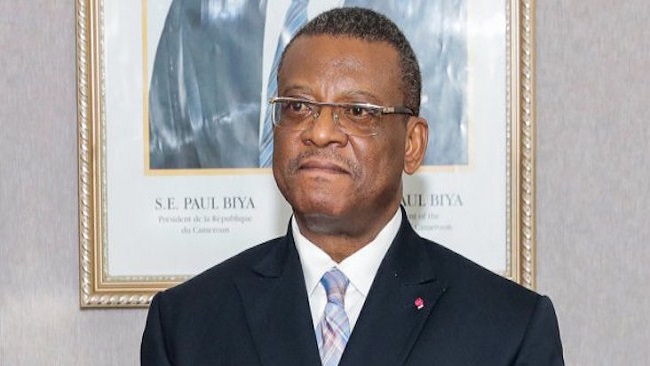
Prime Minister Joseph Dion Ngute has called for stronger security around schools in Cameroon’s North-West and South-West regions, where several incidents have marked the start of the academic year and 223,749 children remain completely out of school.
Dion Ngute chaired a meeting on September 17, 2026, to assess security conditions and the resumption of classes in the two Anglophone regions.
In the North-West, Governor Adolphe Lele Lafrique said the security situation was generally under control, with security forces deployed around schools, according to a report on the meeting published by Cameroon Tribune. Several incidents have nevertheless occurred since classes resumed.
In Wum, a police commissioner was killed on September 8 during an attack on the Government Teachers’ Training College. Five teaching staff members were abducted and later freed following an operation by security forces. Other incidents were reported in Bamenda, Bui and Benakuma.
About 53,000 primary school pupils and 26,000 secondary school students had been registered in the North-West. Donga-Mantung and Mezam recorded attendance rates above 60%. The governor also cited teacher shortages and the circulation of vehicles without traceable license plates among the challenges authorities face.
About 300 of 400 Schools Operating in the South-West
In the South-West, Governor Bernard Okalia Bilai said about 68,000 students had returned to public and private schools by September 15. Around 300 of the region’s 400 schools were operational. Dion Ngute instructed administrative authorities to continue efforts to bring children back to school and ensure that teachers and other public employees report to their posts.
He also called for traditional leaders, local elected officials, religious leaders and civil society organizations to take part in the effort.
More Than 2,400 Schools Remain Closed
The figures on students who have returned to class only tell part of the story. The Anglophone crisis continues to keep a large number of schools closed and hundreds of thousands of children out of the education system.
In an article published on September 11, 2026, UNICEF, citing regional basic education authorities, reported that 2,463 schools remained non-operational across the North-West and South-West.
The North-West accounted for 2,005 of those schools, while 458 were in the South-West. UNICEF also reported that 223,749 children were completely out of school across the two regions.
Source: Sbbc



















24, September 2026
Manyu Division: ‘NguidEjagham’ App Launched 0
In a historic milestone for the preservation of cultural heritage, the Nguid Ejagham Development Initiative in a dynamic cooperation with Ekume Ejagham NRW Germany has officially launched “Nguid Ejagham (Ejagham Academy),” a groundbreaking web-based application designed to revitalize and sustain the Ejagham language. Accessible globally at https://ejagham.org, this digital platform serves as a modern bridge connecting the indigenous Ejagham people of Manyu Division, Cameroon, to their linguistic roots, no matter where they reside in the world.
The primary objective of the initiative is to enhance the daily use and learning of the Ejagham language, focusing specifically on the dialect spoken in Central Ejagham within Eyumojock Sub-division. In an increasingly globalized world where indigenous languages face the threat of erosion, “Nguid Ejagham (Ejagham Academy)” offers an innovative solution by transforming smartphones and computers into interactive classrooms.
The mastermind behind this technological feat is Tambendiparrah Tanyi, a German-trained engineer and professional Senior IT Consultant. Driven by a passion for his roots and a vision for digital cultural preservation, Mr. Tanyi spearheaded the technical development of the platform. To ensure the application met world-class standards, he built a collaboratively dedicated and talented technical team, including Mr. OjongTabot, a Senior Software test Lead, and Mr. Roland Eta, a pharma technical support engineer.
The resulting platform is an all-in-one educational ecosystem. The app features a comprehensive digital dictionary, grammar guides, and structured practice exercises to guide beginners and intermediate speakers alike. For advanced utility, it incorporates an AI-powered translator and an interactive AI Tutor. Users can also immerse themselves in Ejagham culture through curated stories, proverbs, idioms, daily phrases, and a dedicated culture map.
With the application now fully functional and publicly available, a global call to action is being extended to every Ejagham indigene across the diaspora—from Limbe, Buea, Kumba, Douala, Yaoundé to Europe, the Americas, and beyond. Community leaders emphasize that the success of this initiative relies entirely on community ownership.
Parents are highly encouraged to use the application to teach their children the language of their ancestors, ensuring that the next generation does not lose its identity. Likewise, adults wishing to improve their fluency or reconnect with their heritage are urged to integrate the app into their daily routines.
The Nguid Ejagham Development Initiative calls upon all sons and daughters of Manyu to not only actively use the platform but to support its growth through continuous engagement and advocacy. By embracing this digital tool, the Ejagham community can ensure that their beautiful language remains vibrant, spoken, and celebrated for generations to come.
By Soter Tarh Agbaw-Ebai in Mulheim, Germany