3, August 2026
Biya regime secures $160m to improve disease detection and emergency response 0
Cameroon has launched a three-year pandemic preparedness program backed by nearly $160 million, with the government and development partners seeking to strengthen the country’s ability to detect and contain disease outbreaks before they escalate.
The financing package includes a $23.5 million grant from the Pandemic Fund, $112.3 million in co-financing from development partners and $24 million from the Cameroonian government. According to the Ministry of Public Health and the Pandemic Fund, the money will be used to reinforce disease surveillance, laboratory capacity, emergency response systems and health workforce training under the One Health approach.
The program comes as Cameroon faces multiple public health risks linked to population displacement, regional insecurity, natural disasters and increasing human interaction with wildlife, factors that heighten the country’s exposure to epidemics before they are detected and contained.
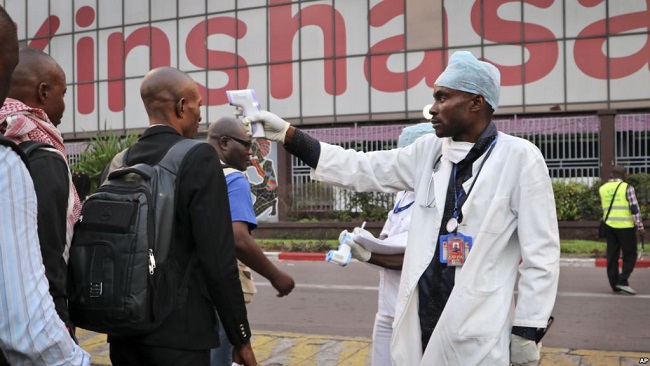
A major part of the project will focus on improving surveillance. The government plans to strengthen monitoring at key entry points, establish seven regional call centers and digitalize community-based surveillance in more than 40 municipalities.
Antimicrobial resistance monitoring will also be expanded through 42 sentinel sites. The program is intended to improve the exchange of information between public health, veterinary and environmental services, allowing authorities to identify emerging threats more quickly.
These investments are aligned with the global 7-1-7 target, under which a suspected outbreak should be detected within seven days, reported within one day and followed by an effective response within seven additional days.
Laboratory capacity will receive substantial support. Fifty laboratories are expected to improve their quality-control and diagnostic systems, while three national reference laboratories will be upgraded to meet international ISO standards. The project will also strengthen the transport of biological samples and expand genomic surveillance for priority diseases, including cholera, meningitis and hemorrhagic fevers.
Emergency response capacity is another focus. Ten regional Public Health Emergency Operations Centers will be equipped and activated, while integrated rapid response teams will be trained to intervene during epidemics and other health emergencies.
The program will also train epidemiologists, veterinary specialists, community health workers, local government officials and environmental health professionals. It is expected to improve coordination among the institutions involved in outbreak prevention and response, as well as the management of funds and equipment assigned to health security.
According to the Pandemic Fund, successful implementation will result in stronger early warning systems, upgraded laboratory networks, enhanced emergency response capacity and improved collaboration across sectors. The program draws on lessons from Cameroon’s response to COVID-19, cholera, Mpox and other outbreaks while reinforcing the country’s long-term health security framework.
Source: Business in Cameroon


















12, August 2026
Congo-Kinshasa: At least 2,000 die in fastest-growing Ebola outbreak on record 0
An Ebola outbreak in the Democratic Republic of Congo (DRC) has killed 2,011 people out of 4,381 confirmed cases of the virus, Congolese officials said on Tuesday.
The latest toll puts it close behind the DR Congo’s deadliest Ebola outbreak in 2018 to 2020 when nearly 2,300 people died out of 3,500 recorded cases.
The Ebola outbreak, which has hit the DR Congo’s conflict-plagued eastern and northeastern regions, was declared on May 15 but is thought to have already been spreading for several weeks.
While it took about nine weeks for the outbreak to record the first 1,000 deaths, it’s taken just around three weeks for the figure to double, an evidence that the health crisis is moving faster than efforts to track and manage it.
It is the DR Congo’s 17th surge of the highly contagious disease and is already considered the largest in the country’s history “and could well become the largest outbreak ever”, Sania Nishtar, chief executive of the Gavi global vaccine alliance, has said.
Aid workers say the outbreak continues to outpace response that’s been expanding across the five eastern provinces affected. Many health workers have gone on strike to protest lack of payment for their work since the outbreak was declared. And the World Health Organization (WHO) has said most new cases are still being recorded outside of contacts being monitored, showing that transmission remains out of the control of health workers.
The case fatality rate of the current outbreak is estimated by Congolese health authorities to be 45.9 percent.
On Friday, WHO vaccine experts recommended a full-scale human trial of the only existing approved Ebola vaccine to see if it offered cross-protection against the strain of Ebola currently spreading in the DRC against which no specific vaccine currently exists.
The Ervebo vaccine has proved safe and efficient against the more common Zaire strain of Ebola virus and WHO experts said that early data, notably from animal trials, showed it may also give some protection against the rare Bundibugyo strain exploding in the DRC.
Two potential Bundibugyo vaccines are in the early stages of clinical trials on humans, while a third is being worked on to bring it to that stage.
Source: France 24