27, August 2026
Indomitable Lions: Baleba has joined Man United from Brighton 0
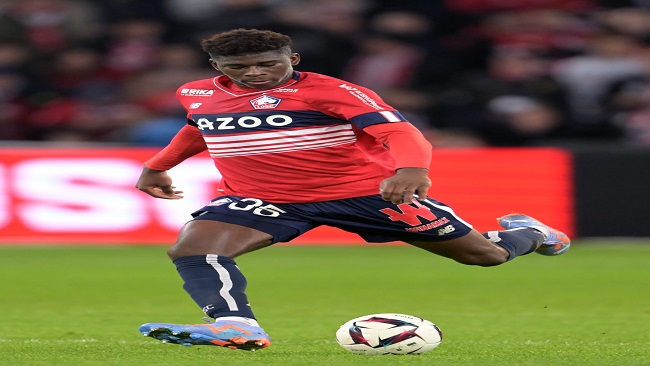
Cameroon’s Carlos Baleba has joined Manchester United from Brighton and Hove Albion, the Premier League giants announced on Tuesday.
The 22-year-old is the third midfielder signed by the Red Devils during the summer transfer window.
“Manchester United is pleased to confirm that Carlos Baleba has joined the club, subject to registration,” the 20-time Premier League champions said in a statement.
His reported £70 million ($95 million) fee takes United’s spending on midfield reinforcements to more than £150m in this window.
He joins Belgium’s Youri Tielemans and Andrey Santos of Brazil in a new-look United midfield after veteran Casemiro left at the end of last season.
“Baleba has already established himself as one of the most talented midfielders in the Premier League,” said United.
“During the 2024/25 season, his combined number of tackles and interceptions was the sixth-highest among midfielders in the league, while he also ranked fourth-highest for progressive ball carries per 90 minutes.”
United had been interested in signing Baleba a year ago following two impressive seasons for Brighton, but baulked at the south coast club’s asking price.
His last season was far less impressive, but that did not put off the Old Trafford club.
“It is an incredible feeling to join the club of my dreams,” said Baleba.
“Playing at Old Trafford is always special but the opportunity to do so as a Manchester United player will be a real honour.
“I cannot wait to work with Michael Carrick; his experience and knowledge of the game make him the perfect coach to help me to reach the highest level.”
Baleba had joined Brighton from French team Lille in 2023 and made 112 appearances for the Seagulls, including 35 last season.
He was hot property a year ago before his star waned a touch during the following campaign.
But it is his athleticism and combativity which have convinced United to sign him.
He ranked “in the top eight per cent of players for combined tackles and interceptions as well as the top one per cent for second balls won” last season, United said.
“Carlos is an elite midfielder with immense potential to develop further,” said United’s director of football, Jason Wilcox, who also pointed to Baleba’s determination to join the club.
“He brings a unique combination of qualities that will really complement our squad.”
Baleba is still recovering from an ankle injury he suffered during pre-season.
He has signed a five-year contract with the option of a further year, according to reports.
The fee is £65 million plus a potential £5m in add-ons.
He will compete with Tielemans, Santos, Kobbie Mainoo and Mason Mount for a midfield starting berth at Old Trafford.
Source: AFP











1, September 2026
Indomitable Lions: Zambo Anguissa retires from international football 0
Napoli midfielder Andre-Frank Zambo Anguissa on Monday announced his retirement from international football with Cameroon.
In a statement, the 30-year-old said wearing the shirt of the Indomitable Lions had been a childhood dream. “Playing for the Cameroon national team is the dream of every Cameroonian child. I am very happy and above all very grateful to have been able to make it come true. After many years in the service of the Cameroon national team, I have taken the decision to bring my international career to an end,” Anguissa said.
“Wearing the shirt of the Indomitable Lions has been an immense honour and a huge source of pride. I realize how fortunate I have been to represent my country, to experience unforgettable moments and to share this adventure with so many team-mates, brothers and members of staff,” he added.
He thanked the Cameroon Football Federation, coaches, teammates and fans who supported him throughout his international career.
Anguissa made his senior debut for Cameroon in March 2017 and became a mainstay in midfield. He had earned 67 caps and scored five goals as of October 2025.
He was part of the squad that won the 2017 Africa Cup of Nations shortly after his debut. He went on to represent Cameroon at several AFCON tournaments, including a third-place finish at AFCON 2021 on home soil, as well as the 2017 FIFA Confederations Cup, where he scored his first international goal, and the 2022 FIFA World Cup.
Source: Xinhuanet