2, April 2025
President Putin begins biggest Russian military call-up in years 0
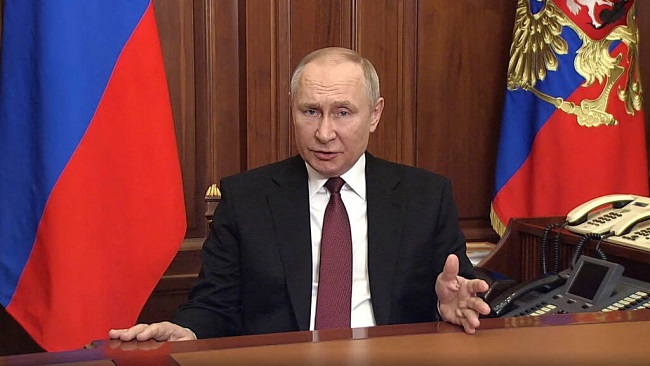
President Vladimir Putin has called up 160,000 men aged 18-30, Russia’s highest number of conscripts since 2011, as the country moves to expand the size of its military.
The spring call-up for a year’s military service came several months after Putin said Russia should increase the overall size of its military to almost 2.39 million and its number of active servicemen to 1.5 million.
That is a rise of 180,000 over the coming three years.
Vice Adm Vladimir Tsimlyansky said the new conscripts would not be sent to fight in Ukraine for what Russia calls its “special military operation”.
However, there have been reports of conscripts being killed in fighting in Russia’s border regions and they were sent to fight in Ukraine in the early months of the full-scale war.
The current draft, which takes place between April and July, comes despite US attempts to forge a ceasefire in the war.
There was no let-up in the violence on Tuesday, with Ukraine saying that a Russian attack on a power facility in the southern city of Kherson had left 45,000 people without electricity.
Although Russia has turned down a full US-brokered ceasefire with Ukraine, it says it did agree to stop attacking Ukraine’s energy facilities. In an apparent attempt to deny Moscow had broken the terms of that deal, Russian officials said they had told Putin that Ukrainian drones had carried out attacks with little sign of a break.
Russia calls up conscripts in the spring and autumn but the latest draft of 160,000 young men is 10,000 higher than the same period in 2024.
Since the start of last year, the pool of young men available for the draft has been increased by raising the maximum age from 27 to 30.
As well as call-up notices delivered by post, Russia’s young men will be receiving notifications on the state services website Gosuslugi.
In Moscow there were reports that call-ups had already been sent out on 1 April via the mos.ru city website.
Increasing numbers of Russians are trying to avoid the army by taking on “alternative civilian service”. But human rights lawyer Timofey Vaskin warned on independent Russian media that every new call-up since the start of the war had become a lottery: “Authorities are coming up with new forms of refilling the army.”
Quite apart from its twice-yearly draft, Russia has also called up large numbers of men as contract soldiers and recruited thousands of soldiers from North Korea.
Moscow has had to respond to extensive losses in Ukraine, with more than 100,000 verified by the BBC and Mediazona as soldiers killed in Ukraine.
The true number could be more than double.
Putin has scaled up the size of the military three times since he ordered troops to capture Ukraine in February 2022.
Russia’s defence ministry linked the December 2023 increase in the size of the military to “growing threats” from both the war in Ukraine and the “ongoing expansion of Nato”.
Nato has expanded to include Finland and Sweden, as a direct result of Russia’s invasion of Ukraine.
Finland has Nato’s longest border with Russia, at 1,343km (834 miles) and Prime Minister Petteri Orpo said on Tuesday that his country would join other states neighbouring Russia in pulling out of the Ottawa convention banning anti-personnel mines.
Poland and the Baltic states made similar decisions two weeks ago because of the military threat from Russia.
Orpo said the decision to resume using anti-personnel mines was based on military advice, and that the people of Finland had nothing to worry about.
The government in Helsinki also said defence spending would be increased to 3% of economic output (GDP), up from 2.4% last year.
Source: BBC













2, April 2025
Yaoundé spent CFA311bn on interest payments for central government debt in 2024 0
In 2024, Cameroon’s public treasury spent a total of CFA1.38 trillion repaying central government debt. According to the national sinking fund (CAA), the agency managing the country’s public debt, CFA311.4 billion of this amount was used to cover interest payments, including CFA58.8 billion for domestic debt.
Although the CAA highlights that Cameroon benefits from “favorable borrowing conditions,” with an average debt cost of 3.2% at the end of 2024, interest expenses continue to weigh on public finances, limiting funds available for development projects.
To put this in perspective, the interest payments made in 2024 were 2.5 times higher than the CFA126.4 billion the government expects to raise in 2025 through the new local taxation law to fund municipalities. They also represent nearly a quarter of the CFA1.14 trillion the African Development Bank (AfDB) has invested in Cameroon’s transport infrastructure. Additionally, this amount is almost double the CFA164 billion in private-sector investments claimed by the International Finance Corporation (IFC), a World Bank subsidiary. The IFC plans to expand its investment portfolio in Cameroon to CFA300 billion over the next three years, which is still CFA11 billion less than what the government paid in interest alone in 2024.
The growing interest burden on Cameroon’s central government debt is largely due to the country’s increased reliance on non-concessional loans in recent years. In 2024, only 35.9% of new financial commitments were concessional loans, while 64.1% came from non-concessional sources, according to the CAA.
Non-concessional loans, which often consist of commercial debt, include borrowing from financial markets and private institutions that typically charge higher interest rates. While these loans provide more flexibility in securing funds, they also come at a higher cost. This makes strict financial management essential to limit interest expenses and ensure long-term budget stability, the CAA warns.
Source: Business in Cameroon