Featured
 A year after Biya’s disputed re-election, CPDM remains without a timetable for next year’s polls.
 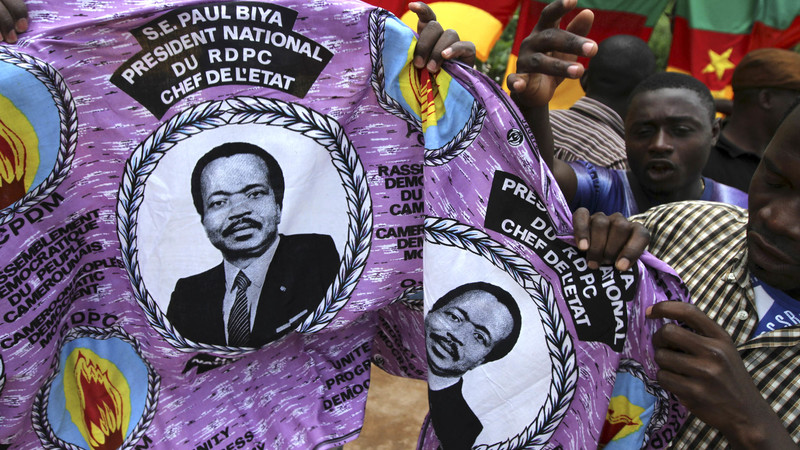 Ruling CPDM Party: When a political message runs out of the road
  Dion Ngute in Buea: Peace cannot be a slogan; Prime Minister must go beyond dialogue
  A new phase for the Southern Cameroons struggle?
  The Cameroonian army must put its conscience to the test
Most Commented Posts
 4 Anglophone detainees killed in Yaounde
18 comments Chantal Biya says she will return to Cameroon if General Ivo Yenwo, Martin Belinga Eboutou and Ferdinand Ngoh Ngoh are sacked
13 comments The Anglophone Problem – When Facts don’t Lie
12 comments Anglophone Nationalism: Barrister Eyambe says “hidden plans are at work”
12 comments Largest wave of arrest by BIR in Bamenda
10 comments
Featured
-
Ambazonia crisis marks 10 years: Rights Groups release list of 4,000 deaths
-

CDC spends nearly all 2025 revenue on payroll, posts CFA20 billion loss
-
A year after Biya’s disputed re-election, CPDM remains without a timetable for next year’s polls.
-
Nigeria: Tinubu confirms 32 dead after military plane crash
-
Martinez Zogo trial resumes with missing Amougou Belinga phone back in focus
-

Algeria cuts diplomatic ties with UAE
-

Football: Ireland players refuse handshakes with Israelis in UEFA Nations League
9, October 2020
Systemic poverty in Cameroon illustrates the complex barrier poor people face 0
Nodem, who’s from Cameroon, is the Presbyterian Hunger Program’s Associate for International Hunger Concerns. Serving in Lima, Peru, Koball is a mission co-worker serving with the Peru Joining Hands Network.
Nodem spoke about colonization and globalization. He said that although Cameroon gained its independence from Great Britain and France 60 years ago, it’s as if colonizers are still present. In part that’s because Cameroon’s natural resources — including oil, timber and coffee — are exported. Value is added in other countries, and the money made by selling those products remains outside Cameroon’s coffers.
He identified three drivers of colonization in Cameroon: gold, God and glory. The first two are fairly well-known: colonizers had a financial interest in extracting natural resources and were also interested in converting people to Christianity. The “glory” part “was about showing your influence,” Nodem said. “What resources did you find there? It was about showing power.”
As a result of the 19th century “Scramble of Africa,” countries were sliced up arbitrarily, he said. “They weren’t thinking about the consequences” of the warfare those practices would help bring about.
“Colonization makes people feel powerless in their own country,” he said. “The system is still strongly governed by foreign powers who robbed countries of a lot of resources. It’s ripped up regions that used to live in peace.”
As a college student in Cameroon, Nodem “was always going to pretty much any demonstration,” he said. “My parents were always upset. They said, ‘Stay out of trouble and don’t do anything.’” Later they told him it’s because they feared for his life.
Source: Presbyterianmission