Featured
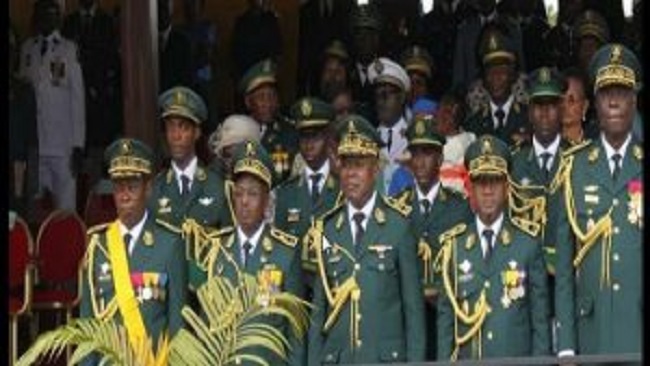 The Cameroonian army must put its conscience to the test
  Who really pushed for the return of the Vice President of the Republic?
  When politics fails a nation, football and the Church become the battleground
  Biya has had his era; Cameroon must now be allowed to enter its next one
  Biya’s hand: a source of glory and shame
Most Commented Posts
 4 Anglophone detainees killed in Yaounde
18 comments Chantal Biya says she will return to Cameroon if General Ivo Yenwo, Martin Belinga Eboutou and Ferdinand Ngoh Ngoh are sacked
13 comments The Anglophone Problem – When Facts don’t Lie
12 comments Anglophone Nationalism: Barrister Eyambe says “hidden plans are at work”
12 comments Largest wave of arrest by BIR in Bamenda
10 comments
Featured
-

Martinez Zogo Trial: questions over missing phone linked to Amougou Belinga
-

Revealed: Colonel Danwe admits ordering Martinez Zogo operation
-
Archbishop Nkea to battle decade of war with new peace Catechism
-

Southern Cameroons Crisis: 7 kidnapped by suspected Amba fighters in Bangourain
-
Southern Cameroons Crisis: 3 killed, 2 injured in bar shooting in Bamenda
-
US military nearing ‘breakdown’ amid sustained Iranian attacks
-
The Cameroonian army must put its conscience to the test
27, February 2026
Southern Cameroons Crisis: Situation Report 0
The security situation in the North-West and South-West regions remained tense in December. This period has been marked by frequent and intense violent clashes between non-state armed groups (NSAGs) and state security forces (SSF), leaving the security and humanitarian situation very fragile and volatile. Drawing towards the end of the year, multiplicity of illegal check points led to a high rate of extortion from the civilian population by NSAGs in the name of “Liberation tax” across most of the divisions in the two regions. Also, there has been an increase in arbitrary arrest, kidnapping for ransom, including some government current and former officials.
Over 14 incidents involving improvised explosive devices (IEDs) targeting government officials and military convoys were recorded in the North-West and South-West regions. One of these incidents involved IED targeting the convoy of the Donga Mantung Senior Divisional Officer, while another IED detonated beside a military base in Bamenda 1 subdivision targeting a senior SSF official in the North-West region. Another IED detonated against a SSF vehicle travelling along the Mundemba- Bulu road (Mundemba subdivision) in the South-West region. The use of IEDs in public places and on busy highways largely increases fear and poses high risk to civilian populations.
Continuous violence resulted in multiple population displacements with over 2,072 people from 400 households reportedly displaced to nearby bushes, villages, and towns from Donga-Mantung, Bui, and Mezam divisions, in the North-West and Manyu division in the South-West region with Bui, Manyu and Donga Mantung divisions being the most affected respectively. The displacements expose the affected communities to major protection risks among others, as they move to and from their homes seeking safety and protection, placing additional burdens on communities that are already very fragile.
Access was constrained due to insecurity and multiple informal check points with strict verification of “liberation tax” receipts, as well as imposition of large sums on road users including pedestrians. These restricted movements narrowed the humanitarian space and negatively affected response activities. With coordination support from OCHA, humanitarian partners mobilized to carry out needs assessment in preparation for a potential response to the affected population.
Source: reliefweb