Featured
 The Cameroonian army must put its conscience to the test
  Who really pushed for the return of the Vice President of the Republic?
  When politics fails a nation, football and the Church become the battleground
  Biya has had his era; Cameroon must now be allowed to enter its next one
  Biya’s hand: a source of glory and shame
Most Commented Posts
 4 Anglophone detainees killed in Yaounde
18 comments Chantal Biya says she will return to Cameroon if General Ivo Yenwo, Martin Belinga Eboutou and Ferdinand Ngoh Ngoh are sacked
13 comments The Anglophone Problem – When Facts don’t Lie
12 comments Anglophone Nationalism: Barrister Eyambe says “hidden plans are at work”
12 comments Largest wave of arrest by BIR in Bamenda
10 comments
Featured
-
The Cameroonian army must put its conscience to the test
-

Dangote refinery launches continent’s biggest IPO
-

Norway joins 11 other states to criminalize trade with West Bank settlements
-

Southern Cameroons Crisis: 3 civilians, one Amba fighter killed in Ekona
-
White Elephant: Kribi Port sinks to 395th globally after one of the sharpest drops in performance
-

President Putin says figures reflect ‘structural, deep, profound shifts’ in global economy
-
Dion Ngute reaffirms peace efforts amid fresh violence in Ambazonia
21, May 2026
Another 20TH May, same questions: Can Biya still steady Cameroon? 0
As Cameroon marks another National Day under the leadership of Paul Biya, the atmosphere surrounding the celebrations feels far more reflective than triumphant.
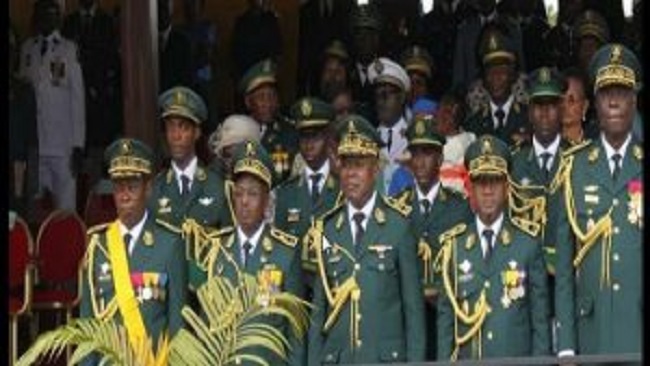
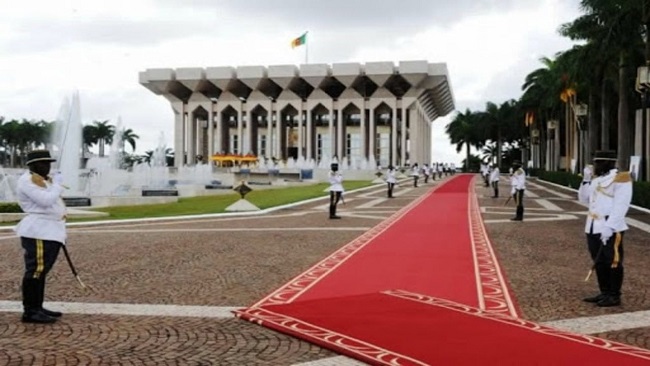
For decades, May 20 has represented continuity, national unity and the resilience of the Cameroonian state. Military parades, patriotic songs and carefully orchestrated displays of state authority have long reinforced the image of a country anchored by stability.
This year, however, the celebrations arrive at a moment of unusual national introspection.
Behind the formal ceremonies lies a country wrestling with uncertainty over leadership, governance and the future direction of the republic. Cameroon is increasingly confronting questions that for years remained largely whispered in political circles: succession, institutional fatigue, generational renewal and the long-term sustainability of a system built around one dominant political figure.
At 93, President Biya remains one of the world’s oldest serving leaders. Yet his reduced visibility has become impossible to ignore. Public appearances have grown increasingly rare. National addresses are infrequent. Important moments in the country’s political life often unfold without direct engagement from the presidency.
Less than a year after securing another term in office despite growing concerns over his age and health, many Cameroonians now openly wonder whether the country is entering a delicate transition period without a clearly communicated roadmap.
The promises that accompanied the latest mandate — including commitments to empower young people, elevate women and modernize governance — have so far produced limited visible change. Instead, frustration continues to build around economic hardship, administrative stagnation and the perception that political renewal remains indefinitely postponed.
The Slow Unraveling of the Old Guard
Cameroon’s current political unease is not driven solely by concerns surrounding the presidency. It also reflects the gradual disappearance of a political generation that shaped the country for more than four decades.
In recent months, several prominent figures associated with the country’s long-standing establishment have either died, exited office or been forced into political retirement by deteriorating health.
The departure of Marcel Niat Njifenji became one of the clearest examples of this reality. Long regarded as one of the most influential figures within the ruling establishment, he was eventually replaced by his deputy before passing away shortly afterward.
A similar scenario unfolded in the National Assembly with the passing of Cavaye Yeguie Djibril, a political heavyweight who had occupied senior parliamentary positions since the 1970s and served as Speaker for more than three decades.
The deaths of other senior personalities, including General Philip Mpay and former Supreme Court Justice Dipanda Mouelle, have further reinforced the sense that an era in Cameroon’s political history is slowly coming to an end.
For many citizens, these developments are more than isolated losses. They expose the fragility of a political system that delayed generational transition for too long and relied heavily on aging personalities instead of strong institutional succession mechanisms.
Vacant Offices and the Cost of Political Delay
One of the most pressing governance concerns facing Cameroon today is the growing number of institutions affected by delayed appointments, prolonged vacancies or officials widely viewed as physically exhausted and politically disconnected from present-day realities.
Across ministries, public agencies and state corporations, concerns over leadership inertia have become increasingly common.
Many Cameroonians privately admit that the country narrowly escaped a serious constitutional and symbolic crisis with the deteriorating health conditions of both the Senate President and National Assembly Speaker before their departures from office. For years, public opinion had questioned whether both men still possessed the energy and capacity required for such sensitive national responsibilities.
Yet decisive succession planning appeared absent until events forced the issue.
That pattern has become increasingly characteristic of governance in Cameroon, where leadership transitions often happen reactively rather than through deliberate institutional planning.
Critical offices remain unfilled. Important decisions continue to be delayed. Administrative bottlenecks have deepened in sectors requiring urgent reform and modernization.
Questions are also growing louder about the concentration of authority within a small political circle that has remained largely unchanged for decades.
Many younger Cameroonians struggle to understand how certain ministers have remained in the same positions for more than twenty years without meaningful rotation or institutional renewal. What was once defended as experience and continuity is increasingly interpreted by critics as stagnation and resistance to change.
In a rapidly evolving Africa driven by youthful populations, technological transformation and competitive economies, Cameroon risks appearing politically frozen while much of the continent moves forward.
National Crises Demanding Immediate Attention
The leadership uncertainty comes at a time when Cameroon faces multiple crises requiring urgent political attention.
The Anglophone conflict remains among the country’s gravest national challenges. Years after violence erupted in the North West and South West regions, insecurity continues to disrupt daily life across large sections of the two regions.
Communities continue to endure kidnappings, attacks, displacement and prolonged disruptions to education and economic activity. Entire generations of children have experienced interrupted schooling because of instability.
Even as National Day celebrations project images of national unity, tensions remain visible across parts of the Anglophone regions, where frustration and insecurity continue to shape daily realities.
Many observers believe the crisis can no longer be managed solely through military containment and administrative measures. Increasingly, calls are growing for stronger political engagement, deeper national dialogue and a more imaginative long-term solution capable of rebuilding trust between the state and affected communities.
At the same time, corruption scandals and governance controversies continue to weaken public confidence in state institutions.
Questions surrounding gold exploitation in Cameroon’s East Region have fueled fresh concerns about transparency, illegal networks and the management of strategic natural resources. Critics argue that such controversies reinforce broader perceptions of weak oversight and institutional decline.
Economic pressures have also intensified public frustration. Rising living costs, unemployment and limited economic opportunities continue to weigh heavily on ordinary citizens, particularly the youth population that was promised greater inclusion during the president’s latest mandate.
The Vice Presidency Debate and Succession Anxiety
Recent moves to establish the office of Vice President have only deepened speculation surrounding succession within the Cameroonian political system.
The speed with which the legislation passed through parliament surprised many observers, particularly in a country where institutional reforms often move slowly.
The ruling CPDM’s overwhelming parliamentary majority ensured the bill’s swift approval, immediately triggering nationwide debate over its political significance.
For some, the move reflected an attempt to reassure political elites and calm growing anxieties about succession. Others viewed it as a sign that internal discussions about the post-Biya era may already be far more advanced than publicly acknowledged.
Yet weeks after the bill’s passage, no vice president has been appointed.
That silence has fueled further speculation and uncertainty.
In Cameroon’s highly centralized political environment, ambiguity often creates tension within elite circles, especially when questions of succession remain unresolved.
Elections Delayed as Anxiety Grows
The postponement of parliamentary and local government elections has added another layer of uncertainty to an already fragile political climate.
Official explanations cite organizational and administrative considerations. Critics, however, interpret the delays as signs of a government attempting to carefully manage an increasingly sensitive political environment.
For many Cameroonians, the cumulative effect of delayed reforms, aging leadership, unresolved crises and institutional hesitation has created the impression of a state operating in slow motion at a time when urgent decisions are required.
A Defining Moment for the Presidency
Despite growing criticism, President Biya still possesses the authority and political influence necessary to shape how Cameroon navigates the coming years.
Many observers believe the country has reached a moment where hesitation itself carries risks.
Vacant offices require credible appointments.
Government restructuring can no longer remain permanently deferred.
Institutions need revitalization.
The Anglophone crisis requires renewed political imagination and engagement.
Public confidence must be restored through visible action rather than repeated promises.
Most importantly, Cameroon’s leadership faces the challenge of demonstrating that the stability of the state can outlive the personalities that have dominated it for generations.
National Day Beneath the Shadow of Transition
This year’s National Day therefore carries symbolism far deeper than ceremonial celebrations.
It reflects a country standing at the intersection of continuity and transition.
For decades, Paul Biya built a reputation as one of Africa’s most resilient political survivors, navigating coups, economic crises, regional instability and shifting geopolitical pressures.
But no political system remains untouched by time forever.
Cameroon today appears increasingly confronted by the realities of generational change, institutional renewal and the unavoidable limits of personal rule.
As the country celebrates another National Day, the question dominating political discussions is no longer simply whether President Biya can remain in office.
The more pressing question is whether decisive action can still be taken to stabilize the system, address urgent national crises, preserve institutional order and guide Cameroon toward a smooth and peaceful transition before uncertainty overtakes stability.
Culled from Pan African Visions