Featured
 Unity Palace needs a new idea and a new head of state
  Martinez Zogo Affair: Biya must clean house and make way for a new generation
  Ambazonia People’s Liberation Authority explains motives for the new transition
  A year after Biya’s disputed re-election, CPDM remains without a timetable for next year’s polls.
 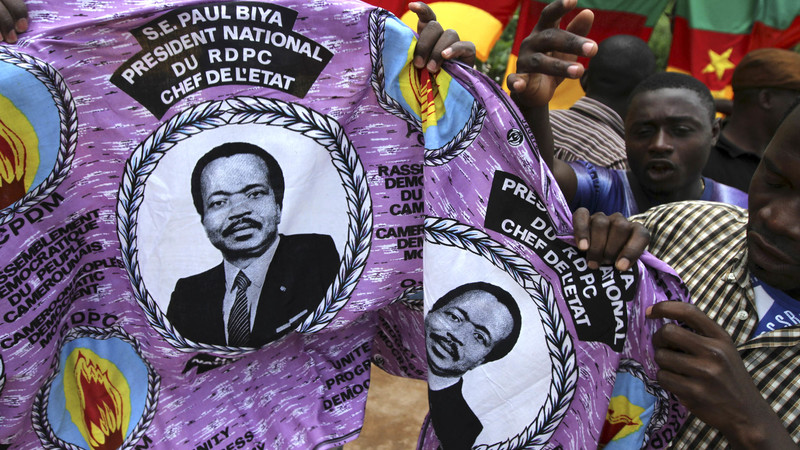 Ruling CPDM Party: When a political message runs out of the road
Most Commented Posts
 4 Anglophone detainees killed in Yaounde
18 comments Chantal Biya says she will return to Cameroon if General Ivo Yenwo, Martin Belinga Eboutou and Ferdinand Ngoh Ngoh are sacked
13 comments The Anglophone Problem – When Facts don’t Lie
12 comments Anglophone Nationalism: Barrister Eyambe says “hidden plans are at work”
12 comments Largest wave of arrest by BIR in Bamenda
10 comments
Featured
-

Unity Palace needs a new idea and a new head of state
-

Trump says US may launch ‘another little Epic Fury’ attack on Iran
-

Formula 1: Hamilton sets sights on racing in African grand prix
-

Yaoundé: anti-corruption agency calls for stronger powers after 20 years of limited progress
-

Martinez Zogo Affair: Biya must clean house and make way for a new generation
-

Biya’s health crisis is starting to alarm investors
-

Cameroon’s Eurobond yields hit record high after Fitch downgrade
25, June 2026
Biya regime test new approach to keep urban roads in better condition 0
Cameroon is looking to change how it maintains urban roads and drainage systems, shifting from a system focused on construction work to one centered on long-term performance.
The Sustainable Cities and Land Management Project (PVGFD), with support from the World Bank, is preparing to introduce a new generation of road maintenance contracts known as Results-Based Road Contracts (MROR). On June 17, public works companies, engineering firms, local governments, and urban development stakeholders gathered in Yaoundé for a workshop dedicated to the new model. More than 100 participants attended the event, both in person and online.
The approach represents a significant departure from traditional public works contracts. Under the current system, companies are paid primarily for carrying out specific works. Under the proposed model, a larger share of compensation depends on the condition of the infrastructure over time and the quality of service delivered to users. “Unlike traditional contracts, MRORs focus on results and the long-term quality of infrastructure for the benefit of citizens. Expected benefits include better-maintained roads, more effective drainage systems, smoother mobility, and more efficient use of public resources,” the Ministry of Housing and Urban Development said.
A Focus on Long-Term Performance
The goal is no longer simply to repair a road or clear a drainage channel. Contractors would be responsible for keeping infrastructure in good working condition throughout the life of the contract. As part of pilot projects planned for Douala and Yaoundé, selected companies could be required to meet specific performance standards. Failure to maintain those standards could result in financial penalties.
Several countries already use similar contracts to improve road maintenance and reduce the cost of recurring repairs. The model also encourages contractors to adopt durable technical solutions rather than relying on repeated short-term fixes. The initiative comes at a time when urban infrastructure is under growing pressure. Rapid urban growth, heavier traffic, and intense rainfall continue to strain roads and drainage networks in both Douala and Yaoundé.
The effects are visible across both cities: roads deteriorate quickly, flooding remains common in some neighborhoods, traffic congestion worsens, and transportation costs increase for residents and businesses.
Improving Returns on Public Spending
For many residents, the issue is not simply building new infrastructure but ensuring that existing infrastructure remains functional. Several urban roads rehabilitated in recent years showed signs of deterioration shortly after completion, raising questions about the effectiveness of current maintenance practices. Authorities also see an economic benefit in the new approach. By linking payments to measurable performance, they hope to generate better returns from public spending on urban infrastructure.
The challenge is particularly important given the scale of infrastructure needs and the limits of available public resources. For local governments, every franc spent on maintenance must produce visible and lasting results. The pilot projects in Douala and Yaoundé will serve as a real-world test. If successful, the model could be expanded to other cities across the country.
Its success, however, will depend on several factors, including clear contract specifications, reliable performance indicators, effective monitoring by local authorities, and enforceable penalties when contractors fail to meet their obligations.
Without those safeguards, the shift toward results-based maintenance could remain more of a policy objective than a meaningful change in how urban infrastructure is managed.
Source: Business in Cameroon