Featured
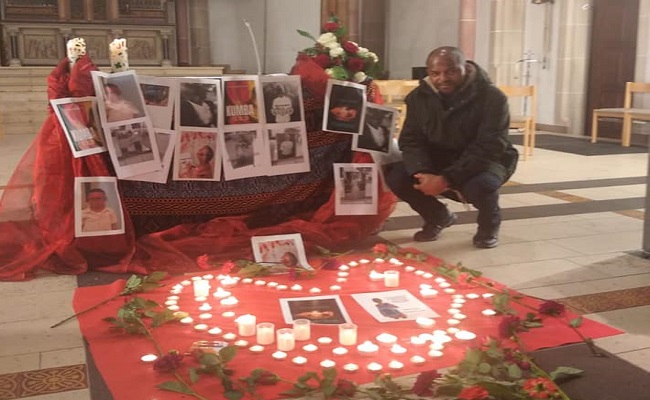 Ngarbuh massacre trial short on justice
  John Ashu Agboreyong: a man of God counting years and counting impact @60
 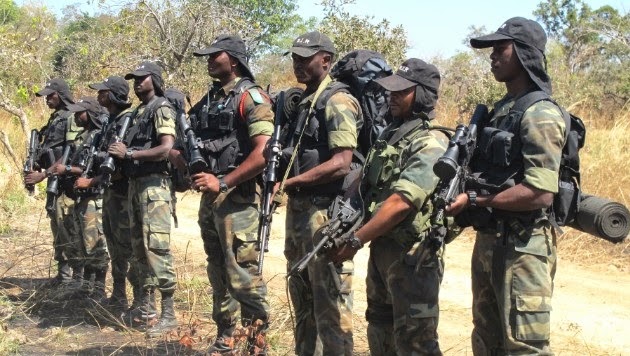 Ethnic armies and the democratization process in Cameroon: an impediment to democratic consolidation
 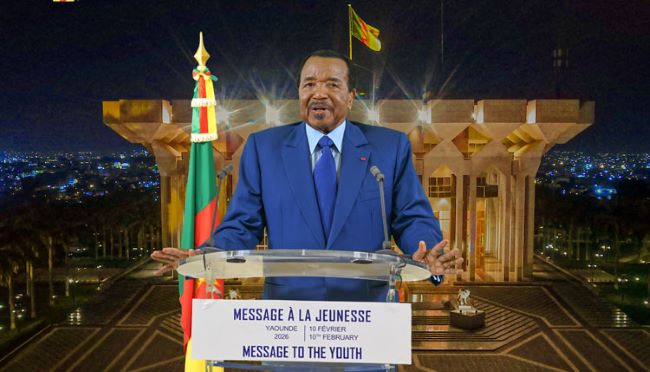 Biya’s message to the Youth on the 60th edition of the National Youth Day
  How Cameroon pays the price for disrespecting contracts
Most Commented Posts
 4 Anglophone detainees killed in Yaounde
18 comments Chantal Biya says she will return to Cameroon if General Ivo Yenwo, Martin Belinga Eboutou and Ferdinand Ngoh Ngoh are sacked
13 comments The Anglophone Problem – When Facts don’t Lie
12 comments Anglophone Nationalism: Barrister Eyambe says “hidden plans are at work”
12 comments Largest wave of arrest by BIR in Bamenda
10 comments
Featured
-

Southern Cameroons Crisis: Situation Report
-
Ambazonia crisis reaches unenviable decade milestone
-

Epstein probe: Bill and Hillary Clinton to testify before Congress
-
UN condemns death of opposition figure Anicet Ekane in custody
-

Pope Leo to visit Yaoundé, Bamenda and Douala from April 15 to 18
-
Yaoundé grants traditional chiefs power to issue provisional land certificates
-
Biya regime orders 3,442 teachers to prove status or face payroll removal
27, February 2026
Ambazonia crisis reaches unenviable decade milestone 0
Ten years after it began, the Anglophone crisis in Cameroon is worsening and continues to be one of the most under-reported conflicts in the world.
The conflict, which has been ravaging the North-West and South-West regions, started in late 2016 and has grown into the worst crisis in the Central African country post-independence.
Pitting militants agitating for the autonomy of the English-speaking regions citing marginalisation by the French-speaking-dominated government, it has exposed civilians to human rights abuses.
The United Nations Office for the Coordination of Humanitarian Affairs (UNOCHA) reports how the security situation remains tense, marked by frequent and intense violent clashes between non-state armed groups (NSAGs) and state security forces (SSF), leaving the security and humanitarian situation very fragile and volatile.
The UNOCHA notes that drawing towards the end of the year, multiplicity of illegal checkpoints led to a high rate of extortion from the civilian population by NSAGs in the name of “Liberation tax” across most of the divisions in the two volatile regions.
“Also, there has been an increase in arbitrary arrest, kidnapping for ransom, including some current and former officials,” said a spokesperson.
In December, according to the UN agency’s statistics, at least 14 incidents involving improvised explosive devices (IEDs) were reported in the North-West and South-West.
More than 2 000 people were reportedly displaced from 400 homes.
Humanitarian agencies decry how the displacements expose the affected communities to major protection risks among others, as they move to and from their homes seeking safety and protection, placing additional burdens on communities that are already very fragile.
Access during December was constrained due to insecurity and multiple informal check points with strict verification of “liberation tax” receipts, as well as imposition of large sums on road users including pedestrians.
“These restricted movements narrowed the humanitarian space and negatively affected response activities,” UNOCHA stated.
The crisis began as peaceful strikes and protests by English-speaking lawyers and teachers against the alleged “Francophonisation” of the legal and educational systems in Anglophone regions.
This situation escalated into an armed conflict between the military and separatist groups following a violent government crackdown in late 2016 and early 2017.
Separatists declared the symbolic independence of “Ambazonia.”
Independent since 1961 and previously a German colony, Cameroon was colonised by both Britain and France following the defeat of Germany in World War I.
Eight of Cameroon’s ten regions are predominantly Francophone.
Around 80 percent of the country of 30 million people is French-speaking.
Source: CAJ News