
24, May 2018
Yaounde lashes US over ‘abuses’ in Southern Cameroons 0
Cameroon’s government has blasted the United States for accusing its forces of abuses, including “targeted killings,” in an English-speaking region of the country wracked by a separatist insurgency.
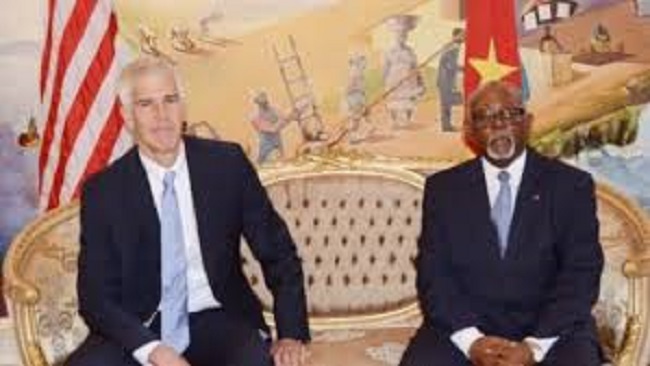
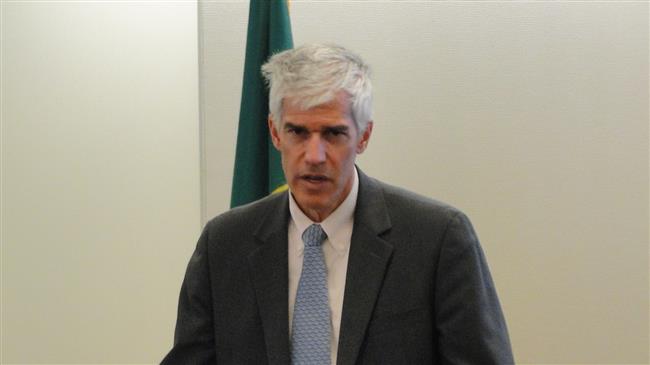
In a statement received by AFP on Thursday, the foreign ministry said it had expressed its “deep disapproval” of comments made by US ambassador in Yaounde, Peter Barlerin, last week.
His action “violates all diplomatic conventions as well as the rules of civility and law, both in style and substance,” it said.
Barlerin was summoned to the foreign ministry on Tuesday, four days after alleging government forces had carried out “targeted killings” and other abuses against militants demanding independence for two English-speaking regions.
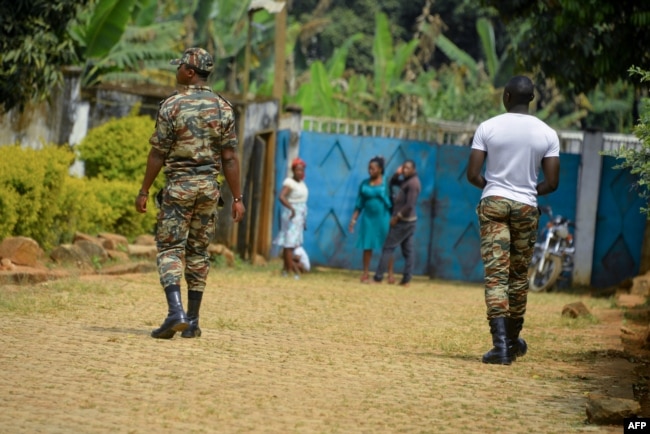
“On the side of the government, there have been targeted killings, detentions without access to legal support, family, or the Red Cross, and burning and looting of villages,” the ambassador said in a statement.
“On the side of the separatists,” he also stressed, “there have been murders of gendarmes, kidnapping of government officials, and burning of schools”.
The statement followed warnings by rights watchdogs over abuses in the conflict. It was issued after Barlerin met Cameroon’s 85-year-old president, Paul Biya.
The foreign ministry statement said such allegations were “totally unfounded.”
“Despite almost daily harassment and heavy losses in terms of lives and equipment, (the security forces) have always kept in mind, with professionalism and rigour, the rules of engagment and international humanitarian law.”
Anglophones account for about a fifth of Cameroon’s population of 22 million.
Most of them live in the Northwest and Southwest regions that in colonial times were administered by Britain, joining francophone Cameroon after it gained independence from France in 1960.
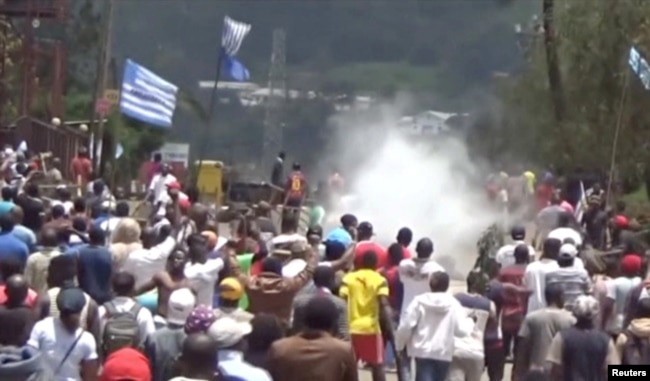
Decades of resentment about perceived marginalisation in education, the judiciary and the economy escalated last year, culminating in the announcement on October 1 of a putative separate state called Ambazonia.
According to the International Crisis Group (ICG) think tank, “at least 120” civilians and “at least 43” security forces have been killed since the end of 2016.
The UN’s Office for the Coordination of Humanitarian Affairs (OCHA) says around 160,000 people have been internally displaced and 20,000 have sought refuge in neighbouring Nigeria as a result of the violence.
Source:AFP



















24, May 2018
Cameroon bishops alarmed by ‘blind, inhuman, monstrous violence’ 0
‘Not a week goes by without houses being burned down, people kidnapped or killed. Fear has taken over this territory’
The situation in English-speaking regions of Cameroon is “marked by blind, inhuman, monstrous violence and by a radicalisation of positions that alarm us,” said the president of the Cameroon bishops’ conference.
“Let us stop all forms of violence and let us stop killing each other,” said Archbishop Samuel Kleda of Douala, the president, in a statement May 16. “Let us save our country from an unfounded and useless civil war.”
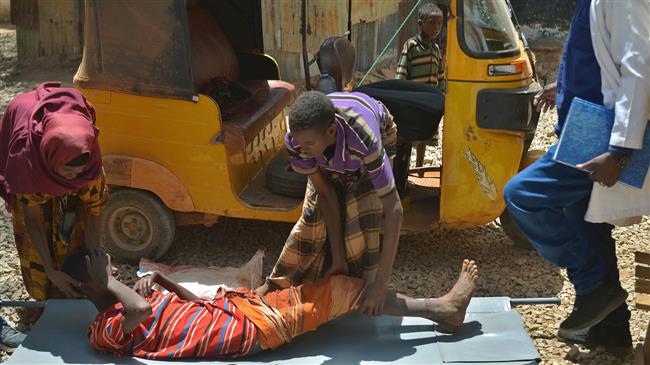
Caritas Internationalis, in an appeal launched May 15, reported that the conflict in Cameroon “has forced 160,000 people out of their homes into the bush and a further 26,000 to cross into Nigeria as they flee regions ‘stalked by fear and death.’ Whether a person speaks English or French has become a reason to kill.”
Tensions between Cameroon’s French-speaking majority and English-speaking minority have been growing since late 2016 when lawyers and then teachers in the English-speaking northwest and southwest regions of Cameroon went on strike to protest the appointment of French-speaking judges and the use of French in schools. In October, English-speaking separatists declared an independent state, “Ambazonia.”
Archbishop Kleda’s statement said, “the brutal repression of the army against an independence movement in the English-speaking regions of the country” has fuelled an escalation of the humanitarian crisis.
“Not a week goes by without houses being burned down, people kidnapped or killed. Fear has taken over this territory,” wrote Hippolyte Sando of Caritas Cameroon in a letter March 28 from Mamfe, a diocese in the southwest which Caritas described as being at the “epicenter” of the violence.
“The village of Kembong is a typical example of the suffering of the people. Here, young and old alike have been sleeping in the forest since Sept. 29,” Sando wrote. “Two priests and a hundred or so villagers spent months living in the compound of Bishop Andrew Nkea of Mamfe, and it was only recently that they cautiously agreed to go back to their villages on the condition that they would no longer be attacked.”
The diocesan, national and international Caritas organisations are mobilising to provide emergency aid both within Cameroon and across the border in Nigeria where many of the refugees have sought shelter and safety.
Source: The Tablet