

2, August 2019
Of Back-To-School and the Southern Cameroons Crisis 0
Of late there has been a ‘back to school’ chorus in the media. But the simple questions I have asked over the past few weeks but received no answers for them are the following:
- We have children agonising in the refugee community in and out of camps. We have children battling with disease and other survival issues among the IDP community in the forests, hills and caves. So which children is the ‘back to school’ advocacy targeting?
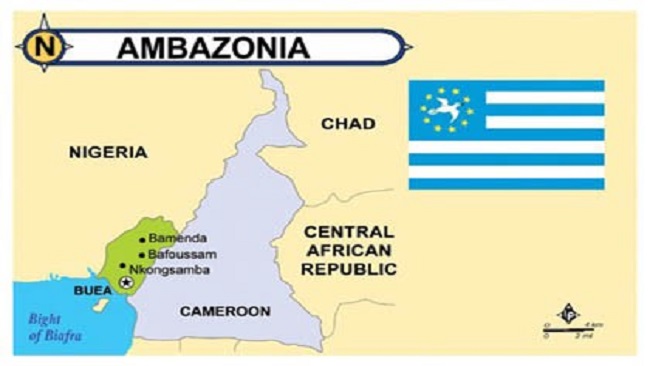
- In the past five decades French Cameroun has actively pursued a deliberate policy of and adopted measures aimed at pauperisation of the people of Ambazonia. Grinding poverty is evident everywhere in Ambazonia. French Cameroun’s genocidal war in Ambazonia has aggravated the humiliating condition of abject poverty of the people of Ambazonia. In the face of this excruciating poverty situation it comes to me as a huge surprising and disappointment that the advocates of ‘back to school’ have maintained a shouting silence on the economics of ‘back to school’: fees of all kinds, learning resources and uniforms. If the advocacy were sincere why is it not accompanied by advocacy for free education. Owners of schools, religious bodies and others, would be hard put to deny the charge of being interested only in unjustly enriching themselves from the poverty and humiliation of the generality of the masses.
- This whole matter cannot be divorced from evident security, safety, human resource and infrastructure issues.
Ambazonia is occupied by French Cameroun troops. These are on the prowl. They are marauding troops. They rape, muder, burn, maim and abduct indiscriminately. Not even children are spared. Not even babies are spared. So in what conducive environment would schools reopen? These troops and the groups they have created as so-called “counter-terrorism measures” are preying around. They are ready and willing to murder those they chance upon.
Further, there are education-related human resources issues: teachers. Hundreds of school teachers have either been mudered or disappeared or abducted and illegally locked up or become IDPs or refugees. No one has so far talked about the teachers who are to teach children.
And no advocate of ‘back to school’ has said anything about the content of the education they are trying to compel children to submit to. It is often forgotten that one of the immediate triggers of the Ambazonian Revolution is massive and legitimate dissatisfaction with the the education for ignorance that French Cameroun has sought over the years to impose on Ambazonian children. That ‘Bantustan’ education project has not been fixed. If anything it continues to be pursued by French Cameroun and has evwn gone even gone on a higher gear. A telling random example is the deliberately misleading ‘English’ version of examination questions asked school children and students.
Further still, not a small number of schools have been razed to the ground by French Cameroun arsonist troops or have been converted into troop camps by those forces. Our advocates of ‘return to school’ have also maintained something of a conspiratorial silence over this matter. They also continue to be silent over classroom equipment, learning resources, and PTAs that play a key role in the governance of schools in their communities.
- Finally, there are credible insider intelligence on the sinister plot by French Cameroun that hinges on its counter-intelligence strategy that hinges on ‘back to school’. Hence their ‘back to school’ campaign using various agents. We know what that strategy entails. The people of Ambazonia will not be made a fool of again and shall not suffer our children to be put in harm’s way under the very thin disguise of ‘return to school’.
By Prof. Carlson Anyangwe

















2, August 2019
600,000 children with no school in Southern Cameroons 0
Cardinal Christian Tumi, the Archbishop emeritus of Douala, has called for the schools in Cameroon’s troubled Anglophone regions to be re-opened at the beginning of the forthcoming scholastic year, two months from now.
The country’s North West and South West regions have been suffering an ongoing insurgency by English-speaking rebels complaining of discrimination and marginalization by the French-speaking majority.
The boycotts began in 2016 with a strike by lawyers and teachers protesting the use of French in courts using the Anglo-Saxon common law tradition (practiced in the English-speaking parts of the country) and in Anglophone schools, and it soon boiled over to the general public, with many Anglophones calling for outright secession.
Schools’ boycott
Since then, armed rebels have enforced the school boycott, leaving children in the two regions without an education for three years. “It can’t continue this way,” the cardinal told Crux in his Douala residence.
In a recent visit to his hometown Kumbo, Cardinal Tumi said he came home with the shocking realization that schools in that part of the country do not function anymore. “A people who go for a single moment without school – what future do they have?”
“Assuming that these boys become political leaders tomorrow, where will they get the educated ability to work with for the good of the state?” asked the cardinal, referring to the rag-tag force fighting for the independence of the English-speaking regions of Cameroon.
The Prelate noted that most of these boys are illiterate, and he said he doubted whether they really understand “the importance of education for the human being.” He also admonished them for kidnapping teachers and students and described such actions as “torture.”
“There is a Catholic school in my village – St. Augustine’s College – where they went and kidnapped 150 students at night. These were children between 12 and 14 years. They were taken at night without shoes on and forced to trek for several kilometers. It’s torture,” the cardinal said.
“No matter their convictions, even if they are convinced that it’s necessary to continue fighting against established authority, they should allow schools to continue,” Cadinal Tumi said.
600,000 children with no school
Church leaders in Cameroon have accused the government of being heavy-handed in its actions against the separatists, and complained that innocent civilians are the ones suffering the most.
Rather than negotiate, the government opted for military force to quell the tensions, leading to several deaths. So far, at least 2,000 people have died in the conflict, and over 400,000 have been driven from their homes.
In 2017, several Anglophone groups called for a stop to the school boycott, calling it counter-productive, but were brandished as traitors by the separatists and school authorities who tried to reopen schools, and students who tried to attend them, were often kidnapped.
UNICEF, The UN’s children’s agency, estimates over 600,000 school-aged children aren’t attending classes in the Anglophone regions.
“Prior to October 2016, more than 6,000 schools were operational within the region. As of December 2018, less than 100 schools were operational; meaning nearly 5,900 schools were closed down with over 40,000 students out of school and over 40 schools burnt down,” said a July 9 statement by the Center for Human Rights and Democracy in Africa.
Source: NewsBook