

26, January 2019
Sudan: Former Prime Minister calls for President Bashir to quit as protests mount 0
The leader of Sudan’s largest opposition party, Sadiq al-Mahdi, called on President Omar al-Bashir’s government to heed protesters and resign in an address to supporters at a mosque across the River Nile from Khartoum Friday.
“This regime has to go immediately,” Mahdi told hundreds of worshippers at a mosque in Omdurman, the twin city of the capital Khartoum, which has seen near daily anti-government protests. Hundreds of protesters then marched through Omdurman after Friday prayers, until police fired teargas to try to break up the rally.
Mahdi said that since the protests against Bashir’s government erupted on December 19, “more than 50 people have been killed” in violence during the demonstrations.
Officials say 30 people have died in the protests, while rights groups have put the death toll at more than 40.
“The most important demand is that this regime must leave and be replaced by a transitional government,” Mahdi said at the mosque, which has links to his Umma Party.
“A period of transition will come soon… we are supporting this (protest) movement,” said Mahdi, leader of Sudan’s opposition Umma Party whose government was toppled by Bashir in an Islamist-backed coup in 1989. After nearly a year in exile, Mahdi returned to Sudan last month on the same day protests began.
Mahdi said Friday his party has signed a document with the Sudanese Professionals’ Association (SPA) that is leading the campaign against Bashir’s government.
“This is a document for change and freedom,” Mahdi said. “Together we will hold peaceful demonstrations in Sudan and outside of Sudan,” he said as he condemned the violence and use of “live ammunition” against protesters.
A fixture of Sudanese politics since the 1960s, Mahdi was prime minister from 1966 to 1967 and again from 1986 to 1989.
His government was the last one to be democratically elected in Sudan, before it was toppled by Bashir. Since then Mahdi’s Umma Party has acted as Sudan’s main opposition group and has regularly campaigned against the policies of Bashir’s government.
The ongoing protest movement however has been spearheaded by the SPA, an umbrella group of unions representing doctors, teachers and engineers. Analysts say the movement has emerged as the biggest challenge yet to Bashir’s rule.
(FRANCE 24 with AFP and REUTERS)



















26, January 2019
UN says 32,000 Ambazonians seeking refuge in Nigeria 0
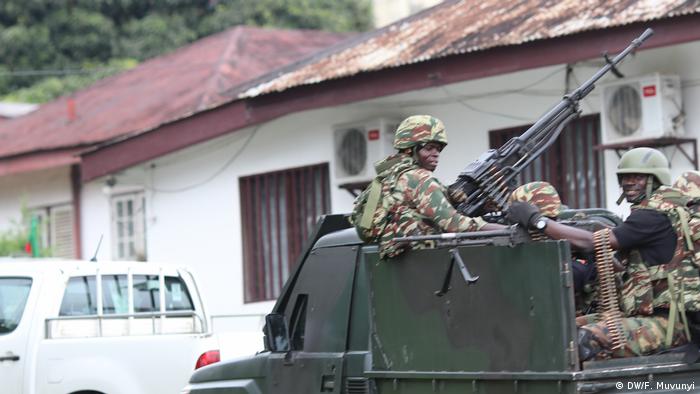
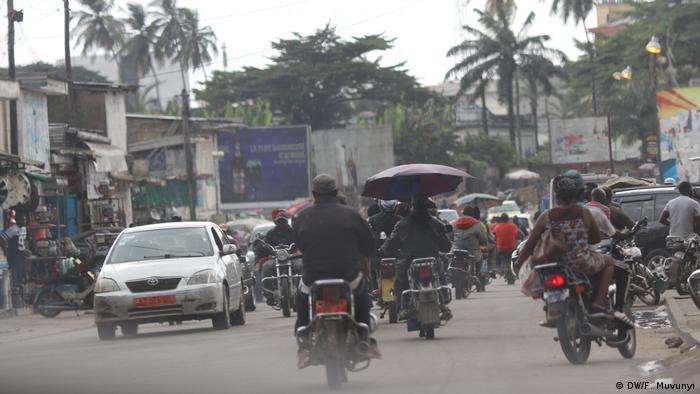
The United Nations has said that no fewer than 32,000 Southern Cameroonians fleeing insecurity and violence are currently taking refuge in Nigeria. UN Resident and Humanitarian Coordinator for Cameroon, Ms Allegra Baiocchi, while presenting the 2019 Humanitarian Response Plan for the country, described the situation in the country as “forgotten crisis”.
Baiocchi and Cameroon’s Civil Protection Director, Ms Yap Mariatou, warned at the inauguration in Geneva that there was a drastic increase in humanitarian need across the country. The UN chief for Cameroon regretted that with attacks on the rise, around 4.3 million Cameroonians, mostly women and children, were in need of lifesaving assistance.
She said, “Insecurity and violence in these regions have uprooted 437,000 people from their homes and forced over 32,000 to seek refuge in neighbouring Nigeria. Four million people are affected by the conflict in Cameroon’s west.
“In addition, due to the deteriorating situation in northeast Nigeria, more than 10,000 new refugees arrived in Cameroon in 2018, bringing the number of Nigerian refugees to 100,000,” she said. “Humanitarian needs are likely to increase in coming years,” Baiocchi said, lamenting paucity of funds in the 2018 Humanitarian Response Plan for the country.
“Underfunding means we cannot do all we can to make a difference in the life of most vulnerable people across Cameroon, whether it is the girl who is missing school due to violence, the displaced mother struggling to feed her children, or the father who has lost his entire family.
“Hundreds of thousands of people on Cameroon’s territory need urgent assistance and protection,” Baiocchi said.
She added that “attacks against civilians have increased and many conflict-affected people are surviving in harsh conditions without humanitarian assistance due to the dramatic underfunding of the response. “Cameroon today can no longer be a forgotten crisis; it needs to be high on our agenda”.
With needs rising by 31 per cent in a year, the UN estimated that around 4.3 million people in Cameroon – one in six people and mostly women and children – require lifesaving assistance.
The joint Humanitarian Response Plan 2019 seeks $299 million to assist 2.3 million vulnerable people, more than half of those in need. In 2018, a $320 million response plan for Cameroon was only 40 per cent funded.
The aggravation of the conflict in western regions is the main driver behind the increase, with armed attacks in the far north, and new refugees coming from the Central African Republic also increasing demand for urgent aid.
The representative of the Cameroonian Government at the launch, Mariatou, said, “The Government of Cameroon is responsible for the protection and wellbeing of its people and has been at the forefront of the response with its national and international partners.
“We acknowledge the scale of the different crises we face, and we encourage all the actors to work in close partnership to address the needs of Cameroonians and of the people we host”.
(NAN)