5, December 2020
Cameroon becomes the 33rd party to ratify the AfCFTA 0
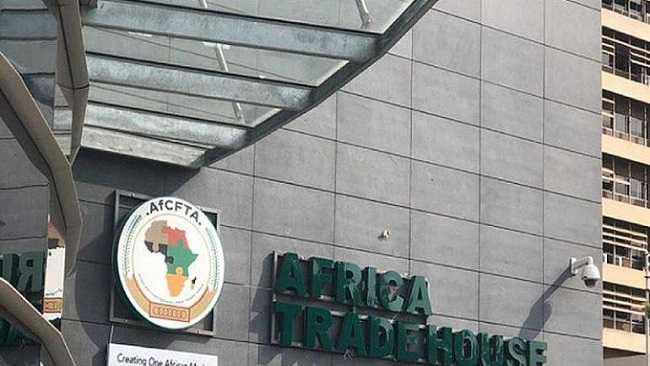
Cameroon has joined the list of countries to formally ratify the African Continental Free Trade Area (AfCFTA) agreement, one month to the commencement of trading, the African Union Commission’s (AUC) Trade Commissioner Albert Muchanga announced today.
“The Republic of Cameroon became the 33rd AfCFTA State Party following the deposit of its instrument of ratification this 1st December, 2020,” Ambassador Muchanga said on his Twitter handle.
Cameroon’s decision comes after Lesotho and Tunisia submitted their own instruments on 27 November, leaving only 21 countries yet to ratify the treaty. They are Benin, Botswana, Burundi, Cape Verde, Central African Republic, Comoros, the Democratic Republic of the Congo, Guinea-Bissau, Liberia and Libya. The others are Madagascar, Malawi, Morocco, Mozambique, Nigeria, Seychelles, Somalia, South Sudan, Sudan, Tanzania and Zambia.
The AfCFTA agreement entered into force on 30 May 2019 after the treaty was ratified by 22 countries — the minimum number required under the treaty — out of the 54 that agreed to be members of the bloc. Eritrea is the only country which has yet to make any commitment to the continental body.
Trading was earlier scheduled to start on 1 July this year but it was postponed for six months owing to the COVID-19 pandemic.
The AfCFTA provides the opportunity for Africa to create the world’s largest free trade area with the potential to unite more than 1.2 billion people in a $2.5 trillion economic bloc and usher in a new era of development. It has the potential to generate a range of benefits through supporting trade creation, structural transformation, productive employment and poverty reduction.
The ECA through its African Trade Policy Centre has been working with the AU to deepen Africa’s trade integration through the effective implementation of the agreement by supporting the AfCFTA ratification process through policy advocacy.
The ECA is also assisting the member-states to develop national strategies for the implementation of the AfCFTA in partnership with the AUC, International Trade Centre (ITC), the UN Conference on Trade and Development (UNCTAD) and a selection of independent trade experts with the financial support of the European Union (EU).
Source: Modern Ghana




















20, December 2020
Cargo ship hijacked en route from Ghana to Cameroon 0
A container ship owned by A.P. Moller-Maersk A/S was attacked off the West African coast, prompting the company to warn of a rising risk from piracy in the area.
The Maersk Cadiz was boarded by “criminals” on Saturday at about 2:30 p.m. Nigeria time while traveling from Tema in Ghana to Kribi in Cameroon, Maersk said in a statement. Nigerian naval ships have arrived to help the vessel, which can transport the equivalent of as many as 4,500 twenty-foot containers.
All 21 crew have been confirmed as safe, and the vessel has been secured, a spokeswoman for Copenhagen-based Maersk said. The ship was carrying cargo when attacked.
The boarding of the Maersk Cadiz follows an attack on another Maersk container ship near the West African nation of Guinea in February. That vessel, known at the time as the Maersk Tema, was owned and operated by two German companies.
The West African coast overtook Southeast Asia last year as the worst area for reported piracy and kidnappings at sea, with the number of seafarers seized rising by more than 50%, according to a study. Despite a global decline in piracy in 2019, attacks have continued in the Gulf of Guinea this year, especially off Nigeria’s coast.
“We are very concerned about the increased security risk from armed attacks on merchant vessels in the area,” Maersk Chief Technical Officer Palle Laursen said in a statement. “The risk has reached a level where local governments and the international community must take action to deal effectively with an unacceptable situation.”
The Maersk Cadiz was built in 2013 and sails under the Singaporean flag.
Source: Bloomberg.com