21, May 2018
Killings, Kidnappings Mar Cameroon National Day Celebrations 0
As President Paul Biya led National Day celebrations in Yaounde on Sunday, several policemen were killed, soldiers wounded and mayors kidnapped in Cameroon by suspected armed separatists who had warned against celebrating the central African state’s national day in English-speaking regions.
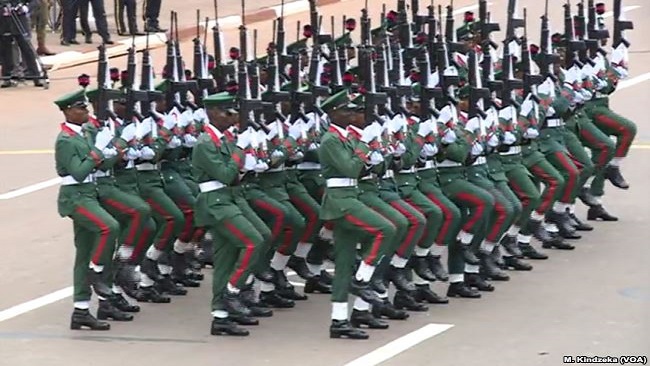
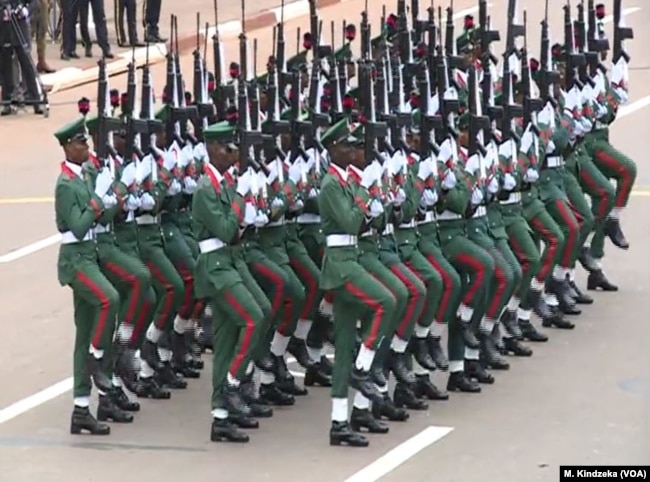
A Nigerian military contingent — part of the Cameroon effort to fight a Boko Haram insurgency — sang before Biya, cabinet ministers, diplomats and thousands of people during the National Day parade in Yaounde.
Nigerian Lieutenant Colonel Mochtar Sani Daroda said the soldiers were invited by Biya to participate as recognition for their fight against the militant group that has left 25,000 people dead and more than 2.6 million displaced in Cameroon, Nigeria, Chad and Niger.
“The class brigade is the elite brigade that carries out national functions on behalf of the Nigerian army,” Daroda said. “They also provide security of the president and the entire federal capital city [Abuja ] and they have been selected to participate in one of the parade we hold in very high esteem. A very special corps to take part in your [Cameroon] parade.”

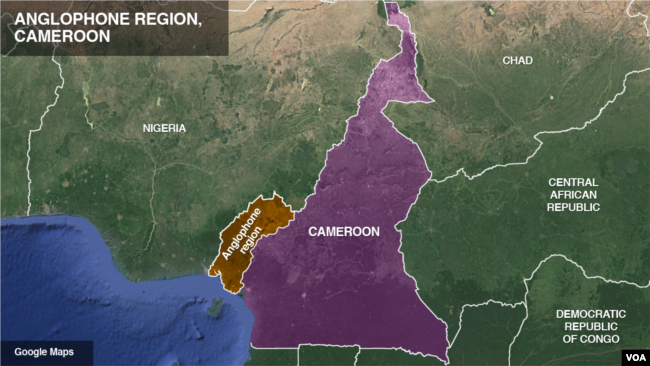
But tensions flared in many towns and villages of Cameroon’s English-speaking regions, including Konye, Batibo, Ekona and several villages.
At least two policemen and several people were killed.
In a recording provided by suspected separatists, Mayor Ekuh Simon of Bangem, an English-speaking town in southwest Cameroon, said he was kidnapped with his deputy for distributing uniforms for residents to march in National Day ceremonies. Separatists had called for a boycott of events.
Simon said he is being held by Ambazonia restoration forces.
Ambazonia is what separatist’s call their self-declared republic in the English-speaking regions of Cameroon.
Nobert Ngu says he escaped Saturday from Ekona to Yaounde when armed separatists started shooting to stop people from celebrating National Day.
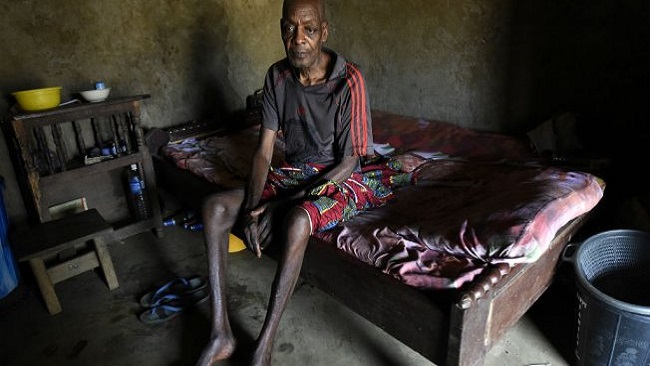
Ngu said his house was attacked. “Some boys saw my father inside the house, attacked my father. I lost my father because of this crisis,” he added.
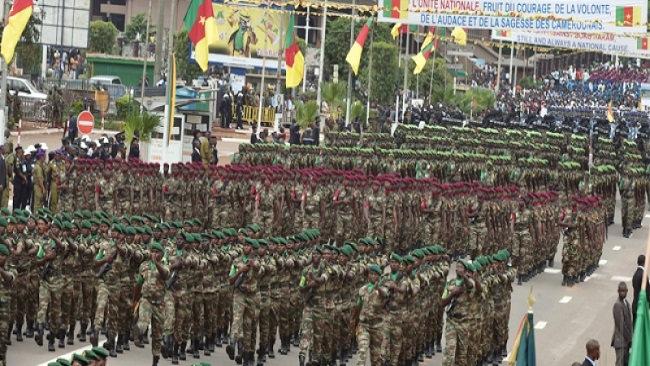
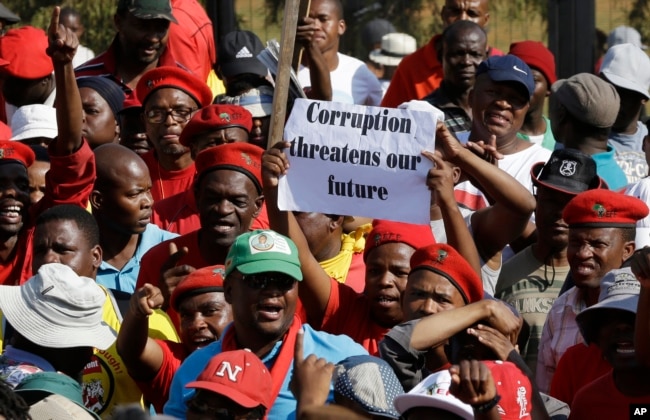
Biya’s government had asked people to come out in numbers to celebrate National Day as a sign of unity.
Tensions in Cameroon began in November 2016 when English-speaking teachers and lawyers protested, saying they were frustrated with the dominance of the French language and the marginalization of the Anglophone population.
The crisis intensified early this year when separatist leader Ayuk Tabe was arrested with 48 others in Nigeria and extradited to Cameroon.
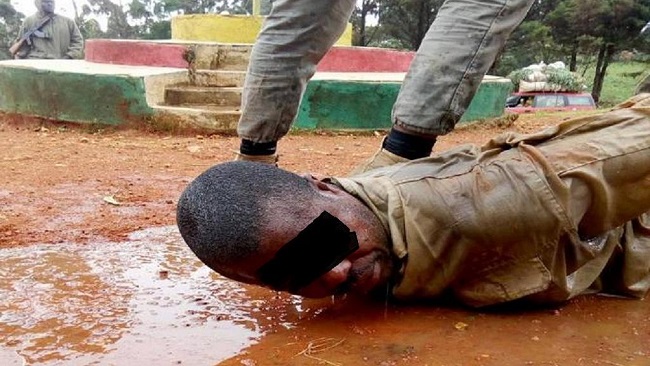
International rights groups have condemned the harsh government crackdown on the English speaking regions and indiscriminate arrests of suspects.
Culled from VOA











21, May 2018
Southern Cameroons Crisis: French Cameroun gendarmerie officer killed 0
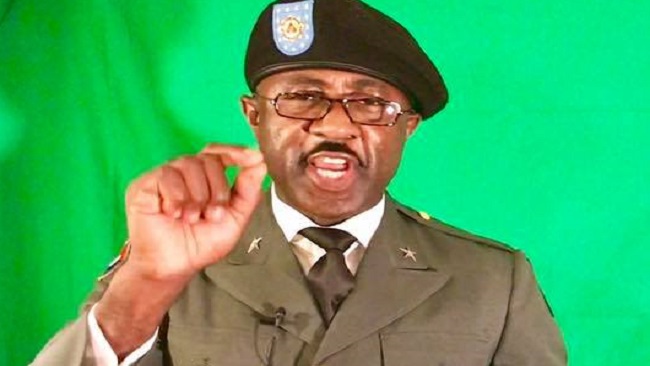
A law enforcement officer was killed on Monday by Anglophone secessionists in Cameroon, as English speaking Cameroonian activists continue to seek independence with bombs and guns.
Mahamat Aldou Djaribe, 24, an indigene of Kousseri in Cameroon’s far north, was killed on Monday in the troubled Southwestern region, reported local newspaper, L’Oeil du Sahel.
Since calls for independence by South West and North West regions activists in Cameroon escalated last year, many soldiers and policemen have been gunned down while the Cameroonian military has also killed, arrested and tortured many activists.
Cameroon, a country in central and west Africa, has about 81 percent of people who speak French and about 19 who speak English, as a result of brutal colonialism from France and the United Kingdom, following the defeat of the German armies in the first and second world wars.
Germany was in charge of Cameroon until the first world war broke out and Cameroonians spoke German with no one speaking English or French until the country was divided and shared between Britain and France who won the war.
Cameroonians began to advocate for the unification of the divided country after the war. But it took time and it was only in 1960 and 1961 that Cameroon under France and then Britain became independent.
In 1972, a referendum brought both Cameroons together again similar to the country that existed before it was divided by France and the UK, although by then, some territories had been lost.
Since the re-unification of English and French speaking Cameroons in 1972, English speaking Cameroonians have complained of marginalization, a charge often denied by equally impoverished French speaking Cameroonians, especially those in the country’s far north where Boko Haram has been wreaking havoc since 2014 without a single visit by President Paul Biya who has been in power for 35 years since 1982.
While English speaking Cameroonians want Cameroon to go back to the time before 1972, French speaking Cameroonians argued that Cameroon had always been one country before France and Britain divided and shared it and would remain one country.
Following protests for equality and justice late in 2016 in the two Anglophone regions in Cameroon that were met with force by the Cameroonian military, Anglophone activists said they were declaring independence.
They called their “new country” the Republic of Ambazonia. But the activists were arrested in Nigeria and extradited to Cameroon. Violence has continued to escalate for the liberation of the activists and the independence of North West and South West regions in Cameroon.
Source: Today News Africa