5, August 2020
Two huge Beirut explosions kill 78, injure thousands 0
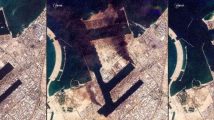
Rescuers worked through the night into Wednesday after two enormous explosions ripped through Beirut’s port, killing at least 78 people and injuring thousands, as they wrecked buildings across the Lebanese capital.
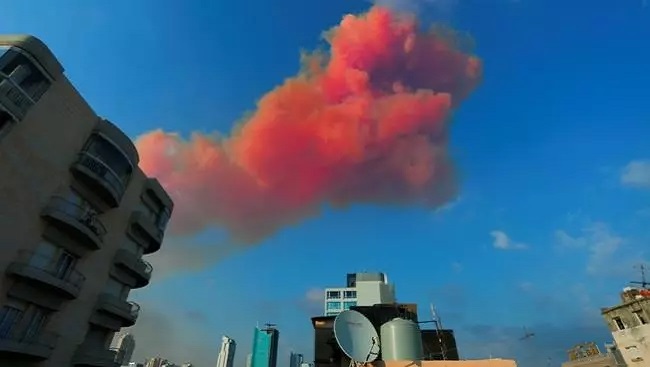
The second blast sent an enormous orange fireball into the sky, immediately followed by a tornado-like shockwave that flattened the port and shattered windows across the city.
The explosions — which were heard in Nicosia, 240 kilometres (150 miles) away in Cyprus — were logged by seismologists, registering as the equivalent of a 3.3-magnitude earthquake.
Bloodied, dazed and wounded people stumbled among the debris, glass shards and burning buildings in central Beirut.
Around 4,000 people were hurt by the blasts, with injuries recorded right across the city.
Lebanon is already reeling from an economic crisis that has left more than half of the population in poverty. The situation has been worsened in recent months by the coronavirus pandemic.
Prime Minister Hassan Diab said 2,750 tonnes of the agricultural fertiliser ammonium nitrate that had been stored for years in a portside warehouse had blown up, sparking “a disaster in every sense of the word”.
“What happened today will not pass without accountability,” said Diab. “Those responsible for this catastrophe will pay the price.”
General Security chief Abbas Ibrahim said the material had been confiscated years earlier and stored in the warehouse, just minutes from Beirut’s shopping and nightlife districts.
A soldier at the port, where relatives of the missing scrambled for news of their loved ones, told AFP: “It’s a catastrophe inside. There are corpses on the ground. Ambulances are still lifting the dead.”
A woman in her twenties stood screaming at security forces, asking about the fate of her brother, a port employee.
“His name is Jad, his eyes are green,” she pleaded, to no avail as officers refused her entry.
“It was like an atomic bomb,” said Makrouhie Yerganian, a retired schoolteacher in her mid-70s who has lived near the port for decades.
“I’ve experienced everything, but nothing like this before,” even during the country’s 1975-1990 civil war, she said.
“All the buildings around here have collapsed.”
AFP correspondents across the city saw shop and apartment windows blown out and streets covered with broken glass.
Photos posted online showed damage to the inside of Beirut airport’s terminal, nine kilometres from the explosion.
Hospitals already struggling with the country’s coronavirus outbreak were overwhelmed by the influx of wounded people and the country’s Red Cross called for urgent blood donations.
– ‘We saw the mushroom’ –
As the national defence council declared Beirut a disaster zone, Diab appealed to Lebanon’s allies to “stand by” the country and “help us treat these deep wounds”.
President Michel Aoun declared three days of mourning, and announced he would release 100 billion lira ($66 million) of emergency funds.
Condolences poured in from across the world with Gulf nations, the United States and even Lebanon’s arch foe Israel offering to send aid. France also promised to send assistance.
AFP video footage showed areas of near-complete devastation, with cars flipped onto their roofs, warehouses flattened and survivors drenched from head to toe in their own blood.
“We heard an explosion, then we saw the mushroom,” said a Beirut resident who witnessed the second deafening explosion from her balcony in the city’s Mansourieh district.
“The force of the blast threw us backwards into the apartment.”
An AFP correspondent at the scene minutes after said every shop in the Hamra commercial district had been damaged, with entire storefronts destroyed and many cars wrecked.
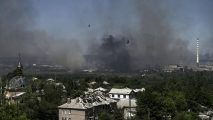
A huge blaze sent up black smoke from the port area, as helicopters dumped water on burning buildings.
A ship moored off the port was on fire, and the blasts also damaged a vessel deployed with United Nations peacekeeping force UNIFIL and injured some of its personnel.
– ‘Like an earthquake’ –
Hundreds shared their shock and grief on social media.
“Buildings are shaking,” tweeted one resident, while another wrote: “An enormous, deafening explosion just engulfed Beirut. Heard it from miles away.”
Online footage from a Lebanese newspaper office showed blown-out windows, scattered furniture and demolished interior panelling.
The explosions hit a country already reeling from its worst economic crisis in decades.
The local currency has plunged, and businesses have shuttered en masse, as poverty and unemployment have soared at an alarming rate.
Charity Save the Children said “the incident could not have occurred at a worse time”.
Source: AFP

















5, August 2020
Nations tighten mask rules, lockdowns as Covid-19 deaths approach 700,000 0
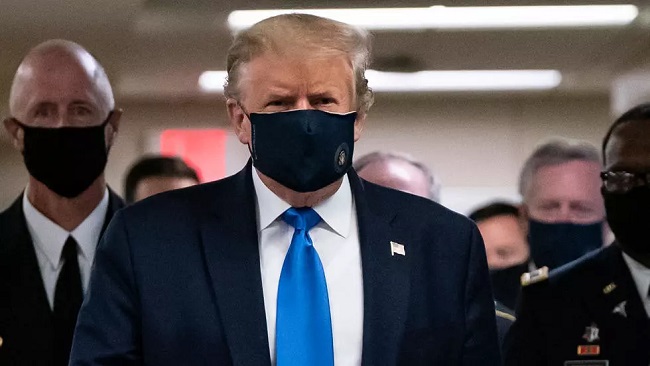
France and the Netherlands are gearing up for stricter mask-wearing rules to fight the coronavirus as the global death toll from the pandemic neared 700,000.
Paris, Toulouse and other cities announced that the wearing of masks would be compulsory in particularly busy streets and squares. People already have to wear them inside most private businesses and all public buildings.
A scientific committee advising the French government warned that the country could lose control of its spread “at any time.”
In the Netherlands, the same mask-wearing measure will be applied in Rotterdam and the famous red-light district of Amsterdam from Wednesday.
And Ireland postponed the reopening of pubs and other nightspots on the advice of scientists, concerned about rising infections.
In other developments, the Philippines placed millions of people back under lockdown. And the hunt for an effective treatment continued with the United States launching trials of an antibody treatment for COVID-19.
Philippines resumes lockdown
Millions of people in the Philippines were ordered to stay home Tuesday in a bid to contain the rising rate of infections, and relieve pressure on overwhelmed hospitals.
More than 27 million people on the main island of Luzon, including the capital Manila, went back into a partial lockdown.
People have been told to stay home unless going out to buy essential goods, for exercise or for work, after the number of recorded infections surged past 100,000.
But with only 24 hours’ notice of the shutdown, many people were stranded in Manila, unable to get back to their hometowns after public transport and domestic flights were halted.
More than 18 million people worldwide have been infected with the virus since it first emerged in China late last year.
The worst hit country, the United States, had added 1,300 new deaths as of Tuesday evening, bringing its toll to nearly 156,000, according to Johns Hopkins University. The caseload grew by 53,847 to nearly 4.8 million, it said.
Far from slowing down, the latest figures show that the rate of infection is accelerating.
Brazil is driving a surge in Latin America and the Caribbean, where infections passed five million on Monday.
South America’s largest country has recorded more than 2.75 million cases, and nearly 95,000 deaths, nearly half the region’s 203,800 deaths.
US announces clinical trials
The world’s hope of ending the current cycle of outbreaks and lockdowns rests on finding a treatment.
The United States announced Tuesday it had begun late-stage clinical trials into a drug they hope will be an antibody against the coronavirus.
The Phase 3 trial will initially enroll some 300 volunteers around the world who have been hospitalized with mild to moderate COVID-19 with fewer than 13 days of symptoms.
On Monday, Russia said it aimed to launch mass production of a vaccine in September and turn out “several million” doses per month by next year.
In response, the World Health Organization on Tuesday urged Russia to follow the established guidelines for producing safe and effective vaccines.
Just a day earlier, the agency’s chief Tedros Adhanom Ghebreyesus called on countries to focus on basic suppression measures, such as contact tracing, maintaining physical distance and wearing a mask.
“There’s no silver bullet at the moment — and there might never be,” he warned.
‘Extraordinarily widespread’
Despite the grim numbers in America, President Donald Trump adopted a resolutely optimistic tone.
“We’re seeing indications that our strong mitigation efforts are working very well, actually, especially to protect those who are most at risk,” he said during a White House press conference addressing the pandemic.
In a morning tweet, he lashed out at his coronavirus response coordinator Deborah Birx after she warned the virus was “extraordinarily widespread” in the US.
Trump — angered by what he sees as overly pessimistic media coverage of his much-criticized handling of the epidemic — accused her of giving in to pressure to sound negative about the new surge.
“Deborah took the bait & hit us. Pathetic!” Trump wrote on Twitter Monday.
Despite rising infection numbers in Europe, some countries are pushing ahead with plans to reopen schools and finding ways to keep their battered tourism sectors functioning.
Angry Nadal withdraws from US Open
Fears over the virus led defending champion Rafael Nadal to announce on Tuesday that he will not play the US Open, which is due to start in New York on August 31.
“The situation is very complicated worldwide, the COVID-19 cases are increasing, it looks like we still don’t have control of it.” Nadal said on Twitter.
“This is a decision I never wanted to take… for the time being I rather not travel.”
Women’s world number one Ashleigh Barty withdrew from the tournament last week citing “significant risks” from COVID-19.
(AFP)