
5, June 2025
Cameroonians in Texas face deportation as Trump moves to end protected status 0
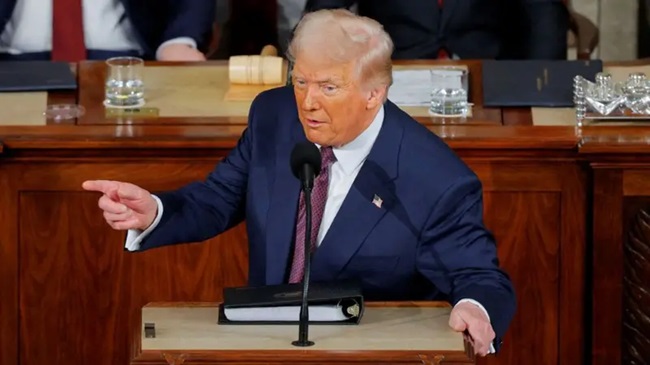
The Trump administration gave notice in the Federal Register on Wednesday that it is withdrawing Temporary Protected Status (TPS) for Cameroonians in the United States, effective Aug. 4. That could mean deportation for thousands of Texas residents.
Texas hosts the second-largest community in the U.S. of people from the West African nation of Cameroon.
“For about the past decade, Cameroon has been in a state of armed conflict,” said Ryan Downer, legal director of the Washington Lawyers’ Committee for Civil Rights and Urban Affairs. “About 6,000 people have been killed. As a result of the conflict, more than a million people have been displaced, either internally or to neighboring countries. And this is a clash between government forces and armed separatists in the country, and there have been multiple terrorist attacks over the course of that time.”
TPS is designed to provide temporary haven in the U.S. for migrants from countries where their lives might be in danger if they were forced to return because of such conditions as wars or environmental disasters.
The Washington Lawyers’ Committee and other civil rights organizations previously sued the Trump administration, when it signaled it planned to end TPS for Cameroonians and Afghans without providing the 60 days’ notice required by statute. The Department of Homeland Security subsequently published a notice in mid-May stating that TPS for Afghans will end July 14.
But Downer said the administration still isn’t complying with the statute, because the law requires the notice be given 60 days before the current grant of TPS is set to expire. In the case of Cameroonians, that date is June 7.
“Because there was no termination notice issued 60 days prior to the expiration date,” Downer said, “the statute says there’s an automatic six-month extension.”
If a judge agrees, that would extend Temporary Protected Status for Afghans to November of this year and for Cameroonians to December.
“We understand that the status is supposed to be temporary, and there are periodic reviews to assess whether or not an extension or termination is warranted,” Downer said. “But part of the purpose of the statute was to provide some measure of stability for TPS holders, so that your status can’t be yanked out from underneath you the next day, so that folks have some time to organize their lives, they have time to make arrangements for where they’re going to live, and to give some measure of predictability to the lives of people who – by definition, if you’re a TPS holder – are in a vulnerable state.”
The U.S. Department of Homeland Security did not respond immediately to a request for comment on Wednesday.
The Trump administration’s moves follow a victory in the Supreme Court, in which eight of the nine justices ruled the White House had the power to end TPS for thousands of Venezuelans in the U.S.
“That decision didn’t have a lot of reasonings, unfortunately, so it’s difficult to decipher exactly what the Supreme Court was doing there other than what was presented in the text of the opinion, which is just granting a stay of the district court’s order in that case, but we don’t know yet what the implications are going to be,” Downer said.
Source: Houston Public Media





















7, June 2025
Football: Cristiano Ronaldo says Ballon d’Or ‘should go to Ousmane Dembele 0
Five-time Ballon d’Or winner Cristiano Ronaldo said Saturday the individual honour should be awarded to a player who won the Champions League.
Speaking ahead of Sunday’s Nations League final in Munich between Portugal and Spain, the veteran said “trophies” should determine who wins the Ballon d’Or.
“In my opinion, whoever wins it should be on a team that has won trophies. The Ballon d’Or winner should be in a team that has won the Champions League,” the 40-year-old forward told reporters.
First awarded in 1956 by French magazine France Football, the Ballon d’Or is awarded to the player considered the best over the previous season.
Paris Saint-Germain’s 5-0 thumping of Inter Milan in the Champions League final last Saturday led to growing calls for Ousmane Dembele to win this season’s gong.
Spain starlet Lamine Yamal’s superb display in Thursday’s 5-4 Nations League semi-final win over France however had some arguing the teenager should be awarded the Ballon d’Or, which would make the 17-year-old the youngest winner in its history.
France coach Didier Deschamps backed Dembele for the award, saying “considering the season Ousmane is having, he deserves it and that’s all I wish for him”.
At a press conference in Stuttgart on Saturday, France captain Kylian Mbappe told reporters he backed Dembele.
“Does anyone really need me to explain? Right now we’re talking about Lamine Yamal and Ousmane Dembele, but I’m voting for Dembele.”
Ronaldo said he “cannot tell you who deserves it” this season.
Ronaldo’s five wins is bettered only by Argentinian Lionel Messi, who has won the award eight times.
The duo had a monopoly on the award for a decade from Ronaldo’s first win in 2008 to his last in 2017.
The current holder is Spain and Manchester City midfielder Rodri.
Source: AFP