
25, May 2026
Pope Leo apologises for Church’s historic role in slavery 0
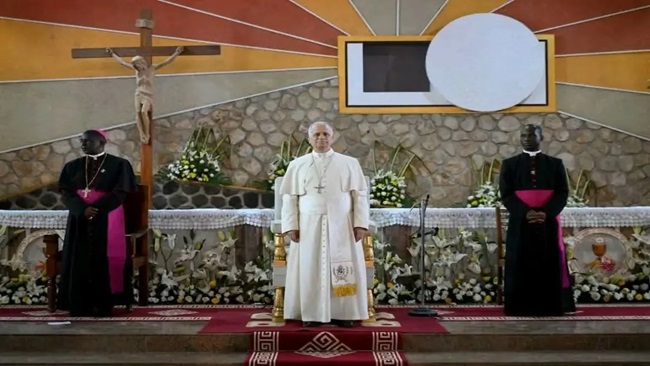
Pope Leo on Monday issued the clearest apology yet from a pontiff for the Catholic Church’s role in slavery, acknowledging both its delay in condemning the practice and its historic involvement in legitimising it.
In a key passage of his first papal encyclical, Leo said the Church had taken centuries to fully recognise “the scourge of slavery” as incompatible with human dignity, calling the legacy “a wound in Christian memory.”
“For this, in the name of the Church, I sincerely ask for pardon,” he wrote in the wide-ranging manifesto, expressing “deep sorrow” for the suffering endured by enslaved people.
Leo acknowledged that Church authorities had, at times, responded to rulers by regulating and legitimising forms of subjugation, including the enslavement of non-Christians.
He also acknowledged that before that time, in the Middle Ages, ecclesiastical institutions had their own slaves.
He said the Church only reached a “formal, absolute and universal condemnation” of slavery in the 19th century, under Pope Leo XIII, after what the current pope described as a long period of inconsistency in teaching and practice.
PREVIOUS PAPAL STATEMENTS ON SLAVERY
The remarks mark the most explicit papal admission to date of institutional responsibility, going beyond earlier statements by previous popes that focused on the actions of individual Christians rather than the Vatican itself.
Pope John Paul II, during a 1985 visit to Africa, asked forgiveness from Africans for the suffering caused by “men belonging to Christian nations” in the slave trade.
Leo’s predecessor Francis condemned the plight of modern-day slaves and formally repudiated papal documents from the 15th century which were used by colonial powers to give legitimacy to their actions, which included slavery.
But such statements stopped short of directly addressing the role of the papacy, instead framing responsibility in broader terms tied to Christians or historical circumstances.
Leo’s intervention was made in his debut encyclical, “Magnifica Humanitas” (Magnificent Humanity), which addresses the ethical challenges of artificial intelligence and warns of new forms of exploitation linked to the global economy.
Genealogical research published after Leo’s election last year showed that history’s first U.S.-born pope had a diverse ancestry that included both enslaved people and slaveholders.
Source: Reuters





















26, May 2026
Biya regime tightens gold mining controls to curb smuggling 0
Cameroon announced on May 21 new measures to tighten control over artisanal gold mining, targeting illegal operations, gold smuggling and revenue losses in the sector.
The reforms were unveiled during a cabinet meeting chaired by Prime Minister Joseph Dion Ngute in Yaounde. They include a minimum monthly declaration threshold of five kilogrammes of gold for companies seeking exploitation rights and an environmental hazard tax of CFA 63 million for operators working on more than 21 hectares.
The government said the measures are aimed at improving transparency in gold production, increasing state revenues and strengthening oversight of mining activities.
Interim Minister of Mines, Industry and Technological Development Fuh Calistus Gentry said illegal mining had created major discrepancies between officially declared production and volumes traced abroad. He said the reforms would help formalise the sector and improve state control over gold exports.
“Illegality represents the gap between what is declared and what is exported. Once restructuring is accepted, it will generate immediate revenue for the State estimated in several hundreds of billions. We are also projecting a minimum increase of three tonnes in the State’s gold reserves every year,” he said.
The minister added that the reforms would strengthen the role of Cameroonians in artisanal mining, while foreign operators would be limited to technical and financial partnerships as provided by law.
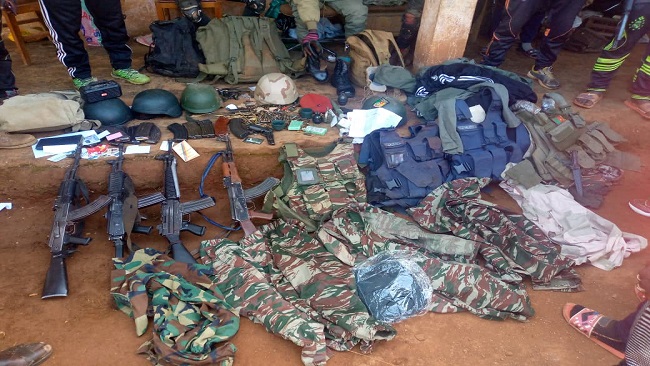
Government figures presented during the meeting showed that nearly 200 illegal semi-mechanised mining sites had been identified in the Adamawa and East regions, compared with only 57 officially authorised gold operations. Authorities said the illegal activities had contributed to gold smuggling and major losses in public revenue.
“If 100 companies align with the declaration threshold, projections already point to 10 tonnes being declared. Many companies are already complying, and tax payments are now being enforced,” Fuh Calistus said.
Officials also said mining operators would face stricter environmental restoration obligations under the “polluter pays” principle. Between 2020 and 2026, the government issued 57 environmental conformity certificates for mining and quarry projects.
On labour issues, Minister of Labour and Social Security Grégoire Owona said more than 1,700 enterprise inspections were carried out during the first quarter of 2026, leading to 188 formal notices against employers found in violation of labour regulations.
“Our role is to protect workers against all forms of abuse. We will intensify inspections, continue sensitisation campaigns on workers’ rights and finalise reforms to the Labour Code to strengthen protection mechanisms,” he said.
At the end of the meeting, Prime Minister Joseph Dion Ngute instructed ministries to strengthen coordination and ensure strict enforcement of the new measures, particularly on illegal mining, environmental compliance and labour protection.
Source: Business in Cameroon