
22, May 2025
Gunfire rips through Southern Cameroons on National Day 0
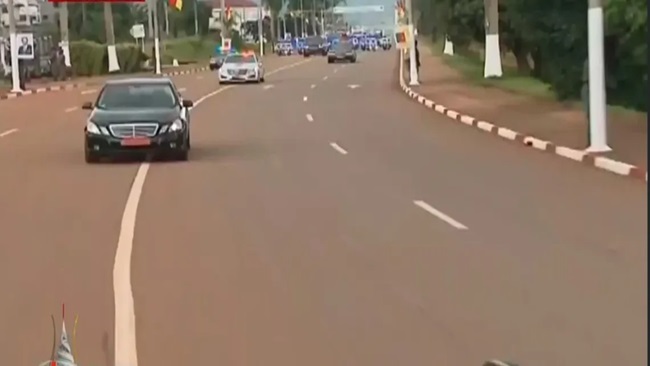
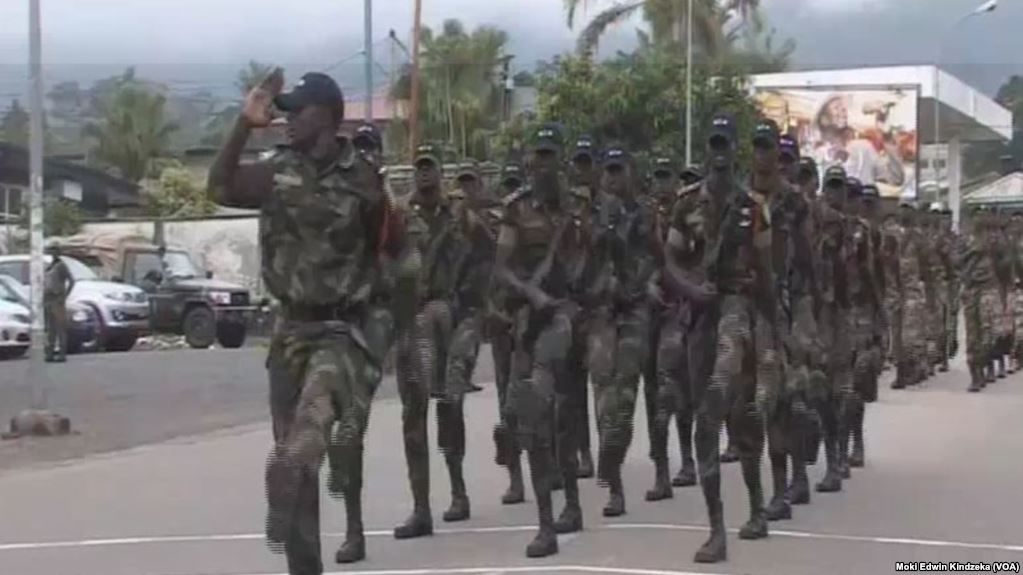
Military parades and civilian march pasts marked the 53rd edition of Cameroon’s National Day on May 20. It’s frequently framed as a day of national unity by the authorities, but that framing rings hollow with millions of citizens in Cameroon’s English-speaking North West and South West regions.
For many in the two regions which constitute 20 percent of Cameroon’s nearly 30 million inhabitants, it’s a stark reminder of betrayal, marginalization, and bloodshed – and that was on full display on Tuesday in several parts of the Anglophone regions.
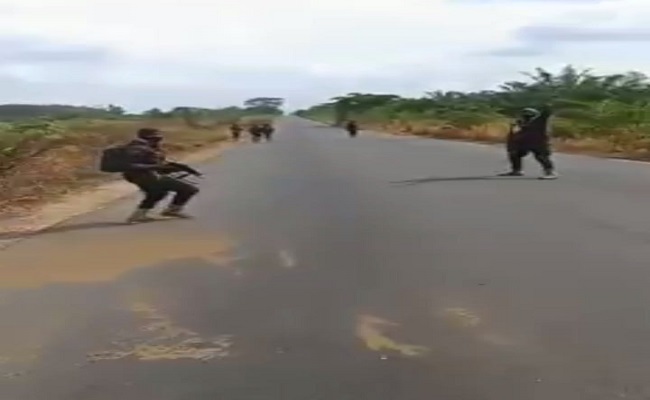
Images of brute violence surfaced online showing suspected separatists beating up school children who had set out to March.
In Kumbo Diocese – a flashpoint of separatist violence, Bishop George Nkuo told Crux that the town woke up Tuesday to the sound of gunfire and explosions.
“We are celebrating national day in Cameroon today and this morning we got up in Kumbo to gunshots and a heavy explosion,” Nkuo said.
“This again is to announce that all is not well in Cameroon. While some people in Cameroon may be celebrating this morning, we got a strong reminder here that there is no peace and people are living in fear,” he told Crux.
This dates back to May 20, 1972. On that day, a controversial referendum organized by Cameroon’s first president, Ahmadou Ahidjo, scrapped the federal constitution that was the mainstay of a fragile union between La Republique du Cameroun – that gained independence from France in 1960 – and the British Cameroons, which gained independence from Britain a year later.
The resultant unitary state was seen by Anglophone Cameroonians as a violation of the federal constitution, and a step towards the assimilation of Anglophones. And so, what Ahidjo sold as a blueprint for national unity ended up as the seeds of today’s disunity.
For decades, Anglophones complained. They protested, asking for equal treatment under the law, but these complaints were either just ignored, or brutally suppressed.
The pent-up anger burst into the open in 2016 when teachers and lawyers in the two Anglophone regions took to the streets to protest the imposition of French in Anglo-Saxon schools and courts. Again, the government responded by imprisoning the leaders of the teachers and lawyers trade unions, and by using lethal force against protesters.
The door to dialogue was thus shut close, and a separatist uprising ensued, with many taking up arms to fight for the creation of a new state for Anglophone Cameroonians to be called Ambazonia.
Nearly a decade of fighting has left at least 60,500 people dead, and more than a million displaced. Entire villages have been burned down; schools and hospitals have been destroyed.
“Those of us who love this land want to see concrete measures taken to arrest this senseless war,” Nkuo told Crux.
“It’s a cry for peace, justice and reconciliation. Our people have suffered enough. There is no celebration here in Kumbo and there is a deadly silence,” the bishop said.
The government has made some efforts to bring about peace. In 2019, it initiated what it called a Major National Dialogue.
The National Dialogue made a series of proposals, including the adoption of a special status for the two Anglophone regions; the restoration of the House of Traditional Chiefs; the immediate relaunch of certain airport and seaport projects in the two regions; the rapid integration of ex-combatants into society; the deployment of Bilingual teachers to Anglophone schools, and the deployment of Anglophone lawyers to Common Law Courts.
Separatists have dismissed all these concessions as too little, too late, insisting they will continue to fight for the freedom of “Ambazonia.”
It seems like the option for independence resonates with most Anglophone Cameroonians, going by the results of a study carried out in 2019 by the late Cardinal Christian Tumi.
The prominent religious leader conducted a survey before the Grand National Dialogue which revealed that 69 percent of Anglophone respondents expressed a preference for secession rather than federation or decentralization. Interestingly, the questionnaire did not explicitly offer secession as an option, but many respondents wrote it in under “other options.”
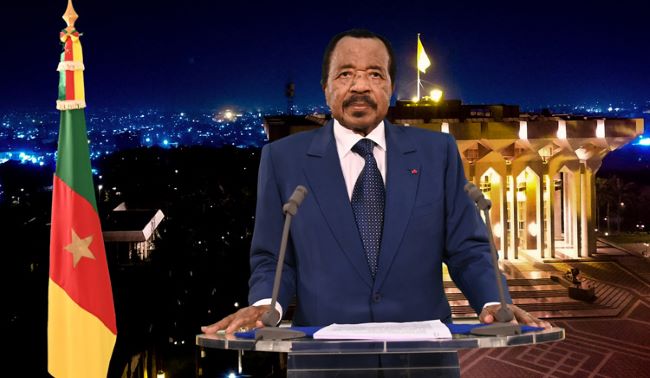
President Paul Biya has made it clear that Cameroon will remain “one and indivisible.”
The celebration of the National Day is yet another emphatic statement to that effect.
Archbishop Andrew Nkea, who doesn’t believe that the solution to the Anglophone Problem lies in secession, told Crux that only love will help Cameroon overcome its many problems.
“As Cameroon celebrates its National Day, I have only one message to all Cameroonians, citizens and leaders: Love Cameroon,” Nkea told Crux.
“When I look at the way Cameroonians function, it is difficult to be convinced if we love our country. Love Cameroon and always work for the good of the country and not for individual benefit,” he said.
“Love Cameroon means dying to ourselves and sacrificing what we want for ourselves so that the country may live. Love Cameroon,” the archbishop said.
Source: Crux











22, May 2025
May 20: Pope Leo XIV sends blessings, wishes for prosperity 0
On the occasion of Cameroon’s annual National Day marked on May 20, Pope Leo XIV has extended his prayerful best wishes and Papal blessings to the Central African nation’s President and citizens, and called for continued commitment to peace, justice, and respect for human dignity.
In a statement issued Monday, May 19 through the Apostolic Nuncio in Cameroon, Archbishop José Avelino Bettencourt, the Holy Father wishes the people of God in Cameroon prosperity that is based on the country’s rich heritage.
“On the occasion of the national day of the Republic of Cameroon, I am pleased to offer to Your Excellency the best wishes for you and for your fellow citizens,” Pope Leo XIV says in the message addressed to Cameroon’s President, Paul Biya.
The Roman Pontiff adds, “I entrust to the lord everyone’s efforts to build a future of peace and prosperity by drawing on the rich human and cultural heritage of your country, with a concern for justice and respect for each person.”
“May God pour over your excellency and all the Cameroonian people His abundant blessings,” the Holy Father implores in favour of the people of God in Cameroon celebrating their 2025 National Day, organized under the theme, “Army and Nation united for a Cameroon turned towards peace and prosperity”.
Cameroon’s National Day marks the country’s transition to a unitary state in 1972, following a national referendum. Prior to this, the Central African nation operated under a federal system, with East and West Cameroon functioning semi-autonomously.
Initiated by the then President, Ahmadou Ahidjo, the 1972 referendum led to the adoption of a unitary constitution and the birth of the United Republic of Cameroon.
May 20 has since become a symbol of national unity and a day that brings together and celebrates Cameroon’s unity in the diversity of ethnic, linguistic, and cultural communities.
Cameroon is to hold a presidential Election in October 2025.
President Biya, who has held the seat since 1982, is expected to vie for an eighth presidential term in the Central African nation, where Presidents have a seven-year mandate. His “extraordinarily long tenure” was occasioned by constitutional amendments that President Biya’s party, Cameroon People’s Democratic Movement (CPDM), spearheaded in 2008, which resulted in the abolition of the two-term presidential limit.
The Cameroonian President, Biya, is Africa’s second-longest-serving Head of State after President Teodoro Obiang of Equatorial Guinea.
The Central African nation’s English-speaking regions plunged into conflict in 2016 after a protest by lawyers and teachers turned violent. An armed movement of separatists claiming independence for the so-called republic of Ambazonia emerged following the government’s crackdown on protesters.
School boycotts have become common in the Cameroonian region as have enforced moratoriums on public life known as “ghost towns”.
According to a March 2025 report, Cameroon’s Anglophone crisis “has caused over 900,000 people to flee internally and 60,000 people to flee abroad.”
The report indicates that “as of February 2025, more than 500,000 internally displaced people were in Anglophone-majority regions.”
The UNHCR has reported that Cameroon plays host to over 400,000 refugees primarily coming from the Central African Republic (CAR), Nigeria, Chad, and Niger; more than 17,000 asylum seekers; and over 1 million Internally Displaced Persons (IDPs) “with an additional 658,544 returnees.”
More than 3.3 million people stand in need of humanitarian aid in Cameroon.
In January, the President of the National Episcopal Conference of Cameroon (NECC) called on the people of God in the country to take personal responsibility in realizing the development of the country.
“There is a need, therefore, for every single Cameroonian to take his or her responsibility for the construction of our country,” Archbishop Andrew Nkea Fuanya said during the opening ceremony of the 48th Annual Seminar of NECC in the Catholic Diocese of Buea.
The Local Ordinary of Cameroon’s Bamenda Archdiocese reaffirmed the Church’s commitment to its evangelizing mission, saying that NECC members “will continue to serve reconciliation, justice, and peace.”
Source: aciafrica