
15, November 2025
Yaoundé: Human Rights Watch accuses security forces of post-election violence 0
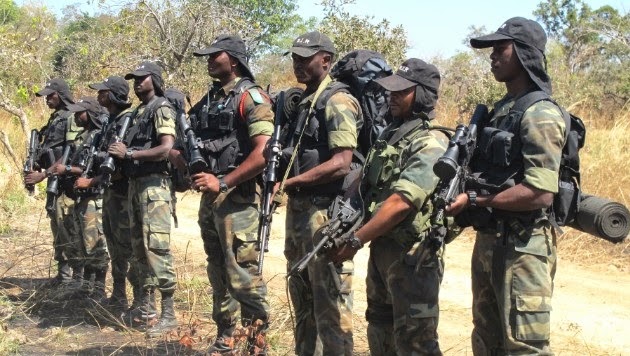
Human Rights Watch (HRW) has accused Cameroonian security forces of using lethal force, committing killings, and arbitrarily detaining hundreds in a violent crackdown following the disputed presidential election on 12 October.
In a report released on Wednesday, November 12, in Nairobi, HRW said police and gendarmes fired live ammunition and tear gas to disperse opposition-led protests challenging President Paul Biya’s re-election, officially declared on 27 October with 53.66% of the vote.
Witness testimonies, including from relatives of victims, lawyers, and opposition figures, documented multiple killings, injuries, and arrests across several cities, with UN sources reporting 48 deaths and opposition groups claiming 55.
The rights group said hundreds of people, including minors, have been detained since the unrest, with legal aid sources reporting as many as 2,000 detainees nationwide, many without appearing before a judge. HRW’s senior Africa researcher, Ilaria Allegrozzi, called on Cameroonian authorities to release all peaceful protesters, investigate and prosecute those responsible for violence, and ensure due process for all detainees.
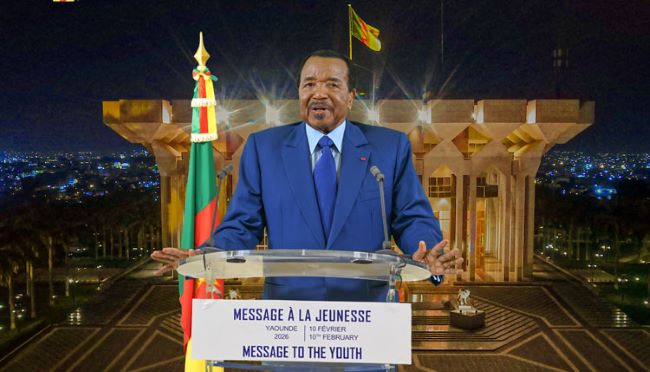
Cameroon’s Government, through Communications Minister Rene Emmanuel Sadi, defended the security operations, saying authorities were responding to “illegal gatherings, roadblocks and violent mobs,” and warned that those inciting unrest would face the full force of the law. President Biya, the world’s longest-serving head of state since 1982, removed presidential term limits in 2008 and continues to maintain power amid allegations of electoral fraud, with his main challenger, Issa Tchiroma Bakary, having declared himself the winner.
Source: Medafricatimes















16, November 2025
Will Fr. Paul Verdzekov recognize the refurbished and rededicated Cathedral in Bamenda were he to return today? 0
Of course, not! And he is not returning! We, who enjoyed the episcopacy of the revered Fr. Paul Verdzekov, tend to seek an escape to a supposed golden era under his long reign of 36 years. His resting place in the St. Joseph Metropolitan Cathedral has also received a facelift, and a chapel created, which may be soon named “In Paradiso”. Verdzekov, would have been “scandalized” by such ostentatious opulence. Yet, how much this coheres with his quest for excellence is a puzzling conundrum. For one thing, he was all about the truth, and hence his coat of arms: Et veritas liberabit vos: And the truth will free you. Yet the truth about this refurbishment and rededication today, of the Cathedral which he constructed fifty years ago is that Verdzekov would have borrowed the beautiful verse from his namesake, St. Paul and paraphrased it thus: “I built, Cornelius maintained and Andrew has refurbished. To God be the Glory” (1 Cor. 3:6-8).
In 1996, as I prepared for the priesthood, I had the privilege of spending my pastoral year at the St. Gabriel’s Parish, Bafmeng with Rev. Fr. Peter Amah, that very soft-spoken and genteel priest, who was the parish priest, and Rev. Fr. Arnold Ambe, as the curate, both of blessed memory. Fr. Ambe also taught Religious Studies in the Government High School, Bafmeng. Once there was a schedule conflict, and the parish priest asked the curate to go celebrate Mass in an outstation. The curate, who had a class at that time, was torn between going to celebrate the Mass and going to teach. He evoked the principle of higher authority, noting that the Catholic Education Secretary is higher in authority than the parish priest, and so in this instance he was going to go and teach. Then he added, the parish priest is busy shaping stones and building structures instead of building the people. People vs structures! And this is an argument that I have heard some make about the refurbishment project of the St. Joseph’s Cathedral in Bamenda. One could sympathize with this argument given that the Second Vatican Council defined the Church as the people of God and not so much as structures. As St. Paul stated: “Do you not know that you are the temple of God, and that the Spirit of God dwells in you? (1Cor. 3:16). Yet this has never devalued the place of physical structures. What this argument, if it could be so ascertained, fails to take cognizance of, is the “both…and” principle. It is patently pretentious and falsely dichotomous to set this up as an “either…or” proposition.
In the throes of a deadly war, and with gripping poverty, some believe that embarking on such a gargantuan project is being tone deaf and insensitive. It is not as though this Cathedral had been razed by fire, like that of the beautiful and iconic Notre Dame Gothic Cathedral, France, or the recently dedicated Divine Mercy co-cathedral of Buea Diocese, which really deserved a Cathedral. And so, this could so easily be construed as a waste of the very limited material and financial resources of the Archdiocese of Bamenda. At a time when many parishes are struggling to survive, some priests are navigating difficult terrains on bikes, many unable to eat a decent meal a day, this refurbished Cathedral would seem to be counterintuitive. These words seem to echo the words of Judas during the anointing at Bethany, where Mary Magdalen uses a liter of costly perfumed oil and anoints the feet of Jesus. Judas said, “Why was this oil not sold for three hundred days’ wages and given to the poor?” (Jn. 12:6). And the Gospel adds, “He said this not because he cared about the poor.” And Jesus said: “The poor will always be with you.” Yes the poor will always be with us.
The paradox is not lost on anyone, that even in the midst of the raging conflict, Bamenda has witnessed a sprawling and unprecedented development. The pictures of a nascent bourgeois city Up Station Bamenda, and the many high-rise buildings piercing the skyline of Bamenda do not resemble a city at war.
One is also reminded of the inauspicious article penned by a certain Ernest Molua entitled: “How Bishop Awa underdeveloped the Diocese of Buea”, in which he decried Bishop Awa’s love for historical preservation, overshadowed by the need for modern architectural structures. Reading this, Archbishop Verdzekov wasted no time in setting the records straight, coming to the defence of his brother and friend, and noting that Bishops are not development officers. When the Diocese of Kumbo was erected, the imposing beauty of the newly constructed Bishop’s House drew the ire of many. What’s the point: there is never a right moment for building structures.
It is very easy to second-guess Archbishop Nkea’s motives. And yet, even with all these very legitimate and valid criticisms, Bamenda deserved a Cathedral as beautiful as this. It is, and should be, the pride of the people of God in the Archdiocese of Bamenda. This magnificent building is the fruit of the sweat, tears and labor of the Christians of Bamenda. In the words of Archbishop Nkea, “this Cathedral is built exclusively by the Bamenda people and their friends.” It is the fruit of the Cathedraticum of two years – the collection done during the Chrism Mass to support the Bishop’s work. As one who worshipped at the Cathedral, and would have been ordained in that magnum opus, I look forward to its magnificence bringing many to God.
In his welcome address before Mass, Archbishop Andrew Nkea, the architect of this extension and renovation of the St. Joseph Metropolitan Cathedral, contextualized it within the matrix of symbolism. This new Cathedral is a “symbol of unity,” “a symbol of hope,” “a symbol of a synodal Church” and the “symbol of our history.”
If the American biographer, George Weigel, were to set out to write another “Letters to a Young Catholic”, a breathtaking book in which he teaches the Catholic faith through “an epistolary tour of the Catholic world” through 19 famous Churches in Europe, America and the Holy Land, he would include the opulent St. Joseph’s Cathedral Bamenda. His argument for using a rather unconventional method is the fact that “Catholicism is a very tangible business – it’s about seeing and hearing, touching, tasting and smelling, as much as it’s about texts and arguments and ideas. Visiting some of the more intriguing parts of the Catholic world will, I hope, be an experience of the mystery of the Church.” For one thing, Weigel does not say a word about the Papal Archbasilica of St. John Lateran, the mother and head of all churches. The stunning corollary, or is it affinity, between the renovated Cathedral in Bamenda and the John Lateran Basilica in Rome, is one that evokes deep meaning. The St. Joseph’s Metropolitan Cathedral Bamenda is modeled after the first Catholic Church, John Lateran Basilica, constructed in 324 A.D.
In seeking the key to understanding the significance of the refurbished Cathedral, I found this in the transcendental property of beauty. There is a lot that can be drawn from the refurbishment and rededication of the Cathedral. The entire liturgy of the Mass of rededication carried this. The hitting of the door three time with the crosier, blessing with holy water, the anointing with sacred chrism, the adornment with cloth and flowers, the fragrance of the incense and the lighting of candles, all evoke deep spiritual meaning. In all these, the one thing that could be said of the Cathedral is that it is a very beautiful reality. The resplendence of this edifice breaks through the darkness, as the bright lines expose its stunning beauty. This beauty is of the essence of what this temple of prayer epitomizes. Being is good, being is truth and being is beauty. One can therefore assert that this beautifully refurbished Cathedral is pedagogy for encountering the sublime. Otherwise said, “the right way to open up the Catholic world to someone is with beauty.”
One of the best exponents of this is Bishop Barron, who in 2015, in an essay celebrating the history of New York’s Saint Patrick’s Cathedral, wrote:
“There’s something more winsome and less threatening about the beautiful. ‘Just look,’ the evangelist might say, ‘at Chartres Cathedral or the Sainte Chapelle, or the Sistine Chapel ceiling, or the mosaics at Ravenna’. ‘Just read,’ he might urge ‘Dante’s Divine Comedy or one of Gerard Manley Hopkins’s poems, or Chesterton’s Orthodoxy.’ ‘Just watch,’ he might suggest, ‘Mother Teresa’s Missionaries of Charity at work among the poorest of the poor.’ The wager is that the encounter with the beautiful will naturally lead someone to ask, ‘What made such a thing possible?’ At that point, the canny evangelizer will begin to speak of the moral behaviors and intellectual convictions that find expression in the beautiful. If I might suggest a simple metaphor, when teaching a young person the game of baseball, a good coach begins, not with the rules or with tiresome drills, but rather with the beauty of the game, with its sounds and smells and the graceful movements of its star players (quoted in To Light a Fire on the Earth, 41).
“But there is something unthreatening about the beautiful.” All of these work a sort of alchemy in the soul, and they awaken a desire to participate, to imitate, and finally to share.
Bishop Barron believes that effective evangelization begins with beauty, and that the beautiful reflects and radiates the beauty of the All-Beautiful One. In this, the prelate is drawing from his mentor Hans Urs von Balthasar, one of the great advocates of the aesthetic approach to religion, who held that the beautiful claims the viewer, changes him, and then sends him on mission.
Within this paradigm, then, it would seem that the best evangelical strategy is one that moves from the beautiful to the good, and finally to the true. The pattern is more or less as follows: first the beautiful (how wonderful!), then the good (I want to participate!) and finally the true (now I understand!). The stunning beauty of the Cathedral must be seen as a pedagogical treasure for evangelization. It is not simply beauty for beauty sake. Its glow and shine must point to the Beyond, the source of all beauty, in fact, Beauty itself. This architectural excellence invites, teaches, changes and sends the beholder on mission.
The million-dollar question remains: what next after the pomp! The grammar of beauty incarnated by this Cathedral is unmistakable. A city built on the hill cannot be hidden! So now it is time to return to the truth. The beauty of this church will shine even more if it sheds light on, and gives voice to the despondent cries of justice of the people of Bamenda. The salutary crusade for peace cannot be divorced from justice and truth. And the truth is, unless the root causes to the current crisis are addressed in candor, the festering political climate and the growing insecurities would be a stain on this beauty. The refurbished and rededicated Cathedral must now serve to be not just a citadel of peace, but in this context more so of justice. The grumbling at the beginning of the nuncio’s homily when he mentioned Paul Biya’s name was a direct message to the nuncio and to the other political elite present, of the discontent and disenchantment of the people. It is from this very Cathedral that Verdzekov bellowed and thundered in characteristic prophetic style. May the truth he vigorously prophesied ring forth in and through the beautiful Cathedral.
By Lambert Mbom