
1, March 2026
Miss Cameroon 2025 Dismissed 0
The reign of Josiane Harangada Golonga, elected Miss Cameroon on July 12, 2025, has ended abruptly. In a statement dated Feb. 25, 2026, the Miss Cameroon Organizing Committee (Comica) announced her “immediate removal,” citing “serious and repeated breaches of contractual obligations.”
Among the grievances cited were unjustified absences from several “major official events,” remarks deemed disrespectful toward the institution, the “unilateral cessation” of activities linked to her mandate, and the use of a personal manager “in violation of contractual clauses.” Despite “several requests for explanations, warnings and formal notices,” Comica said the titleholder remained in “culpable silence,” reflecting a refusal to honor her commitments.
The committee consequently stripped her of “all rights, privileges and benefits attached to the title of Miss Cameroon 2025.” The decision, signed by Ingrid Solange Amougou, president of Comica, took effect on Feb. 25, 2026, the date of notification. First runner-up Audrey Moutongo has been called upon to “ensure continuity of the function and preserve the image of the institution.”
The titleholder has implicitly challenged that account. Josiane Golonga is seeking two months of unpaid salary and the return of her official vehicle. She denies the accusations of “job abandonment” and breach of contract.
Before her removal, a final formal notice had been sent to her, giving her five days to appear at the committee’s headquarters or be considered to have resigned. The episode highlights recurring tensions between titleholders and the organization within a contractual framework that is regularly contested.
A pageant repeatedly shaken by scandals
The case is part of a series of crises that have marked the pageant’s recent history since its relaunch in 2002. In 2018, the Dec. 30, 2017 election was suspended following a complaint challenging the results. Caroline Aimée Nséké was ultimately confirmed in her role by the Yaoundé-Center Administrative Court of First Instance on July 3, 2018. The complaining candidate had sought 30 million CFA francs and the annulment of the vote.
In 2017, Julie Cheugueu Nguimfack, elected Miss Cameroon 2016, was removed for “indiscipline” and failure to comply with the code of conduct. Her crown was passed to her fourth runner-up, Ange Michèle Minkata, after several withdrawals. The former Miss denounced “maneuvers” by Comica in an open letter.
Over the years, allegations of embezzlement, harassment and disputes over sponsors’ prizes have also tarnished the pageant’s image, undermining its credibility.
State intervention: an attempt to regain control
In December 2018, citing “repeated incidents” affecting the pageant’s image, the state decided to “reclaim” the Miss Cameroon concept. The Ministry of Arts and Culture said at the time it aimed to “preserve the image of this event” and ensure its “efficient” organization.
Held under the high patronage of First Lady Chantal Biya and financially supported by the state, the pageant was presented as a national symbol. Comica resumed organizing the event in 2019 under the leadership of Ingrid Solange Amougou. Tensions, however, persist.
A structural crisis?
The recurrence of removals, legal disputes and public controversies raises questions about the pageant’s governance, including contractual ambiguity, diverging expectations, deficient communication or an imbalance in the relationship between candidates and the organization.
Presented as a showcase of culture and of “beauty, excellence and hope,” Miss Cameroon has repeatedly been overshadowed by institutional crises. The removal of the 2025 titleholder thus extends beyond an individual case and raises a broader question: can the pageant restore stability and credibility over the long term? Behind the spotlight, the issues now appear to lie in governance and transparency.
Source: Sbbc











1, March 2026
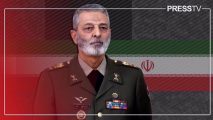
Gen. Abdolrahim Mousavi, the martyred Chief of Staff of Iran’s Armed Forces 0
Major General Seyed Abdolrahim Mousavi, the Chief of Staff of Iran’s Armed Forces, attained martyrdom in a cowardly Israeli-American aggression on Saturday.
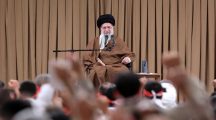
Leader of the Islamic Revolution, Ayatollah Seyyed Ali Khamenei, was also martyred in the Saturday aggression, alongside many top-ranking military commanders and defense officials.
Major General Mousavi succeeded Major General Mohammad Bagheri following the 12-day war in June last year and carried forward the remarkable legacy of his predecessor.
He played a particularly vital role in the June 2025 war, leading the Iranian armed forces in their retaliatory operations that forced the Israeli regime to beg for surrender.
Mousavi previously served as the commander-in-chief of the Islamic Republic of Iran Army and played an instrumental role in bolstering the might of the army.
On August 21, 2017, he was promoted from Brigadier General to Major General and appointed Commander-in-Chief of the Islamic Republic of Iran Army by the Leader, replacing Seyed Ataollah Salehi.
Later, on May 28, 2019, Ayatollah Khamenei appointed him as the commander of the Khatam al-Anbia Air Defense Base, while he continued to serve as the army’s top commander.
Mousavi was born in 1960 in the holy city of Qom in central Iran. He was a graduate of the Army’s Ground Forces Officers’ University and held a doctorate in defense studies from the Supreme National Defense University. He joined the Iranian army in 1979.
During the years of the Imposed War in the 1980s, Major General Mousavi served in the Army’s artillery unit on various fronts, including the western battlefields in Kurdistan (28th Kurdistan Division) and the southwestern fronts (33rd Artillery Group of the Ground Forces) in Khuzestan province.
He participated in many operations such as Valfajr 4, Valfajr 9, Beit al-Moqaddas 5, Qader, Nasr, and several others. He is recognized as a veteran of the war.
After the Imposed War ended in 1997, he completed the Advanced Command and Staff Course (DAFOS) and later earned a doctoral degree in defense management at the Supreme National Defense University.
From 1999 to 2005, he served as the Chief of Joint Staff of the Army, and from 2008 to 2016, he was Deputy Commander-in-Chief of the Army. Following that, from 2016 to 2017, he held the position of Deputy Chief of Staff of the Armed Forces.
Mousavi held several significant leadership positions within Iran’s military. From 1999 to 2005, he served as the Chief of Joint Staff of the Army, later assuming the role of Deputy Commander-in-Chief from 2008 to 2016.
In 2016, he was appointed Deputy Chief of Staff of the Armed Forces, a position he held until 2017, when he was named Commander-in-Chief of the Islamic Republic of Iran Army, a role he held until today.
Additionally, since May 2019, served as the Commander of the Khatam al-Anbia Air Defense Base, further solidifying his central role in the country’s military strategy and operations.
Major General Mousavi also served as the Commander of Imam Ali (PBUH) Officers’ University, where he contributed to the training and development of military personnel.
He also led the Army’s Northeast Operational Base, overseeing strategic operations in the region.
In addition, he was the Deputy for Training and the Deputy for Planning and Programs within the Army Ground Forces, playing a key role in shaping military preparedness and strategy.
Mousavi’s expertise in operations led to his appointment as the Head of Operations for the Army, and later, he became the Director of the Army Strategic Studies Center, where he engaged in high-level research and policy development.
Source: Presstv