29, September 2026
Families demand justice for Cameroon’s ‘nightmare’ wave of murdered women 0
Courage Anushuni still cannot make sense of his pain after his mother Cameroonian teacher Geraldine Achia was beaten to death, with her husband the prime suspect.
“Having lost my mother is a nightmare. The shock is overwhelming. I cannot believe what happened,” said the 18-year-old, Achia’s only son, choking up as the words came out.
Anushuni is far from alone in the central African country where gender-based violence is on the rise.
Between January and April, around 50 femicides were recorded in Cameroon, according to the ministry for women and the family.
The figure matches that for the whole of 2023, climbing to 67 femicides reported in 2024 and 77 last year.
Last month alone saw nearly 10 women killed, the Stop Feminicides 237 (Stop Femicide 237) organisation said.
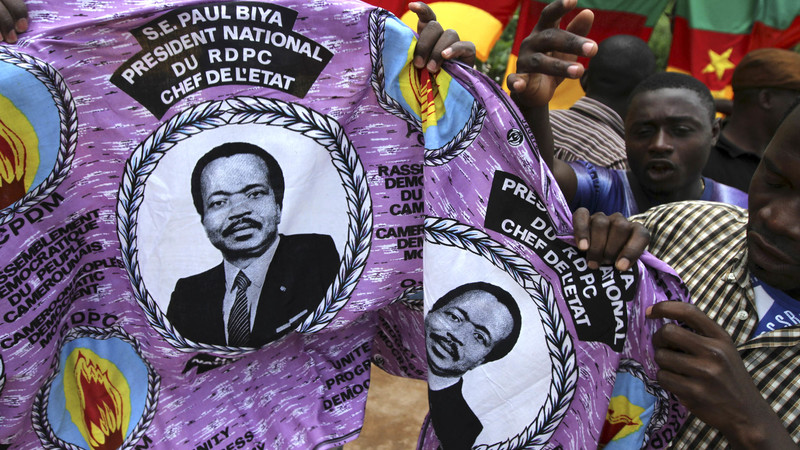
The growing toll has sparked anger from rights groups and the opposition, who accuse 93-year-old President Paul Biya’s government of inaction.
Even Ajara Nchout Njoya, star striker on the Cameroon national women’s football team, has spoken out, with her criticism of the “tragic wave” of femicides going viral on social media.
“Being a woman in Cameroon should never be a risk,” she wrote in late August.
– ‘Jaw broken’ –
At the home of Achia’s older sister in Emana, a working-class neighbourhood of the Cameroonian capital, Yaounde, relatives set about organising her funeral, while struggling with the loss.
Surrounded by her family, Regina Mbatiabuh Ngukum became emotional as she described arriving at hospital to find her sister’s body laid under a sheet.
“I saw her disfigured face, covered with bruises from the blows, her mouth torn up and her jaw broken,” she told AFP.
Achia, who was in her 30s, met her husband in December and they married in a traditional wedding in July.
On the night she was killed between September 5 and 6, he said the pair got into an argument after Achia went on a night out, following which she came home with a half-empty beer bottle in her hand.
Her sister, who is adamant that Achia did not go out drinking, disputes that version of events.
At the hospital, she recovered her sister’s phone and discovered, while still in shock, a series of photos with Achia’s face covered in bruises.
– A murder every 10 minutes –
Senator Francoise Puene, who has been involved in the struggle for women’s rights for years, said several issues were behind the rise in murders.
“Women are speaking out more and more, but the economic crisis is also a factor. Since the onset of the Covid-19 pandemic, violence has escalated,” the politician said.
Through her centre, Puene said she had helped more than 5,000 women become independent through small-scale loans, while teaching more than 300,000 people about women’s rights.
“According to the statistics, we’re seeing a murder every 10 minutes,” she told AFP.
“Just since you started interviewing me, two women have been murdered,” she said.
Psychiatrist Laure Justine Menguene blames a patriarchal society and a violent education where men “grow up with the idea that they are superior to women”.
Viviane Tathi Yende, whose Stop Feminicides 237 organisation has recorded 56 killings since the beginning of 2026, points the finger at alcohol and drug abuse, economic issues, tensions between traditional and modern ways of life and a feeling that abusers escape punishment.
“There is a great deal of impunity and a taboo around prosecuting the perpetrators of violence. Time and time again, the preference is for an out-of-court settlement,” she lamented.
– ‘Justice be done’ –
At the heart of the debate is how woman-killers are tried in the Cameroonian courts.
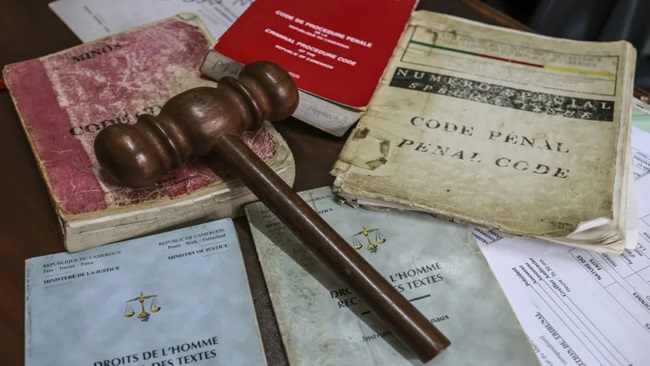
The law currently does not recognise femicide as a separate crime from murder.
“As long as there is no specific law, each judge will base their rulings on the facts presented to them and the criminal code,” argues investigating magistrate Martine Ahanda Tana.
For the judge, a law clearly defining femicide as a separate crime would allow the killing of women to be punished appropriately.
In response to the outcry, the family and women’s ministry announced last month that a bill on the issue — which has been in the works for years — will be considered during parliament’s November session after gaining widespread support.
But the sluggish pace of progress has been condemned.
The opposition MRC party has criticised the “criminal passivity” of the government of Biya, who has ruled Cameroon with an iron fist for nearly 44 years.
After several women were murdered between August 6 and 26 — some in the presence of their children — Human Rights Watch urged the authorities to take immediate action against gender-based violence.
“These killings are the latest signs that women in Cameroon, including domestic violence victims and survivors, have little protection or access to justice,” the watchdog said.
It accused the government of having “made a lot of promises to women” without keeping them.
The scourge is a continent-wide one: Africa has the highest femicide rate in the world, according to the United Nations, with three cases per 100,000 women, compared with 0.5 in Europe.
Several days after Achia’s death, her husband, who denies having killed his wife, was arrested more than 300 kilometres (186 miles) away from Yaounde and remains in detention.
Anushuni, who faces having to bury his mother, has but one wish: “that justice be done”.
Culled from AFP













30, September 2026
Trump picks former Yaoundé security official Christian Ehrhardt as U.S. ambassador nominee to Cameroon 0
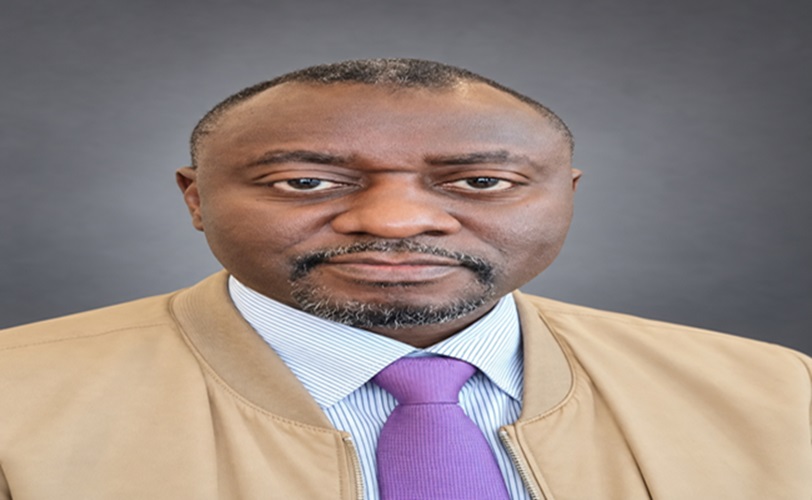
U.S. President Donald Trump has nominated a diplomat with previous experience in Cameroon to lead the U.S. Embassy in Yaoundé. On September 28, 2026, Trump sent the Senate the nomination of Christian Ehrhardt, also known in Cameroon as Christian Jové Ehrhardt, to serve as U.S. Ambassador Extraordinary and Plenipotentiary to the Republic of Cameroon. The White House identifies him as being from New York State.
The process is not yet complete. The U.S. Senate registered his nomination under reference PN1367-3 and referred it to the Senate Foreign Relations Committee. Until the Senate confirms him, Ehrhardt cannot formally take office as ambassador.
Washington’s choice could return to Yaoundé a diplomat who previously worked there as regional security officer at the U.S. Embassy. In 2018, the Cameroonian government made him a Knight of the Order of Valor.
More recently, Ehrhardt returned to Cameroon in November 2025 in a different role, at a time when Washington was putting in place its policy of deporting migrants to third countries.
Nearly two decades in diplomatic security
Ehrhardt is a career U.S. Foreign Service officer. He joined the State Department in 2007 and has spent most of his career in diplomatic security, particularly the protection of U.S. embassies.
The Washington Post, which has detailed his career, reported that he spent nearly two decades in that field before he was called to Washington in 2025.
His assignments included Cameroon. He has also served in several other countries, including Algeria, Jamaica and the Central African Republic. Professional biographies circulated after his nomination also cite assignments in Sudan, Chad, Haiti, Libya and Iraq.
Ehrhardt graduated from St. Lawrence University and the U.S. Naval War College and speaks French and Spanish.
His career took a different direction in 2025. Ehrhardt now serves as Deputy Assistant Secretary in the State Department’s Bureau of Population, Refugees, and Migration.
He also oversees the Office of Remigration, a unit of about 15 people established as part of the Trump administration’s reorganization of its external migration policy.
The office negotiates with foreign governments to accept people deported from the United States who are not citizens of the countries to which they are transferred. These so-called third-country agreements are now part of the responsibilities held by the diplomat nominated for the Yaoundé post.
A return to Cameroon in November 2025
Cameroon was among the countries Ehrhardt visited after he took up his position in Washington.
On November 20, 2025, Félix Mbayu, Minister Delegate to the Minister of External Relations in charge of Cooperation with the Commonwealth, received him in Yaoundé.
Ehrhardt led a delegation from Washington that included White House officials, according to Cameroon Tribune. Christopher J. Lamora, the U.S. ambassador at the time, also attended the meeting. After the talks, both sides publicly emphasized humanitarian, health and security cooperation. “The United States and Cameroon have been friends for many years and will continue to be,” Ehrhardt told reporters before referring to continued engagement between Washington and Yaoundé.
The Cameroonian Foreign Ministry’s diplomatic bulletin also records the meeting, although it dates it November 11, 2025, rather than November 20 as reported by Cameroon Tribune. The two sources nevertheless agree on the participants and the subjects officially discussed: humanitarian assistance, public health and regional security.
Since then, an investigation by the Washington Post, conducted as part of the “Deportation Project” coordinated by Forbidden Stories, has provided another perspective on the visit.
According to internal State Department documents reviewed by the U.S. newspaper, Ehrhardt played a central role in negotiations with several African countries to accept people deported from the United States who were not their citizens.
Up to 1,000 deportees planned for Cameroon
Cameroon is part of that arrangement. According to the Washington Post, the State Department reached an agreement with Yaoundé that allows the transfer of up to 1,000 third-country nationals to Cameroon.
By the end of June 2026, 36 people had already been deported from the United States to Cameroon under the arrangement, according to internal U.S. documents reviewed by the newspaper.
The financial component, however, requires an important distinction. The documents cited by the Washington Post do not show that Washington simply paid the Cameroonian government $30 million in exchange for accepting the deportees. Instead, the newspaper reported that the agreement provides for a $30 million grant to the International Organization for Migration (IOM) to finance support activities in Cameroon.
The newspaper’s broader investigation found that the mechanism extends beyond Cameroon. By the end of June, the Trump administration had committed or pledged at least $410 million under similar arrangements with several dozen countries.
Some of the money goes directly to governments, while other funds pass through the IOM or the United Nations High Commissioner for Refugees. Officials from those organizations told the Washington Post that they did not participate in negotiations over the deportation agreements themselves.
Ehrhardt’s nomination therefore comes at a time when a diplomat responsible for part of the U.S. administration’s migration policy could become Washington’s principal representative in one of the countries with which he helped establish that system.
Embassy without a confirmed ambassador since January
The U.S. ambassadorial post in Cameroon has been without a permanent holder since Christopher J. Lamora left in January 2026.
Lamora arrived in Cameroon in March 2022 and held farewell meetings with Cameroonian authorities in early January. On January 12, he was notably received by External Relations Minister Lejeune Mbella Mbella before another meeting with Prime Minister Joseph Dion Ngute. Since his departure, the U.S. Embassy in Yaoundé has operated under acting Chargé d’Affaires John G. Robinson.
If the Senate confirms his nomination, Christian Jové Ehrhardt would therefore return to Cameroon with two experiences directly connected to the country: his previous service as a security official at the U.S. Embassy, for which Yaoundé honored him in 2018, and his role as a U.S. official involved in negotiations that made Cameroon a destination for third-country nationals deported from the United States.
Source: Business in Cameroon