Featured
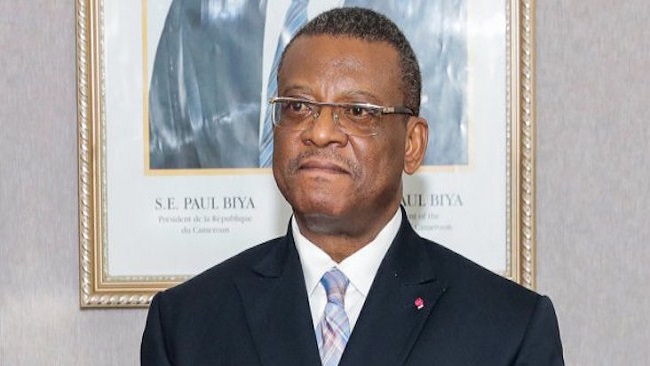 Dion Ngute in Buea: Peace cannot be a slogan; Prime Minister must go beyond dialogue
  A new phase for the Southern Cameroons struggle?
 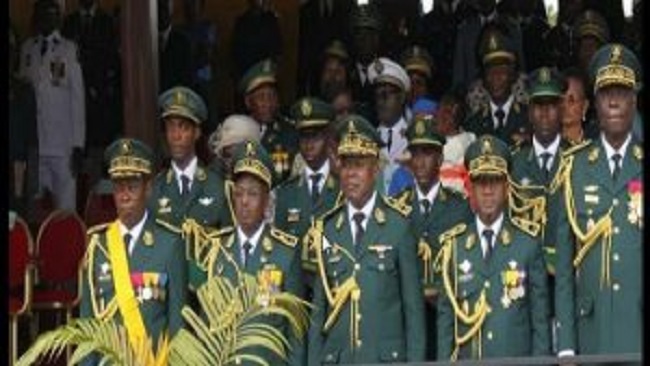 The Cameroonian army must put its conscience to the test
 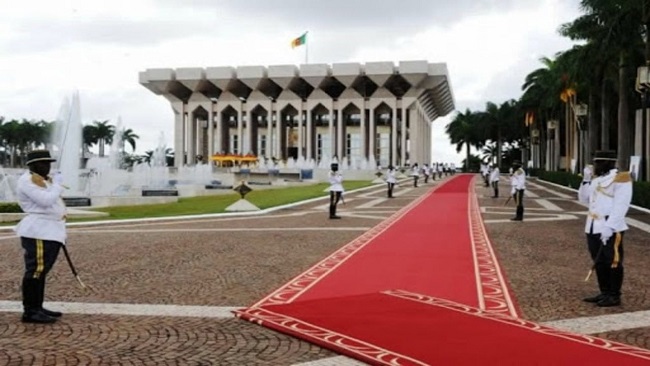 Who really pushed for the return of the Vice President of the Republic?
  When politics fails a nation, football and the Church become the battleground
Most Commented Posts
 4 Anglophone detainees killed in Yaounde
18 comments Chantal Biya says she will return to Cameroon if General Ivo Yenwo, Martin Belinga Eboutou and Ferdinand Ngoh Ngoh are sacked
13 comments The Anglophone Problem – When Facts don’t Lie
12 comments Anglophone Nationalism: Barrister Eyambe says “hidden plans are at work”
12 comments Largest wave of arrest by BIR in Bamenda
10 comments
Featured
-

Douala Convention calls for wider use of capital markets to finance CEMAC economies
-
Dion Ngute in Buea: Peace cannot be a slogan; Prime Minister must go beyond dialogue
-

Former Bayern Munich CEO Oliver Kahn is set to travel to Douala
-

Pope Leo XIV’s open-air Mass in Paris draws many more than expected
-
Chinese firms hold 66% of major road contracts in Northern Cameroon
-

Pentagon quietly adds dozens to tally of troops wounded amid war on Iran
-

Manyu Division: ‘NguidEjagham’ App Launched
29, September 2026
Dion Ngute in Buea: Peace cannot be a slogan; Prime Minister must go beyond dialogue 0
by soter • Cameroon, Editorial, Headline News, Politics
After nearly a decade of bloodshed in Southern Cameroons, Prime Minister Joseph Dion Ngute’s renewed call for peace deserves attention. His recent engagement in Buea with administrative officials, traditional rulers, religious leaders, political and community figures is, in itself an acknowledgement that the conflict cannot simply be allowed to continue indefinitely. Reports from the September 2026 consultations indicate that authorities and community leaders are exploring dialogue, reconciliation and direct engagement with those still involved in the armed conflict.
But the central question is no longer whether Cameroon needs peace. The question is what kind of peace is being pursued and what political courage is required to achieve it.
Dion Ngute should listen again to the message Pope Leo XIV delivered during his April 2026 visit to Cameroon. Speaking to President Biya, the Holy Father said that peace must not be reduced to a slogan. He insisted that genuine peace must be lived and translated into institutional practice. The Pope also stressed that governing requires listening to citizens and involving them in the search for lasting solutions. That message goes to the heart of the Ambazonia crisis.
Peace cannot simply mean persuading a few remaining fighters to lay down their weapons while leaving untouched the political grievances that helped produce the conflict in the first place. Nor can peace be reduced to meetings in Buea, declarations from Yaoundé or the creation of another fund. Peace requires addressing the substance of the dispute.
If Ngute genuinely wants to leave behind a lasting settlement, he has an opportunity that goes beyond convening traditional rulers and religious leaders. As Head of Government and a prominent Anglophone figure, he can take the concerns emerging from the conflict directly to President Paul Biya and insist that the government examine the political questions that have remained unresolved. One such question is the fate of imprisoned Anglophone separatist leaders, including Sisiku Ayuk Tabe.
The Sisiku Ayuk Tabe issue has acquired renewed legal significance. In March 2026, Cameroon’s Supreme Court reportedly annulled the previous appellate proceedings involving Ayuk Tabe and other separatist leaders and ordered a fresh hearing before a differently constituted panel. That development creates an opening for the government to consider whether continued imprisonment is compatible with a broader process of reconciliation and political dialogue.
A comprehensive peace initiative should therefore place the release of political detainees and prisoners connected to the Anglophone conflict on the negotiating table, alongside credible guarantees for justice and accountability for abuses committed by all sides. The second—and perhaps more fundamental—question is constitutional.
There is historical evidence that the Cameroon created at reunification in 1961 was a federation of two constituent states. Cameroon’s own National Commission for the Promotion of Bilingualism and Multiculturalism describes the establishment of the Federal Republic of Cameroon on 1 October 1961, while British parliamentary records from the period document the agreement that reunification would take place on a federal basis. The federal system was subsequently replaced by a unitary structure following the 1972 referendum.
Whether a restoration of the 1961 federal arrangement is ultimately acceptable to the Cameroonian state and its citizens is a political question for negotiation. But it cannot simply be dismissed from the peace conversation if it remains one of the central constitutional demands associated with the Ambazonia crisis. Prime Minister Ngute therefore has a choice before him.
Prime Minister Ngute can continue to promote community dialogue, peace funds and appeals to fighters to surrender. Those initiatives may have a role. But if they are not accompanied by a serious examination of the political grievances at the centre of the conflict, they risk treating the symptoms while leaving the underlying dispute unresolved.
Pope Leo’s intervention provides a useful standard: peace must be more than language; it must become reality. During his visit to Bamenda, the Pope listened to traditional, religious and community representatives and emphasized reconciliation and peace in a region deeply affected by the conflict.
For Ngute, the real test is therefore not how many meetings he holds in Buea. It is whether he is prepared to carry the difficult message from the people of the Northwest and Southwest to the highest level of government.
We of the Cameroon Concord News Group are of the opinion that Ngute should sit with President Biya and present an informed assessment of what is required for a political settlement: the humanitarian and legal questions surrounding detained Anglophone leaders, the release or review of cases involving conflict-related detainees, meaningful engagement with representatives of the various sides, and serious consideration of constitutional arrangements—including the federal option that existed at reunification in 1961. That would transform the current peace initiative from another government program into a genuine attempt at political reconciliation.
Dion Ngute has repeatedly occupied a difficult position: he is a senior representative of the government, an Anglophone son of the country with numerous wives coming from both sides of the river Mungo. That gives Ngute an unusual responsibility. His legacy will not ultimately be determined by the number of peace meetings he convenes, nor by the size of a peace fund. It will be judged by whether he used his position to confront the difficult political questions that have kept Cameroon’s English-speaking regions at war.
The time for peace slogans has passed. The time for political courage has arrived. If the current initiative is to succeed, Yaoundé must be prepared not merely to ask the remaining fighters to come out of the bushes, but also to ask what political settlement would make it possible for them—and the communities they claim to represent—to believe that there is a future worth returning to.
That is the deeper meaning of Pope Leo XIV’s message. Peace is not a slogan. It is a political commitment, a constitutional conversation, and ultimately a choice to confront grievances rather than postpone them.
By Soter Tarh Agbaw-Ebai