Featured
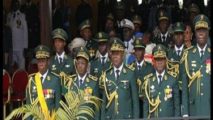
 The Cameroonian army must put its conscience to the test
  Who really pushed for the return of the Vice President of the Republic?
  When politics fails a nation, football and the Church become the battleground
  Biya has had his era; Cameroon must now be allowed to enter its next one
  Biya’s hand: a source of glory and shame
Most Commented Posts
 4 Anglophone detainees killed in Yaounde
18 comments Chantal Biya says she will return to Cameroon if General Ivo Yenwo, Martin Belinga Eboutou and Ferdinand Ngoh Ngoh are sacked
13 comments The Anglophone Problem – When Facts don’t Lie
12 comments Anglophone Nationalism: Barrister Eyambe says “hidden plans are at work”
12 comments Largest wave of arrest by BIR in Bamenda
10 comments
Featured
-
Martinez Zogo Trial: questions over missing phone linked to Amougou Belinga
-

Revealed: Colonel Danwe admits ordering Martinez Zogo operation
-
Archbishop Nkea to battle decade of war with new peace Catechism
-

Southern Cameroons Crisis: 7 kidnapped by suspected Amba fighters in Bangourain
-
Southern Cameroons Crisis: 3 killed, 2 injured in bar shooting in Bamenda
-
US military nearing ‘breakdown’ amid sustained Iranian attacks
-
The Cameroonian army must put its conscience to the test
19, February 2026
Should Pope Leo Visit Cameroon? 0
Pope Leo plans to visit Cameroon shortly, although details of the controversial trip have not yet been confirmed by the Vatican. Questions are being raised about whether the Pope’s presence bestows legitimacy on the regime of 93-year-old President Paul Biya. In the nineth year of a vicious civil war, the Central African nation held an election last October which was considered neither free nor fair by respected monitoring groups. Biya remains in power after four decades at the helm of a country considered corrupt by Transparency International and other observers. Meanwhile, Amnesty International points to dozens of political prisoners held in appalling circumstances.
Does the Pope’s visit offer an opportunity for the Church to draw attention to the regime’s shortcomings, urging a change of direction, and a respect for human rights and democracy? PAV asked several Cameroonian civil society leaders for their views. Some names have been omitted to preserve their safety.
According to Maximilienne Ngo Mbe, winner of the International Women of Courage Award in 2021, “The Pope embodies the voice of the voiceless and intercedes with Jesus to end our suffering. That is why we are happy with the arrival of the Pope in Cameroon. His visit must be part of our reconciliation and social justice process. We ask Pope Leo to entrust the Virgin Mary to undo the knots of disagreement, establish mutual forgiveness, and talk to leaders in order to cultivate compromise.”
Madame Ngo Mbe draws attention to the truth and reconciliation process inspired by Pope Francis in the Central African Republic as an example of what can be achieved.
Dr Christopher Fomunyoh, senior associate at the National Democratic Institute in Washington DC agrees. “His Holiness is in a position to know the suffering and misery that Cameroonians have endured under the repressive and kleptocratic regime of a 93 years old autocrat. The world will be watching the Pope’s every step and every word to be sure the biblical downtrodden who constitute the vast majority of the Cameroonian population can find voice and a future while counting on the Holy Father.”
However, Paul (his last name is omitted for his security), who leads a development NGO, asks what the Pope hopes to achieve. “Is it to endorse the current system, encourage looting, the appropriation of resources by the system’s elites, violence, and political grudges? To help Cameroonians mourn the thousands of deaths resulting from conflicts in the Northwest and Southwest or post-electoral crises?”
Like Madame Ngo Mbe, Paul hopes Pope Leo will prompt a process of reconciliation and sustainable peace. “Knowing the regime’s ability to deceive everyone in order to maintain power and preserve its privileges, one fears that the visit might be nothing more than an endorsement, a blessing that the regime is seeking.”
Judith (last name omitted to protect her security), a Cameroonian Diaspora “seeking positive change back home and conflict resolution through dialogue”, urges the Pope not to visit Cameroon “at this fraught moment.” She continues, “If he does come, I pray he will speak with the moral clarity of our social teaching – affirming the dignity of every person, the primacy of the common good, and the duty of authority to serve the people – by urging the regime to respect the will of the electorate.”
Sharing Judith’s concerns is Serge Banyongen, professor of political science at the University of Ottawa. “If Pope Leo XIV visits Cameroon, he will be welcomed by ceremonies and carefully curated images of stability, in which the Yaoundé regime excels. Above all, the Pope must learn the truth about the suffering Church in Cameroon. Priests, religious, and lay faithful have been murdered, some in cold blood. Two bishops, Mgr. Balla and Mgr. Plummey, along with countless priests and nuns, have died in circumstances that were never credibly investigated. Their deaths remain wounds that have yet to heal. When the Catholic Church has spoken prophetically, calling for justice, dialogue, and reform, it has been humiliated, intimidated, and pressured into silence.”
Source: panafricanvisions