Featured
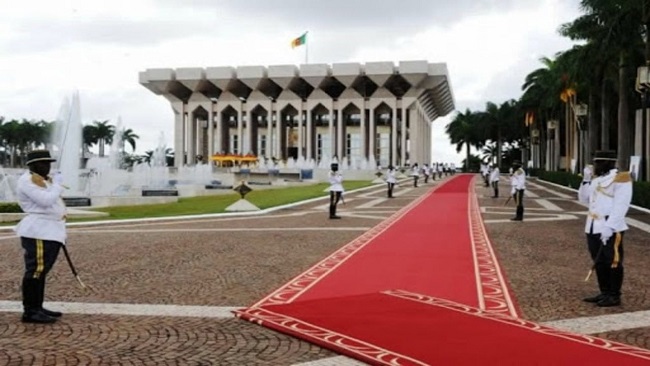 Who really pushed for the return of the Vice President of the Republic?
  When politics fails a nation, football and the Church become the battleground
  Biya has had his era; Cameroon must now be allowed to enter its next one
  Biya’s hand: a source of glory and shame
  So, Cameroonians, what exactly do you want from President Biya?
Most Commented Posts
 4 Anglophone detainees killed in Yaounde
18 comments Chantal Biya says she will return to Cameroon if General Ivo Yenwo, Martin Belinga Eboutou and Ferdinand Ngoh Ngoh are sacked
13 comments The Anglophone Problem – When Facts don’t Lie
12 comments Anglophone Nationalism: Barrister Eyambe says “hidden plans are at work”
12 comments Largest wave of arrest by BIR in Bamenda
10 comments
Featured
-

President Putin says figures reflect ‘structural, deep, profound shifts’ in global economy
-
Dion Ngute reaffirms peace efforts amid fresh violence in Ambazonia
-

Yemen’s Houthis seize key island in Bab al-Mandab strait
-

Billionaire Alex Beard pleads not guilty to Cameroon, Nigeria bribery charges
-

Southern Cameroons Crisis: army rescues 5 kidnapped teachers in Wum
-

SONARA loses final UK appeal over CFA42.8 billion Sahara Energy claim
-

Club 40 Solidarity Antwerpen celebrates 5th Anniversary, reaches out to widows affected by Anglophone Crisis
14, May 2026
Southern Cameroons Crisis: UN situation report 0
Between January and March 2026, at least 33 access constraints were documented in the North-West and South-West (NWSW) regions.
Humanitarian activities continue to face significant access constraints on Mondays, which are widely observed as “ghost town” days, as well as during ad hoc lockdowns imposed by non-State armed groups (NSAGs). During the reporting period, NSAGs announced a lockdown aimed at disrupting the celebration of National Youth Day in February across the North-West and South-West regions and enforced a one-day lockdown in Widikum (Momo division), which was subsequently extended into a regular weekly Tuesday lockdown.
Between January and February, traffic circulation along the Bamenda–Jakiri axis was significantly disrupted for more than a month due to heightened tensions between NSAGs, affecting civilian movement.
Improvised explosive devices (IEDs) continued to be used by NSAGs, especially in the North-West (Bui and Momo divisions), primarily to attack State security forces. Although humanitarian workers are not a direct target, the use of IEDs in highly populated areas and on the main roads pose a risk for all civilians. At least 19 IED-related incidents were recorded, 13 in the NW and 6 in the SW, representing a decrease compared to the same period in 2025, when 38 incidents were reported. Especially in the SW, humanitarian partners had to face bureaucratic impediments resulting in operational delays and, in some cases, limiting the implementation of certain activities in specific locations.
As for the attacks against education, six incidents affecting education were recorded in the NW and two in the SW respectively.
Source: UN Office for the Coordination of Humanitarian Affairs