Featured
 Ambazonia People’s Liberation Authority explains motives for the new transition
  A year after Biya’s disputed re-election, CPDM remains without a timetable for next year’s polls.
  Ruling CPDM Party: When a political message runs out of the road
  Dion Ngute in Buea: Peace cannot be a slogan; Prime Minister must go beyond dialogue
 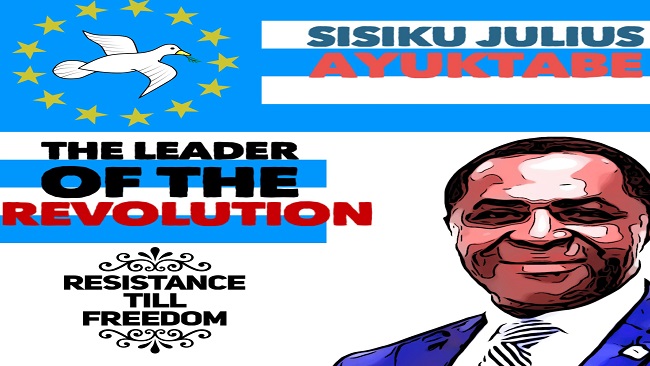 A new phase for the Southern Cameroons struggle?
Most Commented Posts
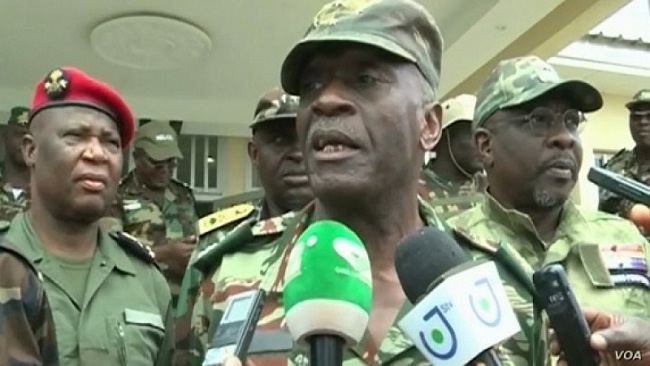 4 Anglophone detainees killed in Yaounde
18 comments Chantal Biya says she will return to Cameroon if General Ivo Yenwo, Martin Belinga Eboutou and Ferdinand Ngoh Ngoh are sacked
13 comments The Anglophone Problem – When Facts don’t Lie
12 comments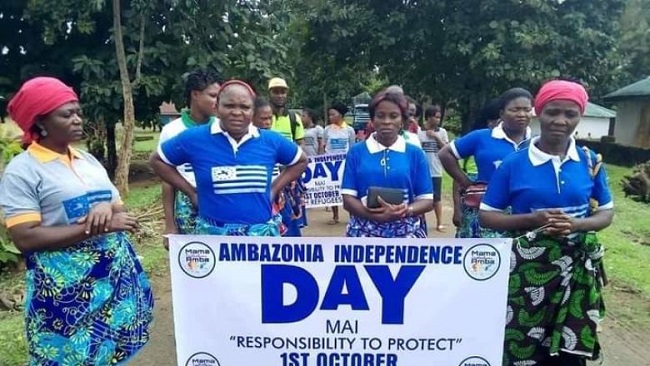 Anglophone Nationalism: Barrister Eyambe says “hidden plans are at work”
12 comments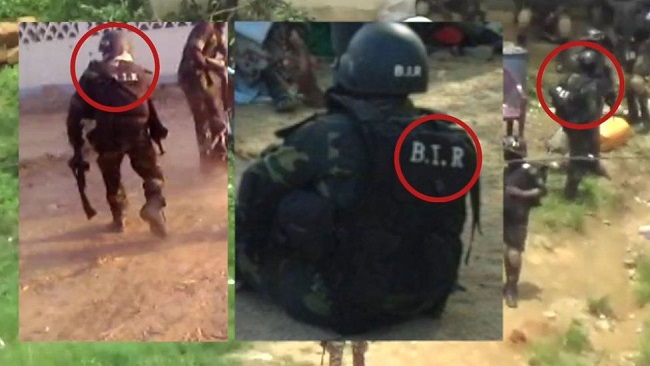 Largest wave of arrest by BIR in Bamenda
10 comments
Featured
-

Gendarmerie officer reports death threats in Martinez Zogo Murder Trial
-

Ambazonia People’s Liberation Authority explains motives for the new transition
-
Pope Leo diagnosed with lung cancer after doctors successfully remove nodule
-

Pivotal election: Israelis fly from around world to vote
-

Martinez Zogo Murder Trial: The break dance is ongoing
-
After Cavaye Djibril: National Assembly to revise administrative structure
-

Cameroon promotes cocoa and coffee investment opportunities at Global Food Forum in Rome
14, October 2026
Ambazonia People’s Liberation Authority explains motives for the new transition 0
Fellow Ambazonians,
Dear compatriots at home and across the world,
Almost ten years have passed since the present conflict entered its most difficult and costly phase. During these years, our people have demonstrated extraordinary resilience. We have endured loss, displacement, imprisonment, destruction of communities and enormous human suffering. We have also demonstrated something that can no longer be questioned: the sovereign call of our people has survived.
But endurance alone cannot be our destination.
This policy sets out the direction of the Ambazonia People’s Liberation Authority and a Three-Year Termination Roadmap to concentrate our collective capacities on overcoming the stalemate, protecting our communities, sustaining our resilience, advancing the Southern Cameroons question internationally, and pursuing self-determination through a just negotiated process whose outcome is sanctioned by the people.
I. THE PURPOSE OF THE TRANSITION
On 22 September 2026, the Interim Government announced its reconstitution and transition into the AMBAZONIA PEOPLE’S LIBERATION AUTHORITY within the broader historical and constitutional evolution of the Ambazonian national movement. The transition is founded upon the approved Constitutional Transitional Instrument and the APLA Constitutional Institutional Framework.
The transition from the Interim Government into APLA is anchored on three fundamental movers:
TRANSITION FROM POWER TO OPERABILITY | TRANSITION FROM ENTITLEMENT TO COLLECTIVE WORK | TRANSITION FROM COMPLEXITY TO DELIVERY
This shift directs the focus of Ambazonians on one primary goal: the termination of our liberation struggle. It marks a turning point and begins a new phase in our liberation struggle.
APLA has not been conceived as a center from which our people are to be ruled, commanded or controlled. It is an instrument through which committed Ambazonians can bring their capacities together, identify where action is missing, close gaps that weaken our collective effort and move necessary work from intention to completion.
Our greatest national resource remains our people: their knowledge, competence, experience, relationships, resources and willingness to serve. These human resources become national power when they are identified, connected, coordinated and directed toward clear objectives.
This forms the basis of APLA’s Three-Year Termination ambition.
By termination, we mean bringing the struggle to a just and definitive end through the realization of self-determination in a negotiated process sanctioned by the people of Ambazonia. Such a process must preserve our political rights, protect our population, address the consequences of war, and provide credible safeguards.
Three years represents a period of concentrated national action. We will bring together our legal, diplomatic, humanitarian, political, organizational, and financial capacities to sustain our resilience, strengthen community protection, advance the claim to self-determination, and create the conditions for a just negotiated settlement sanctioned by our people.
II. BREAKING THE STALEMATE — MOVING THE STRUGGLE TOWARD TERMINATION
Fellow comrades, Southern Cameroons still does not exercise its sovereignty. Our territory remains under the military and administrative authority of Cameroun. Our people still have no independent international access through which to exercise their political personality and defend their sovereign interests. The underlying question of our decolonization at the United Nations remains unresolved, and the war born from this unresolved condition continues unabated.
We are therefore confronted with a stalemate. And that stalemate is devastating our people.
Our recent memory bears the wounds of the abduction and imprisonment of our leaders; the Ngarbuh massacre and the killing of schoolchildren in Kumba in 2020; the rape of our women and girls; the burning alive of Mammi Api; and the raids on Belo, Kwakwa, Zhoa, and other communities across Ambazonia. These events remain with the families who suffered them and the communities that carry their memory. They place a responsibility upon us to secure protection, pursue justice, and bring this conflict to a just and definitive end.
THE TIME IS RIPE TO BREAK THE STALEMATE AND MOVE THE STRUGGLE. AMBAZONIA IS READY TO END THIS WAR, BUT THE QUESTION THAT CAUSED THE WAR MUST BE RESOLVED.
III. TAKING OUR STRUGGLE TO THE WORLD
APLA is taking the struggle to the world. And that begins at the United Nations. We will demand that the United Nations confront the question at the foundation of this conflict.
WHAT BECAME OF THE SOVEREIGN RIGHT OF THE PEOPLE OF SOUTHERN CAMEROONS WHEN UNITED NATIONS TRUSTEESHIP ENDED, AND HOW WILL THAT RIGHT NOW BE BROUGHT TO COMPLETION?
Article 76(b) of the United Nations Charter placed that process within an international obligation directed toward self-government or independence in accordance with the particular circumstances of the territory and the freely expressed wishes of its people. Unfortunately, that sovereign obligation was misdirected and remains unfulfilled.
APLA’s mission is to take the Southern Cameroons question back to its international foundations.
We will build relationships with governments prepared to engage seriously with the Southern Cameroons question and support a just process of self-determination, grounded in the expressed will of the people and accompanied by credible protections.
We will take our case to the British Government, to Parliament, to British institutions and to the British public, and if necessary to the British courts. We will place before them the record of Southern Cameroons, the responsibilities Britain assumed under trusteeship, the circumstances in which it withdrew and the condition in which the people it administered find themselves more than sixty years later.
Britain cannot separate itself from the consequences of a process over which it carried direct responsibility. If Britain continues to evade the Southern Cameroons question, APLA will present its case to BRICS member states, seeking practical political and economic engagement on the exercise of sovereignty and a just settlement.
APLA will also engage African governments, the African Union, and relevant continental human-rights and peace-and-security institutions.
THIS IS AN AFRICAN CONFLICT, AND AFRICA MUST BECOME PART OF ITS RESOLUTION
We will consolidate the historical and documentary record accumulated across generations of our struggle and seek a pathway toward authoritative international determination, including the possibility of taking the Southern Cameroons question before the International Court of Justice through competent international processes and the support of sovereign states.
IV. PROTECTING OUR PEOPLE — BUILDING A SAFE ROAD OUT OF WAR
Dear Ambazonians, our determination to end this war does not mean surrendering the right to lawful self-defense or withdrawing support from the protection of our communities against attacks on lives, homes, and possessions. That responsibility calls for protective measures consistent with applicable international humanitarian law, including the protection of civilians and civilian property.
APLA’s Termination Roadmap and the cessation of armed confrontation must rest on credible, reciprocal, and verifiable safeguards. Our commitment to a just settlement goes together with our continuing responsibilities toward vulnerable communities.
A cessation of hostilities must be reciprocal and internationally guaranteed. Military disengagement must be simultaneous, verifiable and independently monitored. Civilians must be protected against attack, arbitrary arrest, disappearance, reprisal and political persecution. Humanitarian organizations must have safe and unhindered access to affected communities. Displaced people and refugees must be protected against forced return, and those who return must be able to do so voluntarily and safely.
APLA expresses its solidarity with Ambazonia Prisoners of War (APOWs) and Ambazonia Prisoners of Conscience (APOCs), recognizing the suffering of confinement, separation from their families, and the uncertainty endured by their loved ones. Their resilience, dedication, and sacrifice hold an honored place in our national struggle. Securing their freedom remains a central national priority. APLA will pursue their release, strengthen legal protection, and coordinate support for them and their families through its institutions, communities, and competent partners.
Throughout any future process, the rights and political claims of the people of Southern Cameroons must remain fully preserved. Participation in a ceasefire, negotiation, humanitarian arrangement, or transitional process must not be interpreted as surrendering the claim to self-determination or prejudging a settlement without the sanction of the people.
While APLA pursues the cessation of the armed confrontation through an international settlement, APLA recognizes the urgent need to act toward the extreme humanitarian situation on the ground.
APLA hereby announces the creation of SOUTHERN CAMEROONS INTERNATIONAL HUMANITARIAN FUND in response to the grave humanitarian and social crisis produced by the ongoing war in Ambazonia. This is a major intervention dedicated exclusively to victims of the war. The humanitarian emergency in Southern Cameroons has attracted concern over serious funding gaps and inadequate international attention. APLA will seek cooperation with established humanitarian organizations, including international partners, to mobilize support for the Fund, strengthen delivery to affected people, and apply transparent, independently reviewable safeguards to its administration.
V. WOMEN — LEADERSHIP, PROTECTION AND NATIONAL TRANSFORMATION
The APLA Policy places women and youth at the centre of the equation. Ambazonian women have sustained families and communities, organized humanitarian assistance, carried our cause into public life, and exercised leadership throughout this struggle. Their contributions, including women’s participation in the massive September 22 mobilizations, must be recognized as part of our national history.
APLA will make women’s leadership an independent policy commitment. We will promote meaningful participation in decision-making, diplomacy, community mobilization, peacebuilding and national reconstruction. Protection for women and girls affected by violence and displacement, alongside opportunities for education, enterprise and economic independence, will be central to this work.
VI. YOUTH — EDUCATION, INNOVATION AND GRASSROOTS MOBILIZATION
Our young people have carried a heavy burden through disrupted education, displacement and lost opportunities. They are also a vital force for renewal. APLA will open pathways for youth leadership, peaceful grassroots mobilization, civic service, and constructive participation in our community structures.
Education, curriculum development, vocational skills, entrepreneurship, science and digital innovation will be priorities. We will bring educators, professionals and young people together to develop practical opportunities now and the capacities needed for national reconstruction. Our youth must be equipped not only to inherit a future, but to help shape it.
VII. THE THREE-YEAR TERMINATION ROADMAP
Fellow compatriots, APLA has set a three-year horizon for concentrated collective action toward self-determination and a just termination of the conflict. Its success will be measured by the capacities we organize, the responsibilities we discharge, and the progress we make.
YEAR ONE — ESTABLISH AND INTERNATIONALIZE THE CASE
APLA will consolidate the legal and historical case and the documentary record. We will coordinate expertise and community structures, strengthen accountable resource mobilization, and develop the means to sustain humanitarian assistance and civilian protection. We will pursue engagement with the United Nations, Britain, African institutions, and potential international partners as opportunities arise.
YEAR TWO — SUSTAIN NATIONAL CAPACITY AND ADVANCE INTERNATIONAL ENGAGEMENT
APLA will press for the Southern Cameroons question to be formally taken up within competent international institutions and for supporting states to move toward concrete initiatives.
YEAR THREE — PURSUE JUST TERMINATION AND SELF-DETERMINATION
Our legal work, diplomacy, national organization, resource mobilization, humanitarian commitments, and proposals for safeguards must converge toward self-determination through a just negotiated process sanctioned by our people.
Our objective is to create the conditions for a protected and just political settlement that gives effect to the freely expressed will of our people. The roadmap concentrates on the responsibilities and capacities that APLA and Ambazonians can organize toward that objective.
APLA will pursue a referendum through which the people of Southern Cameroons Ambazonia freely determine their political future. APLA will establish the National Referendum Commission for Southern Cameroons Ambazonia Self-Determination to prepare the legal, institutional, and practical framework for that process. Its work will address public information, inclusive participation at home and across the diaspora, participation by displaced people and refugees, independent observation, verification, and safeguards for a credible expression of the people’s will. THE REFERENDUM SHALL BE ORGANIZED BY THE PEOPLE OF SOUTHERN CAMEROONS AND FOR THE PEOPLE OF SOUTHERN CAMEROONS UNDER THE SUPERVISION OF THE UNITED NATIONS.
APLA will also establish the Constitution Drafting Commission of Ambazonia to prepare, through public consultation and legal expertise, a constitutional proposal protecting fundamental rights, organizing accountable government, and safeguarding the nation’s resources for present and future generations. Its consideration and adoption will rest with the people.
VIII. MOBILIZING THE NATION FOR TERMINATION
The time has come to mobilize the nation for termination. No three-year roadmap can be delivered by the APLA Secretariat or by international intervention alone. Its strength will come first from the collective capacity of Ambazonians to organize our resources, skills, institutions, and responsibilities.
THE WORK AHEAD BELONGS TO THE NATION
We need our lawyers and legal scholars. We need historians, researchers and archivists. We need diplomats and people with access to governments and international institutions. We need humanitarian professionals, economists, educators, health professionals, technologists, communicators and experts in peacebuilding and conflict resolution.
Organizations and existing initiatives also have an important place in this effort. APLA does not need to absorb every organization or replace useful work already being done. Where Ambazonians are advancing legal action, diplomacy, humanitarian assistance, documentation, advocacy or community organization, we should find the points at which our efforts can reinforce one another.
APLA’s operational responsibilities are carried through six agencies: the Diplomacy Agency, Community Mobilization Agency, Intelligence & Security Agency, Revenue Agency, Welfare Agency, and Legal Affairs Agency. Each agency has a defined mandate and works within the Secretariat’s institutional coordination framework.
INSTITUTIONAL CAPACITY, FINANCIAL STEWARDSHIP AND NATIONAL INITIATIVES
APLA will develop a consolidated liberation-struggle budget covering institutional coordination, lawful civilian protection, humanitarian support, legal and diplomatic work, education, documentation, and essential operational capacity. The budget will identify priorities, phases, sources of funding, controls on expenditure, and accountable reporting. It will be built around verifiable commitments and realistic implementation capacity, rather than a headline amount detached from available resources.
The Revenue Agency will coordinate financial planning and stewardship. The Council of Liberty Patrons (CLP) will bring together individuals and institutions prepared to undertake sustained, quantifiable financial commitments under a constitutional framework of guarantees applying during the liberation phase and, where lawfully established, after liberation. Unlike ordinary fundraising, the Council of Liberty Patrons participation will be structured through documented obligations, records of contribution, stewardship procedures, and clearly defined institutional recognition and safeguards. Any future entitlements will require appropriate legal authority and enforceable arrangements.
To strengthen APLA’s institutional capacity and address the substantial financial responsibilities associated with its mandate, the Welfare Agency has developed two permanent flagship initiatives: AmbaInsure and the APLA Peace, Justice & Development Fund (APLA-PJDF). These initiatives are intended to establish sustainable mechanisms for resource mobilization, relief and social protection, and long-term peace, justice, and development. Together, they will reinforce APLA’s capacity to translate institutional commitments into practical and enduring results.
These resources must be administered with transparent records, periodic reporting, and independent review. Contributions of professional service, knowledge, networks, and community organization will complement financial commitments, so that the budget becomes an instrument of implementation rather than a list of aspirations.
APLA THEREFORE SPELLS OUT ITS COLLECTIVE RESPONSIBILITY AND NATIONAL ENGAGEMENT MEASSURES
First, the creation of the Commission on Accountability, Transparency and Integrity (CATI). CATI will be constituted as an independent institutional organ within the liberation struggle. It will examine financial stewardship, institutional conduct, transparency, and corrective accountability through proportionate procedures. APLA shall fight against corruption and irresponsible management of resources.
Second, the Legal Affairs Agency will coordinate the Ambazonia Reparations Committee, with competence to document, examine, and classify all categories of reparations. The Community Mobilization Agency will coordinate the Ambazonia Census Committee, beginning with responsible population and community documentation and developing appropriate census methods and safeguards.
Third, the Secretariat will coordinate Education Policy and Curriculum Development through collaboration with educators, specialists, community institutions, and relevant internal and external structures. Its remit will include educational continuity, teacher development, policy, and curricula suited to the needs and heritage of Ambazonia.
Fourth, the APLA Website will host Ambazonia Intellectual Space, a scholarly discovery and reference repository covering history, education, law, science, culture, and other fields. The Secretariat will coordinate this initiative through its IT & Digital and Communications & Public Information functions, with appropriate scholarly input and respect for independent research.
THIS IS A NATIONAL MISSION. AND EVERY AMBAZONIAN WHO CAN HELP MOVE IT FORWARD – HAS A PLACE IN IT.
NATIONBUILDING AND NATIONAL DEVELOPMENT
APLA’s nationbuilding vision is a prosperous Ambazonia serving as an economic and commercial hub of the Gulf of Guinea. Future national development will prioritize effective public administration, reliable public services, and infrastructure connecting communities, production centers, ports, and markets.
Natural-resource policy will emphasize responsible stewardship, environmental protection, domestic processing, employment, and accountable public revenue. Agricultural transformation will develop our diverse endowments through research, improved production, storage, and processing, supporting domestic food security and a food industry capable of large-scale exportation.
Our geographical diversity and cultural heritage will underpin tourism development, conservation, and community enterprise. Hydropower and potable water development will prioritize domestic needs while pursuing the capacity to supply the wider subregion.
These priorities define the national transformation envisaged beyond the conflict. The Three-Year Termination Roadmap will advance the political conditions and preparatory work from which that future can be built. APLA shall constitute a Commission for Strategic Public Policy and National Development to develop the policies and strategic plans that will shape Ambazonia’s long-term development and give practical direction to this national vision.
IX. THE COMMITMENT BEFORE US
Fellow Ambazonians,
The transition to APLA has meaning only if it helps us move our struggle.
The Three-Year Termination Roadmap is APLA’s ENGAGEMENT FOR AMBAZONIA: a sustained undertaking to bring together our resources, skills, institutions, and communities, protect our people, strengthen our resilience, and pursue self-determination through a just negotiated process sanctioned by our people.
They deserve protection for their lives, homesteads, and possessions. They deserve justice, self-determination, and a political future sanctioned by their own freely expressed will. They deserve institutions capable of carrying these responsibilities through to completion.
We will advance the Southern Cameroons question internationally, while organizing the strength we possess at home and across our global communities. We will uphold lawful protection of civilians and support for communities facing violence. We will mobilize and steward our own resources so that our roadmap is sustained by collective capacity, not external goodwill alone.
WE ARE NOT SETTING OUT TO MANAGE AN ENDLESS CONFLICT.
WE ARE ORGANIZING TO TERMINATE IT.
Self-determination through a just negotiated process, with the outcome sanctioned by our people.
THAT IS THE DIRECTION.
THAT IS THE MISSION.
AND THAT IS THE WORK NOW BEFORE US.
The determination to bring this liberation struggle to its final conclusion cannot rest on the international community alone, nor on dialogue alone. It rests, above all, on our collective capacity to bring our resources together, harness the wealth of our endowments, and sustain the resilience required to accomplish the objectives of this three-year roadmap.
Dear people and sovereign heirs, the time has come to liberate Ambazonia. Ambazonia does not lack the means and instruments to meet this calling. Our greatest assurance lies in the inheritance we possess, the responsibilities we accept, and the collective determination with which we put them to work.
If we are truly determined to provide for Ambazonia, then WE SHALL NEVER LACK.
If we are truly committed to serve Ambazonia, then WE SHALL NEVER LACK.
And if we truly understand the inheritance we possess in Ambazonia, then WE SHALL NEVER LACK.
THANK YOU.