
13, July 2018
Yaounde: Biya regime accuses U.S. Ambassador of election meddling 0
When the American ambassador took up his post in Cameroon late last year, he stepped into an increasingly troubled nation, locked in battle against Islamist militants in one part of the country and armed separatists in another.
And then there is the matter of its leader.
Cameroon has not had a new president since Michael Jackson released “Thriller” in 1982.
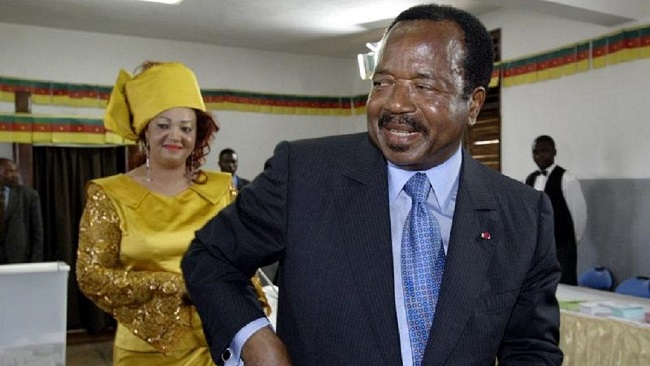
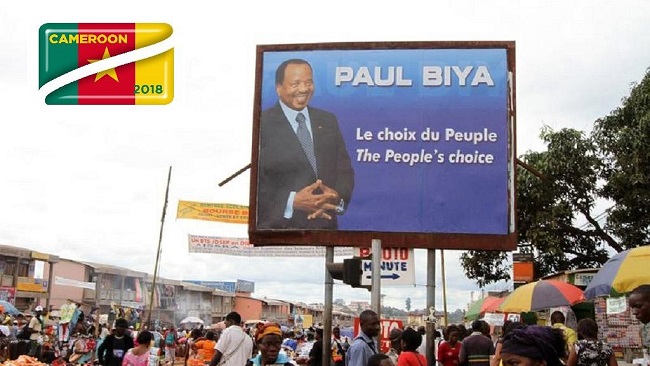
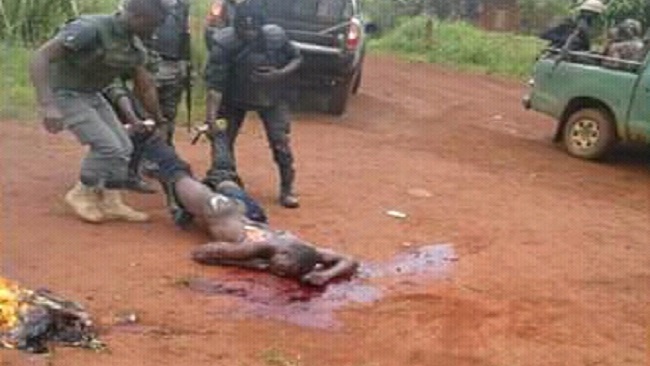
Under the 36-year leadership of President Paul Biya, the nation has been accused of numerous human rights abuses, including killing unarmed protesters, torturing detainees, shutting off the internet and locking up journalists.
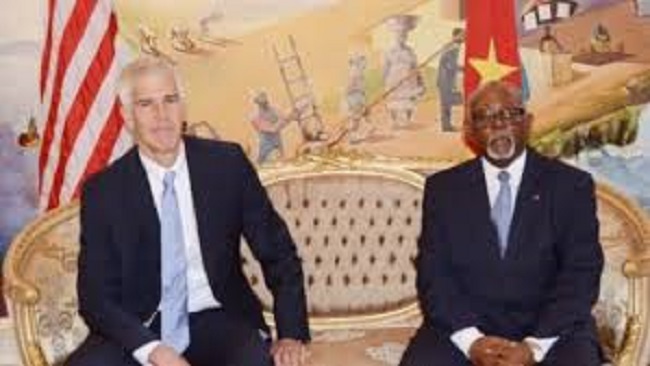
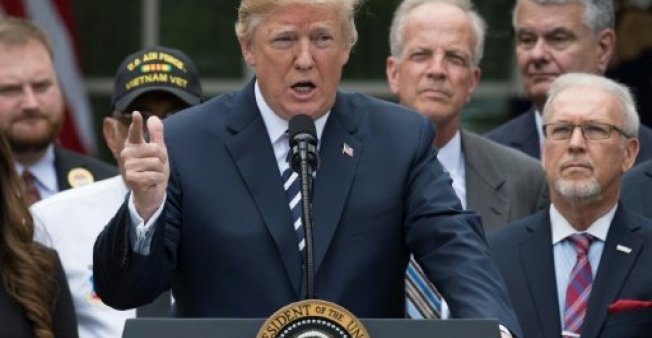
Last month, Washington’s ambassador, Peter Henry Barlerin, met with the 85-year-old president, who has taken initial steps to seek re-election in October. He told Mr. Biya that he “should be thinking about his legacy and how he wants to be remembered in the history books,” saying that George Washington and Nelson Mandela were excellent role models.
The remarks caused an uproar among officials in Cameroon and in the local media, which accused him of trying to influence a foreign election. The minister of foreign affairs summoned the ambassador for a scolding. Mr. Barlerin even received death threats.
The ambassador, a career diplomat, noted that his comments were made following a discussion with the president about the need to stop the violence in areas where the military is battling a bloody separatist uprising. “We do not have a preferred outcome for the election,” Mr. Barlerin said in a recent interview, emphasizing that he has stressed that to government officials. “We want a strong and stable Cameroon.”
The matter seemed to quiet down, temporarily, until late last month when Mr. Barlerin’s photo was plastered across the covers of at least three local newspapers, which accused him of paying nearly $5 million to opposition candidates in the presidential race.

The United States Embassy strongly disputed the claim, releasing a statement that described the story as “entirely false.” Opposition members also denied the reports and speculated they had been planted by the president’s supporters, who know that the population would be appalled at any foreign attempt to influence elections.
“All this agitation is simply that the officials are looking for the sympathy of the people,” said Hilaire Kamga, one of the candidates running against Mr. Biya.
The controversy stirred by the American ambassador is a sign of just how deeply entrenched Cameroon’s current government is. Critics say his loyalists operate with impunity, creating nothing more than a charade of a democracy.
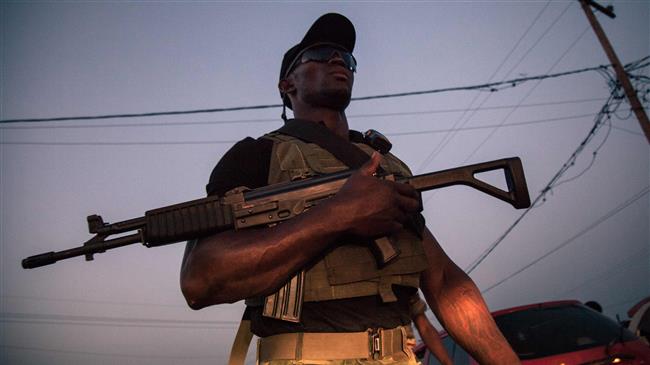
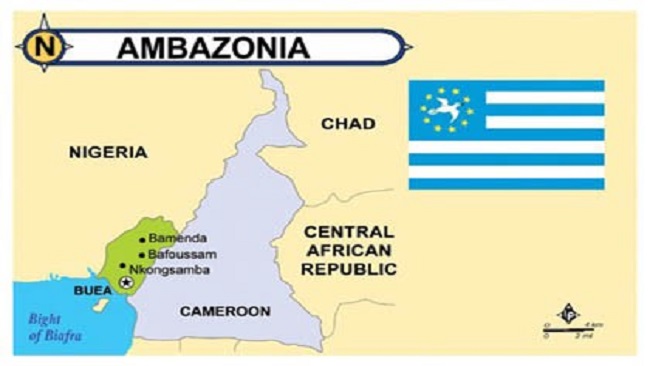
Cameroon has been accused of abusing human rights as it fights the militant group Boko Haram and tries to stop a secession movement being fought by an estimated 1,000 armed rebels who want to create a new, English-speaking nation they call Ambazonia. That conflict, which some analysts fear could spiral into civil war, already has claimed at least 425 lives, according to Unicef, and is spilling into new territories.
Amnesty International said on Thursday it had gathered “credible evidence” that an assault depicted in a horrifying video, showing the shooting deaths of several women and infants by men in camouflaged uniforms, appears to have been carried out by Cameroonian soldiers battling Boko Haram in the country’s Far North. Cameroon’s military and government officials called it “fake news.”
The storm caused by Mr. Barlerin’s remarks about Mr. Biya’s legacy is not the first time American diplomats have become entangled in election controversy on the continent.

Cameroon’s opposition is fractured, and, like in past elections, no candidate with a mass following has emerged. Analysts fear that many voters who most likely would cast a ballot for someone other than the incumbent probably will not be able to vote because of violence that will keep polls from opening.
Some Cameroonians are so fed up with the government that they may withhold their vote in protest, said Hans De Marie Heungoup, a Central Africa senior analyst for the International Crisis Group. Some protests could turn violent, he said, and the military has a record of firing on unarmed protesters.
Past elections won by Mr. Biya have been called flawed and full of irregularities.
Even though victory for Mr. Biya seems likely if he formally joins the race, his supporters were still miffed at what they interpreted as an attempt at a foreign government to urge him to step down.
“The American ambassador is not an enemy of Cameroon,” said Saint-Eloi Bidoung, a first deputy mayor in Yaoundé, the capital, and a member of the governing party. “But he should know that the departure of President Biya from power depends solely on the will of Cameroonians, and not from a foreign power, even the United States of America.”
Emmanuel Simh, a founding member of the opposition Movement for the Renaissance of Cameroon, called the ambassador’s remarks “normal diplomacy” and said they caused a stir only because Mr. Biya’s supporters are panicked about losing power.
Mr. Biya was absent in 2016 when a train overloaded with passengers derailed, killing dozens. And last year when protests by separatists turned violent, the president was in Switzerland.
Critics call him the President of the Hotel Intercontinental, for his preferred accommodation in Geneva.

The Corruption Reporting Project estimated that Mr. Biya has spent $182 million of public money on his private travel. Nearly half of the nation’s population lives below the poverty line.
That Mr. Biya can spend so much time abroad with few implications at home demonstrates his grasp on power.
Government officials have benefited from Mr. Biya’s long tenure. Like many nations in the region, Cameroon is a place of haves and have-nots. Outside Yaoundé, golden painted homes sit atop lush hillsides while beaten-down shacks line the roads at the bottom.
“Ministers,” locals sigh and shrug when asked who lives on the hilltops.
Any plans for a post-Biya nation are murky. If he wins the presidency again, Mr. Biya would be in his 90s by the end of his seven-year term. If he were to die in office, the Senate president would take over until an election is held two months later. But analysts question whether Mr. Biya’s powerful loyalists would stand by idly.
“The institutions there are so weak,” Mr. De Marie Heungoup said.
Unlike other countries in the region that rely on oil revenues to finance most of their budgets, Cameroon has a more diverse economy that includes agriculture and manufacturing, which allowed it to weather a drop in oil prices better than neighboring Nigeria.
Cameroon is in the middle of an unstable region. Conflicts abound in nearby Central African Republic and the Democratic Republic of Congo, and the region’s war with Boko Haram has spilled across borders. Cameroon has welcomed tens of thousands of refugees from those conflicts and has been a key partner with foreign militaries in fighting Boko Haram.
Mr. Barlerin said his office recently had emphasized, as a precaution, to the Cameroon government that the military equipment Americans have provided for the fight against Boko Haram must not be used to fight separatists.
“It’s a wonderful country and we’ve had a lot of good cooperation from the government,” Mr. Barlerin said. “I don’t want to see it go up in smoke.”
He added: “The only thing we want is for elections to be free, fair and credible and that the will of the Cameroonian people be heard.”
Culled from The New York Times
















13, July 2018
Southern Cameroons Forgotten Refugees in Nigeria 0
More than 21,000 people from Cameroon’s Anglophone region have fled to Nigeria in recent months. Not only do they struggle to find enough to eat but also have to come to terms with their traumatic experiences.
Pauline Agba knows many residents of the Adikpo refugee camp. They keep stopping her on her rounds to talk about their situation. Agba works for the Caritas Justice, Development and Peace Committee (JDPC). Together with 20 colleagues and other help organizations she tries to provide for the refugees’ needs. “A couple of days ago the water pumps stopped working,” she said. Now the water supply is functioning again. On this particular day, 34-year-old Napoleon Egumu stops her to ask for building material. “We need doors, to build our houses,” he said, pointing at the unfinished structures.
Nearly 1,100 people, most of them Cameroonians, live in the camp in Nigeria’s Benue state. It doesn’t look like other refugee camps. Small houses are being built everywhere. The children go to schools nearby. The refugees and the local authorities, as well as international organizations, do not expect the conflict in Cameroon to stop anytime soon. They believe the number of refugees will increase.
The United Nations Refugee Agency (UNHCR) says that more than 21,000 people have left Cameroon since October 2017. The majority fled to Nigeria’s Cross River State, followed by Benue and Taraba. “New people are arriving every day,” said Remigius Ihyula, a priest and JDPC coordinator.
Dreams of independence
The refugees fled Cameroon due to the ongoing conflict in the Northwest and Southwest regions. The population there speaks English and not French which is widely spoken in the rest of the country. But Anglophones make up only 20 percent of the 25 million Cameroonians. They have been complaining of discrimination for years. “We suffer. Our children do not get any jobs. We do not have roads, only villages,” said Dorothy Offum, who fled with seven of her own children, two grandsons and two other children.
35-year-old Offum finally feels safe in Adikpo. The fact that the refugee camp is three hours away from the Cameroonian border helps. “We discussed this with the government. Keeping them closer to the border would have increased a sense of uncertainty. The Cameroonian government might have come looking for them,” said UNHCR representative in Nigeria, Antonio Jose Canhandula. However, there is a logistical challenge. New refugees have to be picked up in places like Abande. Due to the bad state of the roads, this can take several weeks.
The refugees’ flight is fraught with danger. Dorothy Offum took a whole week to reach the border. She kept having to hide in the forest until she finally reached Adikpo months later. What she saw still haunts her. “The day we fled they shot at people. Some managed to hide in the bush. Others died.” A woman sitting next to her nodded silently. Later she told us that one of her children was killed on the way to Nigeria.
More than one conflict
It takes the refugees a while to be able to talk about what they’ve experienced. “Many people are traumatized. We haven’t had a chance to deal with this yet,” Remigius Ihyula told DW. The conflict has attracted little attention worldwide, he added. One reason is that Nigeria’s Middle Belt, where the state of Benue is situated, is itself in a deep crisis. Hundreds have died in a conflict between farmers and herdsmen since the beginning of the year. Thousands have left their homes.
When visiting Benue, Antonio Jose Canhandula was made aware of the situation. The Nigerians who have been displaced are now also receiving aid. Canhandula expects the number of Cameroonian refugees to go up. “According to our information, the situation in Cameroon is not improving; it is getting worse,” he said.Separatist violence grips anglophone western Cameroon.
Source: Deutsche Welle