

5, November 2022
UK Energy Company to pay millions over oil bribes in Cameroon, Nigeria 0
Glencore Energy UK has been ordered to pay more than $ 314 million in fines after it bribed officials who worked in several African countries between 2011 and 2016. The company reportedly paid $26 million to the officials from countries like Cameroon, Nigeria, Ivory Coast, Equatorial Guinea, and South Sudan. Prosecutors stated that UK-based Glencore agents used private jets to funnel the cash that would fund the bribes.
According to a report from the UK government’s Serious Fraud Office (SFO), the money was used to guarantee top-grade access to larger cargoesand higher oil grades. The SFO brought the case against Glencore Energy UK and stated that the fine was the biggest that had ever been handed out for a corporate criminal conviction in the UK.
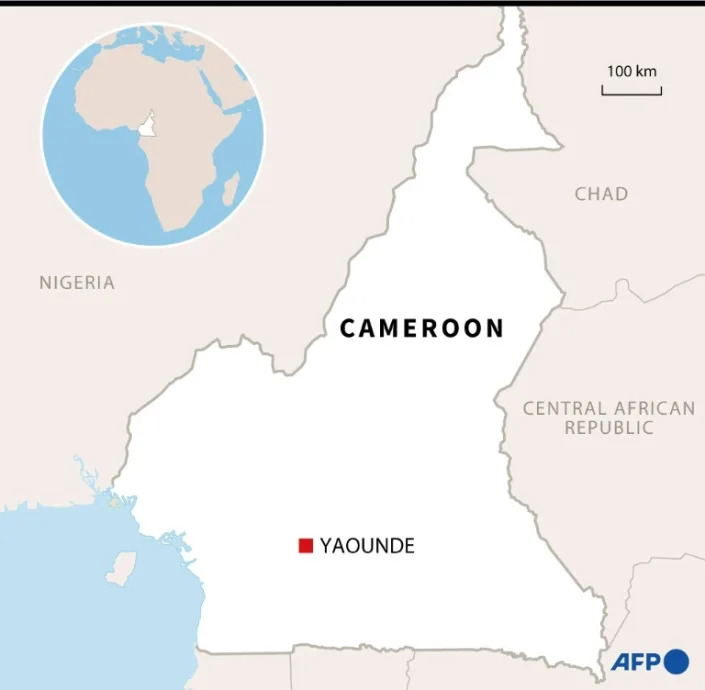
According to the SFO, between 2012 and 2015, an employee of the UK company and a representative from one of the Nigerian oil companies withdrew a total of $13.7 million in cash from Glencore’s Swiss cash bank. The cash was then transported on a private jet to Cameroon, where it was used to bribe officials in the country’s national oil and gas companies. Earlier in June, the conglomerate pleaded guilty to seven counts of bribery at a London court. The judgment of $ 314 million was announced on Thursday and included fines, legal costs, and confiscation of the profit Glencore made from its bribes.
The United States Department of Justice launched an investigation in 2018 to examine Glencore’s compliance with US money laundering and corruption laws dating back to 2007. The query specifically highlighted concerns about the company’s dealings in Nigeria, the Democratic Republic of Congo, and Venezuela. In 2019, UK’s SFO started its own investigation into the UK subsidiary of Glencore over what it stated as “suspicions of bribery” in Africa.
In a statement, Clare Montgomery, a representative for Glencore, said that the company regretted its actions.
“The company unreservedly regrets the harm caused by these offences and recognises the harm caused, both at national and public levels in the African states concerned, as well as the damage caused to others,” Montgomery said.
Source: OkayAfrica


























5, November 2022
World Bank Approves $497 Million in Financing to Lower South Africa’s Greenhouse Gas Emissions and Support a Just Transition 0
The World Bank Group Board of Executive Directors approved South Africa’s request for a $497 million project to decommission and repurpose the Komati coal-fired power plant using renewables and batteries. The project will also create opportunities for the affected workers and communities. This is in line with the government’s efforts to transition the country toward a low carbon development path with reliable, affordable, and sustainable energy for all.
Addressing energy poverty and transitioning toward lower carbon development requires a reliable power sector to underpin inclusive economic growth. The Komati Project aims to help mitigate climate change, enhance energy security, and support economic opportunities in the Komati area. The project is aligned with the country’s Just Transition Framework, which aims to minimize the socio-economic impacts of the climate transition, improve the livelihoods of those most vulnerable, and embrace the opportunities stemming from the transition.
The decommissioning and repurposing of the Komati coal-fired plant is a demonstration project that can serve as a reference on how to transition fossil-fuel assets for future projects in South Africa and around the world. The project will provide learning experiences through a cycle of piloting, monitoring, assessing, documenting, and information sharing.
“Reducing greenhouse gas emissions is a difficult challenge worldwide, and particularly in South Africa given the high carbon intensity of the energy sector,” said World Bank Group President David Malpass. “Closing the Komati plant this week is a good first step toward low carbon development. We are cognizant of the social challenges of the transition, and we are partnering with the government, civil society, and unions to create economic opportunities for affected workers and communities.”
The decommissioning of the Komati coal-fired plant will result in reduced carbon emissions and improvement of ambient air quality in the vicinity of the plant. The power sector is a major contributor to greenhouse gas emissions in South Africa, accounting for 41 percent of its CO2 emissions. This is due mainly to Eskom’s fleet composition. Its 15 coal-fired power plants, with an average age of 41 years, provide 38.7 GW of the country’s 52.5 GW installed capacity.
“This project is critical to our understanding of the sustainability of decommissioning, repurposing, and mitigating the socio-economic impacts for workers and communities before we scale up the move of the power sector into a low-carbon path,” said South Africa Minister of Public Enterprises, Pravin Gordhan. “It is part of implementing the country’s Integrated Resource Plan 2019 to gradually retire 12 GW of our old and inefficient coal-fired power fleet by 2030 and to scale up private sector-led renewables of 18 GW during the same period.”
The repurposing of the plant will enhance energy security in South Africa with the installation of a combination of 220 MW renewable energy solutions (including 150 MW solar PV solar and 70 MW wind) and 150 MW batteries, which together will help to improve the quality of electricity supply and grid stability.
Under the Komati project, the workers will be supported through a comprehensive transition plan, elaborated jointly with inputs from staff and unions. Options for the affected workers will include transfers to other Eskom facilities, re-skilling, and upskilling for deployment to the renewable energy plants.
A portion of project financing will be devoted to creating economic opportunities for local communities, which is expected to benefit approximately 15,000 people. Community-driven projects, skills training, incubation support, and business development services for new and existing micro, small, and medium enterprises are expected to create jobs in agriculture, local manufacturing, and digital technology. Activities will be carried out in coordination with local government, civil society organizations, and the private sector.
The Komati Just Energy Transition Project is financed jointly through a $439.5 million World Bank loan, a $47.5 million concessional loan from the Canadian Clean Energy and Forest Climate Facility (CCEFCF), and a $10 million grant from the Energy Sector Management Assistance Program (ESMAP).