
26, April 2023
Ireland: Cameroonian women travel to Dublin to thank nuns who taught them 0
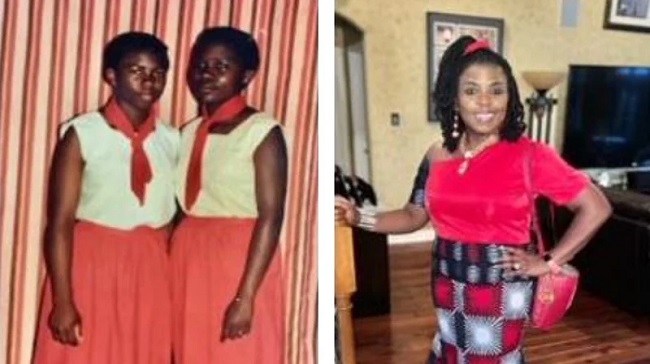
A group of 21 women are travelling to Dublin to show their appreciation for Irish nuns who taught them in Cameroon during the 1980s.
The women, who are all graduates of Lourdes Secondary School for Girls in Mankon, a town in western Cameroon, will be paying tribute to the Holy Rosary Sisters, who empowered them when they were teenagers.
The group, who called themselves the “Pacesetters”, include members who have worked and travelled the world, some earning PhDs and Masters with careers in engineering, nursing, medicine and more.
They are due to land in Dublin Airport this afternoon.
Dr Claire Minang, one of the students from the class of 1986, said the trip was an opportunity to thank the sisters.
“They gave us everything we needed to excel in the world when we got out. That’s why we’re so grateful,” she told RTÉ News.
During their trip to Dublin, the group will be visiting Sr Mary Neville, 90, who served as their principal.
For Nagella Nwana Nukuna, now a technical manager at DuPont, the multinational chemicals firm, the school, while strict and structured, allowed them to grow.
“They were loving sisters to us. And, as we have grown up, we could all see that that level of structure is sometimes good,” Ms Nakuna said.
Although Sr Mary has long since retired, she remembers her time at the school, and her time with her girls fondly.
She said that each of the women appreciated the opportunity of education, during a time when it was generally the males that went to highs school and further education.
“The girls were anxious to make the best of their opportunity, and they worked very hard. I found them very conscientious and responsible people,” she said.
Sr Mary also applauded their parents who sent them to the school, acknowledging that, for many, it was a big financial sacrifice.
During her time there, she tried to ensure the best learning environment, working closely with the other teachers and prefects, even banning corporal punishment.
“I encouraged them to say what kind of school they want, how are you going to achieve that and having great pride in your own compound, in your school and in your own family” Sr Mary said.
Nogwa Fonjoe, who now works in cloud computing, remembers joining the school. She said that she had initially felt homesick after leaving her parents’ home.
However, despite the often strict curriculum and daily structure, she credits Sr Mary and the rest of the Holy Rosary Sisters for teaching her discipline.
Speaking to RTÉ News, she said it helped the students be more organised.
“It helped us appreciate what a good education is and we’re able to pass that on as well to our children.”
Today, the women are all still in touch with each other, regularly in contact through WhatsApp and supporting each other through their milestones.
For Sr Mary, it is an opportunity to reunite with the girls she once knew and celebrate the heights they have reached.
“Now they’ll be women, some of them grandmothers, well dressed and very mature. I’m so excited to be meeting them again.”
Source: RTE















26, April 2023
Boko Haram: Biya regime to redeploy troops to CAR, Nigeria borders amid spike in attacks 0
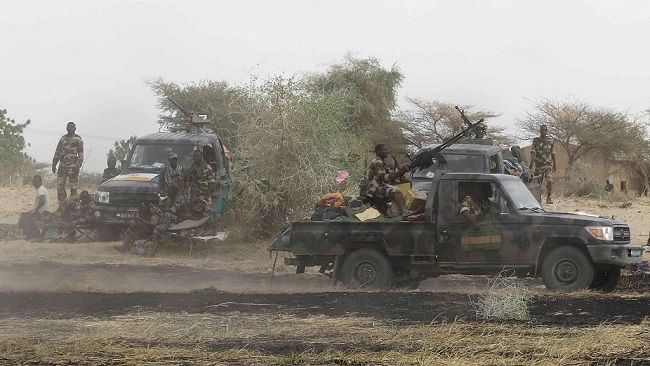
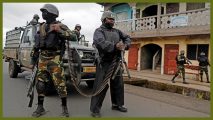
Cameroon’s military plans to redeploy troops to its borders with Nigeria and the Central African Republic after an increase in attacks from militants and rebels.
The military said hundreds of Boko Haram fighters are hiding in the bush after last week’s invasion of the Mayo Moskota district on the northern border with Nigeria. The Cameroon government reported several hundred homes were set on fire, leaving thousands homeless.
Joseph Beti Assomo, Cameroon’s defense minister, said President Paul Biya ordered him to convene an emergency security meeting in Yaounde this week to examine ways of stopping the attacks.
Assomo said a resurgence of Boko Haram attacks is causing untold suffering on civilians on the border with Nigeria after a long period of relative peace. He said militias created by civilians are struggling to combat thousands of Islamist extremists who have been crossing to Cameroon from Nigeria since January to commit atrocities on civilians and government troops.
Assomo, who spoke on Tuesday during the top security meeting also attended by police chiefs, said a week hardly goes by without large-scale attacks by the extremists.
Northern border villagers said Cameroon’s military began withdrawing troops when Abubakar Shekau, the leader of the Boko Haram terror group, was declared killed. Nigeria’s government confirms Shekau died in May 2021.
Cameroon’s military denied accusations that troops have abandoned civilians. The military said it has changed its strategy, but the protection of civilians and their property remains a priority.
Meanwhile, the military said the security meeting concluded that Central African Republic rebels fleeing clashes with the U.N. peacekeeping force known as MINUSCA are regularly crossing into eastern Cameroon for supplies. The rebels also abduct civilians for ransom.
Military officials said they have examined ways of fully stopping separatist attacks in Cameroon’s western regions. Separatists have been fighting to carve out an independent English-speaking state from the French majority nation since 2017.
Deben Tchoffo, governor of the Northwest region, said the military is in control of all 34 districts in Cameroon’s English-speaking Northwest region, despite separatists attacking civilians and burning public edifices at regular intervals. Many civilians have returned to their villages, and children are returning to schools in huge numbers which, he added, is an indication that current attacks by fighters are like the last kicks of a dying horse.
Cameroon’s military said it will redeploy troops to western regions and the borders with Nigeria and Central African Republic. The government said troops will be deployed to new areas where separatists, terrorists and rebels are attacking, but did not say how many forces will be deployed or redeployed.
In March, 2,500 troops graduated from Cameroon’s military training institutes. The government said it will train 3,000 fresh troops within the next 20 months to protect civilians and their property all over the central African state.
Source: VOA