
26, September 2025
From Elysée Palace to prison: The stunning downfall of President Nicolas Sarkozy 1
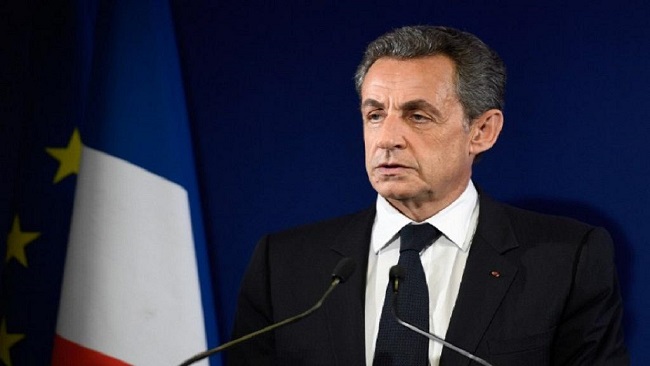
Nicolas Sarkozy, once a dynamic and controversial leader who promised to transform France, has been sentenced to five years in prison for criminal conspiracy tied to illegal campaign funding from Libya. This marks a stunning fall for Sarkozy, who has faced numerous legal battles since leaving office in 2012 and now becomes the first French head of state to face jail time in decades.
Nicolas Sarkozy entered the Elysée Palace in 2007 boasting hyperactive energy and a vision to transform France, but lost office after just one term and the ex-president is now set to go to prison in a spectacular downfall.
Embroiled in legal problems since losing the 2012 election, Sarkozy, 70, had already been convicted in two separate cases but managed to avoid going to jail.
But after a judge sentenced him on Thursday to five years for criminal conspiracy over a scheme to find funding from Libya’s then-leader Moamer Kadhadi for his 2007 campaign, Sarkozy appeared to acknowledge that this time he will go behind bars.
Prosecutors have one month to inform Sarkozy when he must report to jail, a measure that will remain in force despite his promised appeal.
“I will assume my responsibilities, I will comply with court summonses, and if they absolutely want me to sleep in prison, I will sleep in prison but with my head held high,” he told reporters after the verdict.
“I am innocent. This injustice is a scandal. I will not accuse myself of something I did not do,” he added, declaring that hatred towards him “definitely has no limits”.
The drama and defiance were typical of Sarkozy, who is still seen by some supporters on the right as a dynamic saviour of his country but by detractors as a vulgar populist mired in corruption.
Born on January 28, 1955, the football fanatic and cycling enthusiast is an atypical French politician.
The son of a Hungarian immigrant father, Sarkozy has a law degree but unlike most of his peers did not attend the exclusive Ecole Nationale d’Administration, the well-worn production line for future French leaders.
After winning the presidency at age 52, he was initially seen as injecting a much-needed dose of dynamism, making a splash on the international scene and wooing the corporate world. He took a hard line on immigration, security and national identity.
But Sarkozy’s presidency was overshadowed by the 2008 financial crisis, and he left the Elysée with the lowest popularity ratings of any postwar French leader up to then.
Few in France have forgotten his visit to the 2008 agriculture show in Paris, when he said “get lost, dumbass” to a man who refused to shake his hand.
Sarkozy failed to win a second mandate in 2012 in a run-off against Socialist François Hollande, a bruising defeat over which he remains embittered more than a decade on.
The 2012 defeat made Sarkozy the first president since Valéry Giscard d’Estaing (1974-1981) to be denied a second term, prompting him to famously promise: “You won’t hear about me anymore.”
That prediction turned out to be anything but true, given his marriage to superstar musician and model Carla Bruni and a return to frontline politics. But the latter ended when he failed to win his party’s nomination for another crack at the presidency in 2017.
The series of legal woes left Sarkozy a behind-the-scenes political player, far from the limelight in which he once basked, although he has retained influence on the right and is known to meet President Emmanuel Macron.
But Sarkozy is tainted by a number of unwanted firsts: while his predecessor and mentor Jacques Chirac was also convicted of graft, Sarkozy was the first postwar French former head of state to be convicted twice and the first to be formally given jail terms.
Already stripped of the Legion of Honour, France’s highest distinction, he will now be the first French head of state to go to jail since Philippe Pétain, France’s nominal leader during the Nazi occupation.
Source: AFP














26, September 2025
Biya: absent candidate in election 0
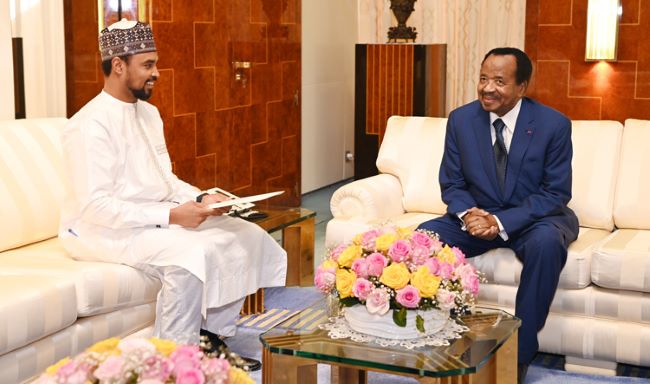
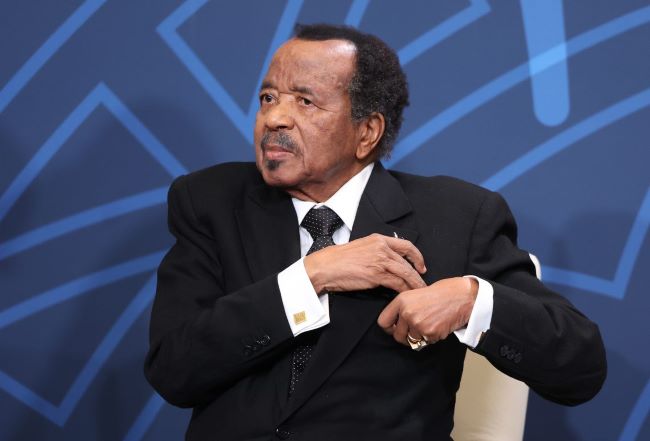
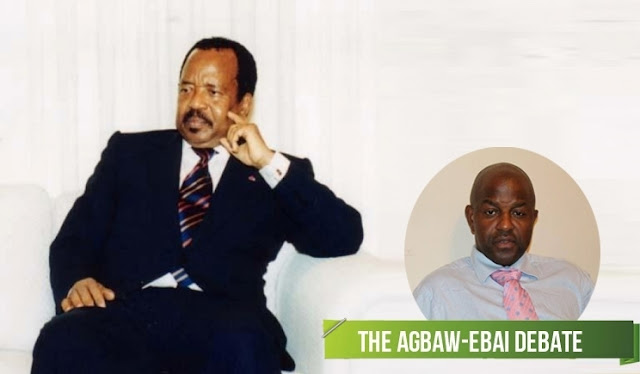
As campaigning starts on Saturday for Cameroon’s presidential election, the nation is puzzling over the whereabouts of the lead candidate: its 92-year-old leader, Paul Biya, the world’s oldest head of state.
In power since 1982 and seeking an eighth term in office in the October 12 polls, Biya left the central African country on Sunday for a “private trip to Europe”, his office said, without elaborating.
Diplomatic sources said the leader, who is rarely seen in public, was in Geneva, his favourite destination for personal visits, with protesters camping outside the United Nations headquarters in the Swiss city on Friday to voice their anger at Biya.
The trip comes a week after his daughter Brenda called on Cameroonians not to vote for him, in a TikTok video that she later retracted.
A weeks-long trip to Switzerland by Biya last September had fuelled rumours of his death, forcing the government to issue a statement reassuring the public about his health.
This time, Biya appeared in good health in a video of his departure released by the presidency, showing him accompanied by his wife Chantal and three advisers.
But the president was absent on Thursday from his scheduled appearance at the United Nations General Assembly in New York, instead represented by his foreign minister.
‘Illusion’ of health
Biya is set to contend for another seven-year term against 11 other candidates.
His RDPC party is rumoured to have scheduled a rally on Sunday in the northern city of Maroua.
The party has not confirmed how many events it will organise and whether Biya will participate.
He announced his candidacy on July 13 on X but has not directly addressed his fellow citizens since.
“Initially, there were rumours that the president himself was not very motivated to run again,” and that his aides pushed him to do so, said Arrey Elvis Ntui, senior analyst for the International Crisis Group.
David Kiwuwa, head of the School of International Studies at the University of Nottingham’s China campus, pointed to Biya’s age and health.
“The more he stays out of the public eye, the more he maintains the illusion that he is mentally and physically suited for the office,” Kiwuwa said.
The opposition, meanwhile, had failed to name a consensus candidate, Maurice Kamto, Biya’s top opponent and runner up in the 2018 election, said on Friday.
“Many Cameroonians are frustrated that the opposition, which has been trying for nearly 30 years to replace President Biya, is still unable at this stage to agree,” said Ntui.
Criticised by daughter
With the opposition divided, Biya is favourite to win the election — despite the recent embarrassment involving his daughter.
Late on September 17, Brenda Biya, a regular at the luxury InterContinental hotel in Geneva, published her shock video on TikTok, calling on voters to abandon her father.
It circulated widely before being deleted from her account, sparking a wave of reactions that prompted her to post an apology days later.
“I know nothing about politics. Don’t follow my advice,” she said in the follow-up video on September 21.
Brenda Biya has also faced legal troubles, having been convicted of defaming a Cameroonian-Nigerian artist who accused her of insults and lies on social media.
The judgement noted that her family “frequently stays at the InterContinental Hotel in Geneva, where rooms are rented year-round”.
A 2018 investigation of economic crime by a consortium of journalists found Paul Biya had spent some 4.5 years of his presidency abroad, largely in Switzerland, at an estimated cost of $65 million.
‘Re-elected by default’
Protesters against Biya’s latest stay in Switzerland heeded a call by an association of Cameroonians in Europe Friday to rally in front of the UN headquarters in Geneva, chanting “Biya murderer” in the pouring rain.
The demonstration was initially organised to denounce opposition leader Kamto’s barring from the presidential ballot, but took on a new dimension.
Laurent, who came from Frankfurt in Germany to attend the protest, told AFP he was angry at Kamto’s rejection and Biya’s absence from the campaign trail.
“We’re getting the impression that the election is already stitched-up and that Paul Biya will be re-elected by default,” he said.
Diosky Moresmo, spokesperson for a Cameroonian diaspora association in Belgium, told AFP the protest wanted “to chase Paul Biya out of Europe”, criticising the president for spending the “the money of the Cameroonian people”, who have “no water, no electricity, no hospitals”, on the visits.
Nearly a quarter of Cameroon’s population lives under the poverty line, according to the World Bank.
“Every day, Cameroonians die,” the protest group said.
“How can he rest peacefully in Geneva, at taxpayers’ expense, while his people suffer?”
Culled from AFP