
20, January 2020
Nigeria: Four die in oil pipeline fire 0
Four people have been killed and several shops and vehicles burnt after thieves breached a fuel pipeline in Lagos, Nigeria’s commercial hub, causing an explosion.
(Source: AFP)

20, January 2020
Four people have been killed and several shops and vehicles burnt after thieves breached a fuel pipeline in Lagos, Nigeria’s commercial hub, causing an explosion.
(Source: AFP)
20, January 2020
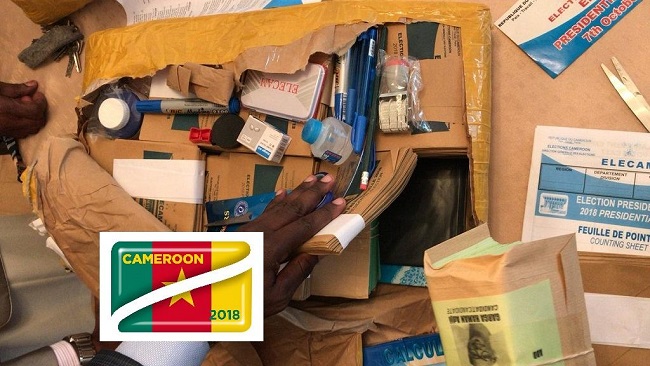
Cameroon on Feb. 9 will host double elections, legislative and municipal, despite worrying socio-political crisis and insecurity in the English-speaking northwestern and southwestern regions of the country.
Armed separatist groups have been threatening security in this part of the country for more than three years. A few weeks before the legislative and municipal elections, they are trying to ban people from casting their votes.
“People have to visit the southwest and go down to the fields in the northwest to see if, in a context of war, we can have free and fair elections. I am really going to say no, but I would like someone to prove me wrong,” said Njong Evaristus Ndim, deputy member of the main opposition Social Democratic Front (SDF).
In the country’s northwestern regions, the offices of the Elections Cameroon (ELECAM), in charge of the country’s elections, are not functional, he told Anadolu Agency.
“Prove to me that you can also visit the electoral offices of ELECAM and how functional they are. Apart from Bamenda, the capital of this region, the other offices are not functional. Everyone is on the run. I am a member of the parliament for Boyo in the northwest, but I am in Yaounde. I can’t even get into my riding,” Evaristus Ndim added.
He also said his fellow MPs from the ruling Cameroon People’s Democratic Movement (CPDM) party, “who are supposed to be privileged”, are also unable to reach the areas they are supposed to represent in the conflict zones.
“Several members of our party have been and are being kidnapped in various constituencies. Police stations should be set up in different localities. And yet there are not many of them. Even the agents in charge of organizing these elections are wondering how they will set up the ballot boxes with the armed conflict. But also how will they get closer to the people so that they will have the opportunity to vote?” decried Evaristus Ndim.
According to him, with the level of insecurity, people will be forced to go only to localities with police stations and vote for representatives they do not even know.
“Is this justice? Local people are supposed to vote for those they know, believe in and expect for the development of their aspirations. But in reality, local people are afraid, threatened and lack confidence because the government fails to guarantee their safety. Meanwhile, the armed groups forbid them to take part in voting. How are these people supposed to go and vote? And if they don’t, who will be their local leaders?” asked the SDF representative.
Real dialogue needed before elections
He does not understand why the head of the country decided to give priority to the organization of these elections instead of bringing peace first.
“Peace has not yet been established in the two English-speaking regions, it is a fact,” said Joseph Mbah Ndam, a SDF deputy in the northwest.
“We have submitted our voters’ lists to demonstrate the impossibility for these elections to take place in this context,” he added.
He also marked a factor that hinders the upcoming elections to be held.
“ELECAM asked us to put representatives at the police stations and we did not do so. We can’t do it, because everyone has left the districts. So, those are the peculiarities of the situation. How are the elections going to take place when we can’t put these officers?” asked Mbah Ndam.
But he hopes that the president of the country will allow the elections to take place freely and safely.
“But if, in the end, the pressure is not changed from what we know now, the elections will of course be impossible,” he said.
Evaristus Ndim also wondered how he and voters without protection are supposed to move for election campaigns and voting.
He said: “The barrel of the gun can never bring total peace. What Cameroonians need the most is a real dialogue before addressing the issue of elections”.
Wanlo John Chiamua, a member of the parliament from CPDM, said more optimistically that he trusts the government, and believes it will take the necessary measures for civilians.
“Security arrangements have been made to ensure that, throughout the country, all our citizens can exercise their right to vote. If necessary, they will be reinforced,” said Cameroonian President Paul Biya in his end-of-year speech on Dec. 31. This was also confirmed on Monday by Territorial Administration Minister Paul Atanga Nji at a meeting of governors dedicated to the upcoming elections.
Atanga Nji spoke from Yaounde and he would not dare to venture into conflict zones such as the city of Bamenda without a military escort, said Evaristus Ndim, being skeptical about the security arrangements.
He also reminded the multiple attacks on the governor of the northwest during his displacement in spite of the armored vehicles and all the security protocol.
Culled from aa.com

20, January 2020
The world’s billionaires have doubled in the past decade and are richer than 60 percent of the global population, the charity Oxfam said Monday.
It said poor women and girls were at the bottom of the scale, putting in “12.5 billion hours of unpaid care work each and every day,” estimated to be worth at least $10.8 trillion a year.
“Our broken economies are lining the pockets of billionaires and big business at the expense of ordinary men and women. No wonder people are starting to question whether billionaires should even exist,” Oxfam’s India head Amitabh Behar said.
“The gap between rich and poor can’t be resolved without deliberate inequality-busting policies,” Behar said ahead of the annual World Economic Forum in Davos, where he will represent Oxfam.
Oxfam’s annual report on global inequality is traditionally released just before the forum opens on Tuesday in the Swiss Alpine resort.
It had some astonishing statistics.
“The 22 richest men in the world have more wealth than all the women in Africa,” it said.
If the world’s richest one percent paid just 0.5 percent extra tax on their wealth for 10 years, it would equal the investment needed to create 117 million new jobs in elderly and child care, education and health, Oxfam said.
Oxfam’s figures are based on data from Forbes magazine and Swiss bank Credit Suisse, but they are disputed by some economists.
The numbers show that 2,153 billionaires now have more wealth than the 4.6 billion poorest people on the planet.
Women and girls are burdened in particular because they are most often care givers that keep “the wheels of our economies, businesses and societies moving,” Behar said.
They “often have little time to get an education, earn a decent living or have a say in how our societies are run,” and “are therefore trapped at the bottom of the economy,” he added.
“Across the globe, 42 percent of women cannot get jobs because they are responsible for all the caregiving, compared to just six percent of men,” Oxfam figures showed.
(Source: AFP)
19, January 2020
Liverpool’s march towards the Premier League title gathered pace with a 2-0 win over rivals Manchester United.
The battle for top four places was at a standstill after Chelsea, United and Leicester were beaten, while Tottenham and Arsenal had to settle for draws.
AFP Sport looks at three things we learned from the English top-flight this weekend:
Liverpool let loose
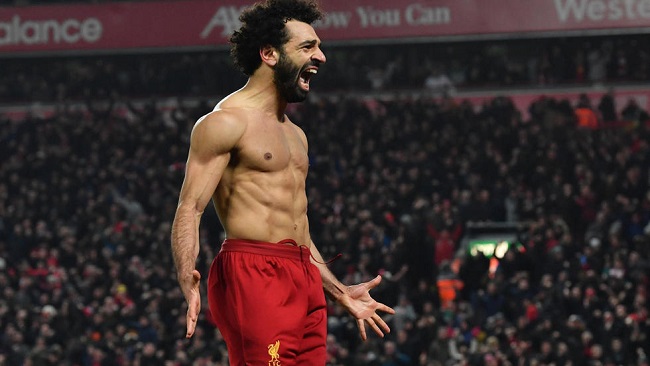
Not until Mohamed Salah sealed another three points in Liverpool’s relentless run towards the title against Manchester United with virtually the last kick of the game did the Kop strike up a chorus of “we’re going to win the league.”
After a 30-year wait to win the title, punctuated by collapses from promising positions, the fear it could slip away again has all but evaporated at Anfield as Liverpool streak further clear of the field.
The lead now stands at 16 points with a game in hand over second-placed Manchester City.
For a side that have taken 91 points from the last possible 93 in the Premier League, and won a Champions League in that time, that is an advantage that is almost certain to not be surrendered.
Lampard eyes reinforcements
Frustrated by Chelsea’s lack of killer instinct, Frank Lampard’s patience finally wore out after a damaging 1-0 defeat at Newcastle.
In a familiar story for Chelsea fans this season, they watched Lampard’s side dominate possession at St James’ Park, only to squander the few genuine chances they created before Isaac Hayden’s stoppage-time header won it for Newcastle.
Lampard had already bemoaned the paucity of Chelsea’s creative play against defensive opponents after several shock home defeats.
But now he made it clear his young team, featuring promising striker Tammy Abraham, need reinforcements if they are to hold onto a top four place.
“If we are looking for people to bring in to the areas to win games when you are controlling it, it is scoring goals,” Lampard said.
“We can’t work anymore in training on finishing. You need to have that killer instinct in front of goal.”
Spurs goal drought
Tottenham’s goals have dried up alarmingly as they contemplate missing out on the Champions League for the first time in five seasons.
Jose Mourinho’s men have failed to score in their past three league games, against Southampton, Liverpool and Watford, despite mustering a combined 41 shots.
They are still playing inventive football but are struggling to put their chances away in the absence of the injured Harry Kane and find themselves eight points behind fourth-placed Chelsea.
Tottenham squandered a number of opportunities in Saturday’s 0-0 draw against Watford but Mourinho was largely positive afterwards, praising his side’s football, though admitting they had been light on forward power.
“It’s not easy,” he said. “Again it’s the kind of game where you have a goalscorer, where you have a guy who smells goals, probably you win it. That missing link is there.”
Mourinho admitted he would be interested in boosting his attacking options if the right player became available in the January transfer window.
Source: AFP
19, January 2020
As election day approaches and doubts about the holding of the election in the two English-speaking regions of Cameroon grow, ruling party (CPDM) officials are now financing terrorist groups to intimidate civilians in the English-speaking parts of the country.
According to a source close to the CPDM, the government party that is responsible for the corruption in country, government officials are paying young hungry men to intimidate the population in the hope that they will go out and vote or they will be seen as supporters of the rebellion.
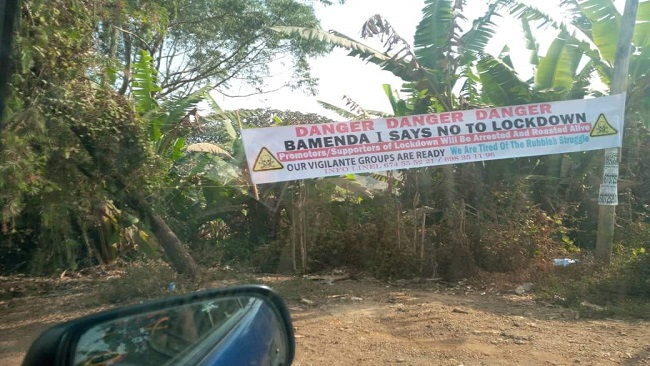
The tactics vary from town to town and from the above banner, it is clear that the government is paying some ghost workers to put up those banners which are designed to intimidate Amba fighters .
The government has been working hard to turn tables on the fighters by creating parallel groups that do pose as Amba fighters.
Some of the groups set up by the Territorial Administration Minister, Paul Atanga Nji, have been kidnapping civilians and asking for huge ransom.
In certain cases, government-created groups have been working closely with government troops and they have been razing villages; a strategy aimed at pushing the innocent population onto withdrawing its support of the genuine Amba fighters who have proven, on many occasions, that they are working for the population.
Last week, government forces went on a home destruction spree in the northwest region, an initiative that has left many old people homeless and this exposes the vulnerable to the elements, especially as harmattan is sweeping across the two English-speaking regions of the country at this time of the year.
But the killing- and home-burning sprees are not helping government efforts as they are radicalizing many in the region and uniting the Diaspora that is hell-bent on bringing about genuine democratic change in Cameroon.
The Yaounde government has decided to organize twin elections in February 2020 in Cameroon against the advice of the international community that has clearly pointed out that elections cannot be held in the two English-speaking regions of the country because of the government-sponsored and government-approved violence that has left more than 5,000 people dead.
From October 2016 when the crisis in Cameroon’s English-speaking regions started, some 270 villages have been burnt down, with the old and mentally ill being some of the victims of the government’s disproportionate use of force to quell a rebellion that started as protests by teachers, students and lawyers.
The government’s mismanagement of the situation has radicalized almost 90% of Southern Cameroonians and united the Southern Cameroonian Diaspora which has the wherewithal to bring the country’s economy to its knees.
Over the last three years, many state-owned corporations in the two English-speaking regions of the country have gone under, as Amba fighters have constituted a real threat to workers of these corporations.
CDC, PAMOL and SONARA have all run into massive storms which have put them out of business.
PAMOL was a secure revenue stream for the corrupt and inefficient Yaounde government while the CDC and PAMOL offered government officials the opportunity to have their girlfriends and relatives recruited at senior levels in corporations that have been white elephant projects for years.
Though located in the country’s southwest region, SONARA which is the country’s lone refinery, has been predominantly Francophone; something that has caused huge and intense friction between the government and the English-speaking minority.
As the government insists on using violence to address the issues raised by the country’s English-speaking minority, the country’s economy has continued its relentless march towards the bottom of the abyss.
More than 2 million English-speaking Cameroonians have been displaced, with some 500,000 living in Nigeria where they are living rough.
After more than three years, it is clear that the government’s military violence is not the right medication for a problem many around the world hold that a genuine and inclusive dialogue could deliver better results than what government atrocities have achieved in three years.
In October 2019, the government demonstrated its ineptitude and dishonesty when it hastily organized a major national dialogue that was major just in name.
To hoodwink the international community into believing that the so-called dialogue was inclusive, the government invented its own Diaspora which comprised desperate and cash-strapped individuals.
The real Diaspora was never invited and even when the government advised that members of the real Diaspora could attend, the plan was to arrest them when they arrived Cameroon; a plan that failed woefully as it was leaked by some French-speaking Cameroonians who are also against the corrupt government.
It should be mentioned at this juncture that many of the resolutions and recommendations of the so-called major national dialogue were already known as there were strict instructions that discussions at the forum must only be limited to the country’s president’s prescription.
A source close to the (dis)Unity Palace, the name of the country’s presidency, has revealed that the government is very concerned about the situation in the two English-speaking regions of the country, as it has not been able to roll back the rebellion after three years.
The source, which elected anonymity, advised that if the country’s Diaspora could be more united, the government would yield to its demands.
It added that if the Diaspora’s fundraising capacity had remained at the 2017 and 2018 levels, the crumbling government would have yielded to the pressure.
The source called on the Cameroon Concord News Group to urge all the factions to unite in order to bring pressure to bear on the government.
It stressed that the Yaounde government trembles each time an American official dwells on government atrocities and the need for an inclusive dialogue.
The source indicated that increasing divisions within the Southern Cameroonian Diaspora are given the beleaguered government a lot of hope that it could break the back of the rebellion sooner rather than later.
The government’s recent display of force by sending over a thousand forces of lawless(ness) and (dis)order to the region is designed to intimidate Amba fighters and to prove to the world that it is capable of organizing elections across the entire country, including in the restive anglophone regions.
Despite the extreme brutality unleashed by the government on the civilian population, a huge majority of Southern Cameroonians still stand solidly behind their fighters who have given the government’s sex-starved, alcohol-inflamed and trigger-happy soldiers a run for their money.
With the government still counting on military violence as a cure for the crisis and Amba fighters holding that independence is the answer, the days ahead are really bleak and many more lives are clearly on the line.
The international community has to be more aggressive in its efforts to find a long-lasting solution to the genocide playing out in Cameroon.
The positions of the warring parties are clear and only a strong third party like the United Nations or United States can truly engineer a satisfactory solution, failure of which, banners like the one above will continue to pop up.
By Soter Tarh Agbaw-Ebai in the United Kingdom and Kingsley Betek in Cameroon
19, January 2020
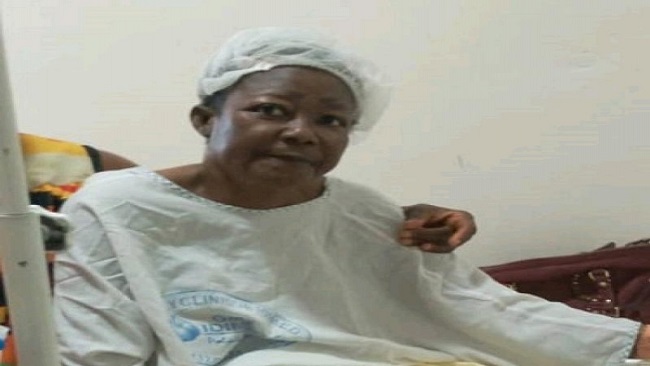
Renowned Cameroonian artist Nguea La Route who had a hip disarticulation operation, meaning they removed her left leg up to and including the hip joint on October 4, 2019, has gotten another amputation on her right leg. The operation took place at the Douala General Hospital on the night of Wednesday, January 15, 2020.
Mama Nguea entered the surgery around 11pm Wednesday and came out shortly after 3 a.m. Local media reported that Nguea La Route had a long session in the intensive care unit.
The artist, whose condition seemed stabilized after the first operation, had left Laquintinie hospital several weeks ago. Things however took a dramatic u turn and she was rushed to the General Hospital where a second amputation took place.
Cameroon Concord News understands a charity concert was organized in Douala on December 2, 2019 in support of the artist. The free concert sponsored by Nicole Mara brought together several legends including Ben Decca, Toto Guillaume, Franco and Hobscur.
The musicians took popular songs from Mama Nguea that celebrated life and raised 400,000 CFA francs which was handed over to her.
By Rita Akana
19, January 2020
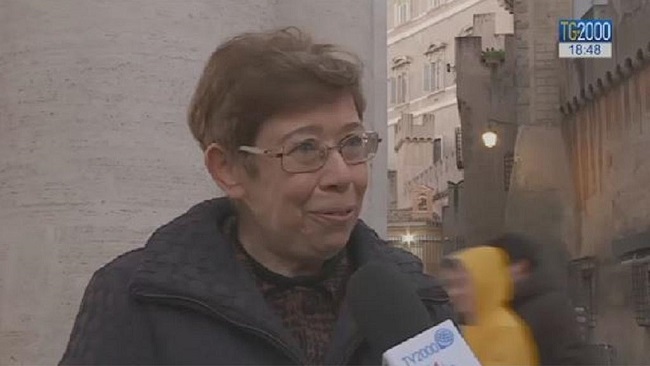
Pope Francis has appointed Francesca Di Giovanni to be the new undersecretary for multilateral affairs in the Vatican’s Secretariat of State.
It is a first at the Vatican for a woman.
Di Giovanni said she did not expect the appointment, but was looking forward to advance a “feminine point of view” in her new role.
The Pope “surprised us, as he often does, with this decision”, Di Giovanni said.
Speaking to local media on Wednesday, she said she had not yet had the chance to speak with the Pope since her appointment, but that she intents to write to him.
AP
19, January 2020
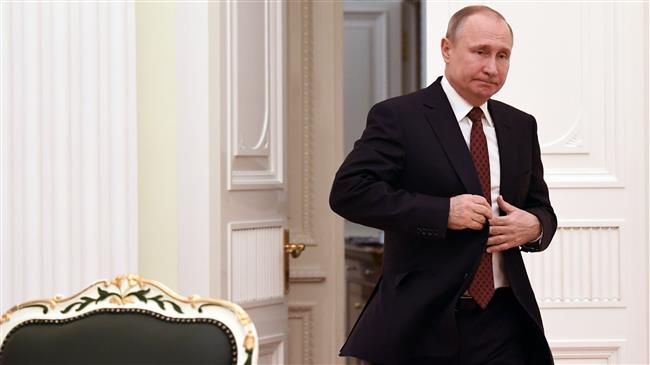
President Vladimir Putin has said he does not want Russia to return to the Soviet-era practice of rulers dying in office without a succession plan, as speculation swirls over his future after he unleashed a political upheaval this week.
The 67-year-old Russian leader said a transition plan for the country was crucial, in comments several days after his shock proposal of sweeping changes to the constitution saw the government resign and a new prime minister appointed.
Putin, who has been in power for two decades, was asked if he could consider removing presidential term limits from the constitution during a meeting with World War II veterans in his hometown of Saint Petersburg on Saturday.
But he appeared to reject the idea.
“In my view, it would be very worrying to return to the situation of the mid-1980s when heads of state one by one remained in power until the end of their days, (and) left office without having secured necessary conditions for a transition of power,” Putin said.
“So, thank you very much, but I think it’s better not to return to the situation of the mid-1980s.”
Soviet rulers Leonid Brezhnev, Yury Andropov and Konstantin Chernenko all died in office.
Chernenko’s successor Mikhail Gorbachev introduced perestroika and glasnost reforms to transform the Soviet system and presided over the eventual collapse of the USSR.
Putin, who is due to step down in 2024 after his fourth Kremlin term ends, said he understood what he called people’s concerns about the continuity of power.
“For many of our people this is linked to worries about stability in society, stability in the state — both foreign and internal stability — I perfectly understand this,” he said.
Many observers have said Putin’s proposals are designed to ensure his grip on power after he leaves the Kremlin and his critics have accused him of orchestrating a “constitutional coup”.
On Wednesday, Putin stunned Russians with his constitutional proposals, including transferring more authority to parliament and enshrining the role of the State Council, an advisory body, in the constitution.
They would be the first significant changes to the country’s basic law since it was adopted under Boris Yeltsin in 1993.
The announcement triggered the resignation of the government, led by Putin’s loyal lieutenant Dmitry Medvedev.
A previously little known tax official, Mikhail Mishustin, was tapped by Putin to take over as premier and he was officially appointed on Thursday.
Source: AFP
19, January 2020
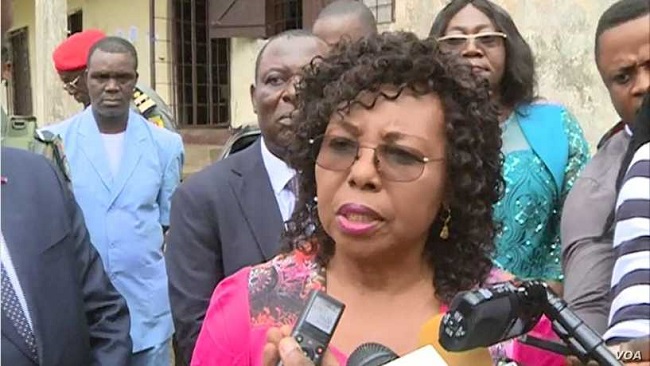
Cameroon teachers are protesting what they say is growing violence against them by both students and their parents, and the teachers are urging the government to protect them and reinstate corporal punishment. The teachers say the absence of corporal punishment is encouraging abuse of teachers. This week, several attacks on teaching staffs were reported, including one in which a teenage student fatally stabbed his teacher, in the capital.
Students shout Saturday at a government-run school in Obala, a town on the outskirts of Cameroon’s capital, Yaounde, protesting the principal’s decision to destroy all mobile phones and knives seized from children Friday at the school. One of their senior discipline masters, Narcisse Ateba, says the students use mobile phones to access social media platforms that promote violence, and they also use sharp objects such as knives to attack their peers and teachers.
He says that some parents and students will want to harass or beat him up, but he has nonetheless decided to publicly destroy the 15 mobile phones found and seized by teachers from students Friday because it is illegal to use them in classrooms. He says he will not allow students to come to school with razor blades, box-cutters and knives.
The destruction of the mobile phones and the peaceful marches to administrative offices and palaces are part of protests by teachers at Obala against what they say are increasing acts of violence against them.
This week, a 16-year-old student at the public school Nkolbisson in a neighborhood in Yaounde is accused of using a knife to stab his mathematics teacher who died of excessive bleeding as he was being rushed to a hospital. The school said the student insisted on using his mobile phone in class against the teacher’s instruction. The student was arrested and detained by police, and will be answering to charges, including premeditated killing.
Another teacher this week was battered by students in Douala for questioning why they were late to school, and yet another teacher in Douala was beaten by a parent and fell into a coma. The parent was said to be angry with the teacher’s decision to use corporal punishment on his son as punishment for making noise in class. In another incident, a student used a machete to chop off another student’s finger in Obala after a fight during a soccer match.
Elvis Yisinyuy, an official with the Cameroon Teachers Trade Union in Yaounde, says attacks by students on teachers intensified in 2015 when Cameroon prohibited teachers from beating or severely punishing students.
“When a minister says that teachers are not supposed to administer corporal punishment to students, the student will now see that he [the minister] has the right to bring disorder because there is nothing the teacher can do in class,” said Yisinyuy. “The minister should revisit the text and permit teachers to administer corporal punishment with caution.
Yusinyuy said the high wave of drug consumption by students and the inability of teachers to use corporal punishment because they have been prohibited from doing so is also responsible for the wave of attacks.
Nalova Lyonga, Cameroon minister of secondary education, says corporal punishment can not be tolerated because it is an abuse on the rights of students who are mostly children.
“What I have told the teachers is that they themselves have to make a distinction between a disciplinary case and a case which becomes a criminal case, and they should be able to report to the special police at the disposal of the schools,” said Lyonga.
Lyonga said Cameroon students are exposed to other cultures of the world because of the increasing use of mobile phones, and they gain access to social media platforms that promote violence, while neglecting the peace and unity that Cameroon traditionally preaches.
Carol Kayum, president of Reference Citizens, a non-governmental organization that promotes citizenship education, has been visiting schools in Yaounde to educate both teachers and students against violence. She says Cameroon should uphold it’s culture of non-violence to prevent the growing number of assaults on other students and teachers.
“Our cultures are rich. Parents should transmit them to children, and also there should be communication between schools and parents so that we know what our children are doing in school, and we also tell the school authorities what the children do at home,” said Kayum. “School authorities and parents should control the use of drugs.
Kayum said many people now join the teaching profession because they lack jobs, and not for the love of teaching, and as such, they are not loved by students.
The students also have complained they are harassed by some teachers whom they accuse of behaving poorly or not teaching well.
The Cameroon Ministry of Secondary Education has recorded 40 violent attacks by students on their peers, 22 attacks on teachers and 15 attacks by parents on teachers within the past month.
Source: VOA
 Pope Leo XIV in Cameroon-The “Ambazonia crisis” in Southern Cameroons
  New Testament pastors in the Presbyterian Church in Cameroon
  World Bank Group statement on the conflict in the Middle East
  Anglophone Vice President: a deeply counterproductive idea
  Ambazonia Crisis: latest on Sisiku Ayuk Tabe’s arrest, trial and conviction
  4 Anglophone detainees killed in Yaounde
 Chantal Biya says she will return to Cameroon if General Ivo Yenwo, Martin Belinga Eboutou and Ferdinand Ngoh Ngoh are sacked
 The Anglophone Problem – When Facts don’t Lie
 Anglophone Nationalism: Barrister Eyambe says “hidden plans are at work”
 Largest wave of arrest by BIR in Bamenda



20, January 2020
Anglophone Commander of Cameroon’s Peacekeeping Force in Central Africa fired unjustly 0
Colonel Tabot Samuel Orock was fired unjustly as commander of the Cameroon UN peacekeeping force by the Cameroon Minister of Defense, Joseph Beti Asomo because he has no ‘Godfather’ and also because he is an Anglophone, Cameroon Intelligence Report has gathered from a well-placed source in Yaoundé.
The peacekeeping force in the Central African Republic has huge infusions of cash from the UN, so the Biya Francophone Beti Ewondo regime has replaced Colonel Tabot Orock with Captain Awono Louis Thaddée, a blood relation to Defense Minister Beti Asomo who is corrupt in order to channel most of that cash to ‘high places’ in Yaoundé.
We understand Yaounde fired Colonel Tabot Orock upon the UN’s request without carrying out any investigations, which is not the right procedure.
Colonel Samuel Orock Tabot, is a graduate of the prestigious West Point U.S. Military Academy as well as the Naval Postgraduate School in Monterey, California. His assignment to lead this deployment was a testament to the seriousness with which Cameroon viewed its role in regional peace and security.
By Oke Akombi Ayukepi Akap in UK with files from Rita Akana