
14, October 2025
Cameroon’s Presidential Election: The French are negotiating 0
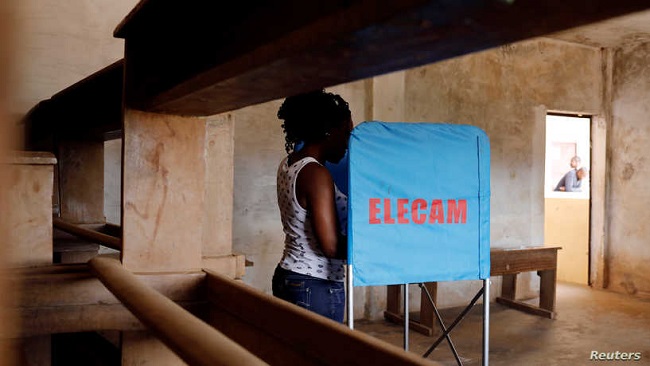
As the counting of the votes of last Sunday’s presidential election is underway at ELECAM, Cameroon’s election body, the French are not waiting for things to totally deteriorate before they step in.
The first figures point to a landslide by Mr. Issa Tchiroma Bakary who incarnates the population’s determination to change a system which has robbed them of their dignity and happiness.
According to a source at ELECAM which has elected anonymity, more than three million votes have already been computed and Mr. Issa Tchiroma has already won more than half of those votes.
Sunday’s vote is clearly a protest vote against the incumbent, Paul Biya, who has been in power for 43 years and has only succeeded to create poverty and misery for his people.
The French, who have been facing mounting opposition in French-speaking African countries, are scared of losing Cameroon seeing the population’s determination to kick out Mr. Biya who has enjoyed French protection for decades.
To stave off such a situation, they are negotiating behind the scenes for a peaceful transition which will protect their interest in the Central African country. With Niger, Mali and Burkina Faso out of the French orbit, there is increasing concern in Paris about the situation in Cameroon. The French hold Issa Tchiroma is a moderate and he is capable of protecting their interest having schooled and lived in France.
The French have seen the writing on the wall and they know that in the event of chaos, French interest will be threatened and in their opinion, Mr. Biya has overstayed his welcome in Yaoundé.
It should be underscored that Mr. Tchiroma’s communication during the election campaign was run by a private French firm and Paris is leveraging that connection to stay in touch with Mr. Tchiroma.
The Biya regime is aware of that and it is already irate. The French want Biya out as he clearly belongs to the past. French interest in Cameroon is more important than Biya who is more of a liability given his age and health condition.
Sunday’s exit polls have left the Elysee very concerned and the determination demonstrated by northerners to protect Issa Tchiroma in the event of chaos is indeed awful.
Several opposition parties have already congratulated Mr. Tchiroma and the population is ready to face the military if the government resorts to its old ways. Northerners are prepared to defend their victory and they are calling on their southern brothers to act accordingly if they do not want the country to be split.
The French fear that if the North splits from the rest of the country, Anglophone separatists might take advantage of the situation to continue their fight for an independent Southern Cameroons.
A French delegation is expected at the Unity Palace soon to persuade Mr. Biya to accept the decision of the ballot boxes as a way for him to have an honorable exit from power. Mr. Biya who is in the grip of regime hawks such as Atanga Nji, Fame Ndongo and Chantal Biya, still believes that old crooked ways could still keep him in power for another seven years.
Meanwhile, there are fundraising efforts in North America and Europe to prepare for any eventuality as the Yaoundé regime is still doubling down. More than USD 500,000 has already been raised in just a day, with most donors being anonymous.
A new movement known as Gen-Z Cameroon is also underway to prepare Cameroonians for the worst if the Biya regime usurps power. Demonstrations are being planned across the country after the release of the election results if Mr. Biya is declared a winner.
This is a developing story and more will be yours as our inside sources inform us.
By Soter Tarh Agbaw-Ebai




















14, October 2025
Issa Tchiroma’s Victory: Yaoundé under pressure 0
Sleeping tablets are becoming scarce in Yaoundé as regime officials have run out of sleep due to Issa Tchiroma’s victory.
Yaoundé is under enormous pressure and this started on Sunday evening when exit polls pointed to a Tchiroma landslide victory.
Hurricane Tchiroma has finally hit Yaoundé with vengeance and the damage is huge. Many Yaoundé regime loyalists are losing sleep as the counting of the votes is slowly confirming that Tchiroma has won by over 70% despite widespread rigging by the government and its ruling party.
Several opposition parties have already congratulated Mr. Tchiroma and many Western diplomats have already called him to congratulate him for solving a decades-old equation.
American diplomats had already informed members of the Cameroon clergy before Sunday’s election that the incumbent, Paul Biya, clearly belonged to the past.
The French who have stood behind Biya for decades are scrambling for solutions to ensure that the ailing and senile Biya is given a safe passage to a quiet retirement.
If Biya is handed the victory by the corrupt constitutional council, there will be widespread demonstrations in the country and northerners might want to secede just like the two English-speaking regions of the country have been trying for almost a decade.
If the North were to declare its independence, Cameroon would be Balkanized and French interests would suffer a situation Paris is scrambling to avoid.
A French diplomat in Yaoundé who spoke to the Cameroon Concord News’ correspondent in Yaoundé on condition of anonymity said that Biya was no longer relevant to the country’s future, adding that Biya was popularly unpopular and would not be able to defend French interests in a balkanized Cameroon.
He added that Cameroon would end up with a Mugabe-style negotiation, stressing that the Cameroon situation was similar to what Zimbabwe faced when Mugabe was taken down.
Like Grace Mugabe, Chantal Biya is also power hungry and she has been the face behind the masks for decades as Mr. Biya sinks into senility and brain farts.
By Soter Tarh Agbaw-Ebai