Featured
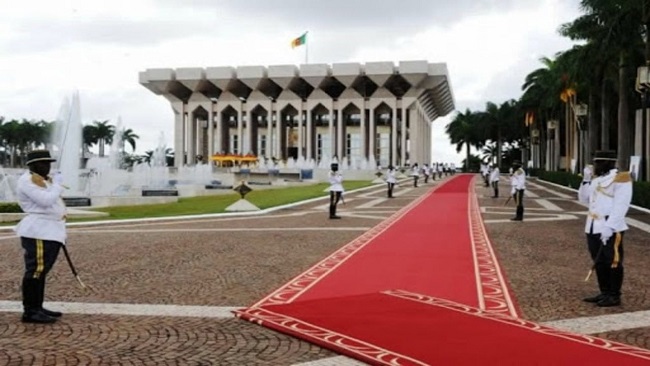 Unity Palace needs a new idea and a new head of state
  Martinez Zogo Affair: Biya must clean house and make way for a new generation
  Ambazonia People’s Liberation Authority explains motives for the new transition
  A year after Biya’s disputed re-election, CPDM remains without a timetable for next year’s polls.
 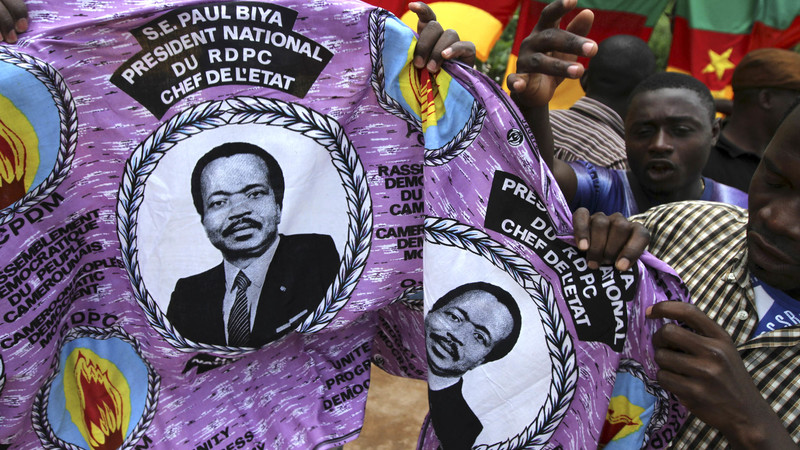 Ruling CPDM Party: When a political message runs out of the road
Most Commented Posts
 4 Anglophone detainees killed in Yaounde
18 comments Chantal Biya says she will return to Cameroon if General Ivo Yenwo, Martin Belinga Eboutou and Ferdinand Ngoh Ngoh are sacked
13 comments The Anglophone Problem – When Facts don’t Lie
12 comments Anglophone Nationalism: Barrister Eyambe says “hidden plans are at work”
12 comments Largest wave of arrest by BIR in Bamenda
10 comments
Featured
-

Unity Palace needs a new idea and a new head of state
-
Trump says US may launch ‘another little Epic Fury’ attack on Iran
-

Formula 1: Hamilton sets sights on racing in African grand prix
-
Yaoundé: anti-corruption agency calls for stronger powers after 20 years of limited progress
-
Martinez Zogo Affair: Biya must clean house and make way for a new generation
-

Biya’s health crisis is starting to alarm investors
-

Cameroon’s Eurobond yields hit record high after Fitch downgrade
3, September 2026
When politics fails a nation, football and the Church become the battleground 0
by soter • Cameroon, Editorial, Headline News, Religion
Cameroon has reached a troubling point where the country’s deepest political failures are increasingly being played out through institutions that should in principle stand above partisan confrontation.
The spectacle surrounding the Cameroon Football Federation (FECAFOOT) is one example. During the inauguration of its new headquarters in Yaoundé, the presence of the Prime Minister, Dion Ngute, and the wider government establishment demonstrated the enormous political attention attached to football. Yet, almost simultaneously, university lecturers, commentators and other public voices have turned television studios into arenas for fierce attacks against FECAFOOT president Samuel Eto’o.
In the English-speaking regions, the battlefield appears different. There, Catholic bishops and other church leaders who have repeatedly called for peace, restraint and responsible public conduct are themselves increasingly exposed to harsh criticism. The contrast between the two situations is striking, but the underlying problem is the same: institutions and personalities that should not be the primary targets of political frustration are becoming convenient victims of a much deeper national crisis.
The question Cameroonians should be asking is not simply whether Samuel Eto’o is right or wrong, or whether a particular bishop has said something that pleases or displeases the masses. The bigger question is: How did Cameroon arrive at a point where football administrators and religious leaders have become proxies for battles that are fundamentally political?
For more than four decades, President Paul Biya’s political system has promised stability, development and national unity. Yet today, too many Cameroonians experience a country marked by economic hardship, declining public confidence, institutional mistrust and seemingly endless political confrontation. The persistence of the Anglophone crisis has deepened the sense of abandonment in the Northwest and Southwest, while the wider population continues to struggle with unemployment, rising living costs and limited opportunities.
A government that has been in power for decades cannot indefinitely escape responsibility for the condition of the nation it governs.
This is not to say that football officials should be above scrutiny. They should not. Nor should bishops, politicians, academics or any other public figures be immune from legitimate criticism. Accountability is essential in any functioning society.
But accountability becomes something else when public debate degenerates into permanent character attacks, televised humiliation and political mobilisation against individuals. At that point, the real issues confronting the population disappear from view. Football becomes the distraction. Religion becomes the distraction. Personalities become the distraction.
Meanwhile, the ordinary Cameroonian is left asking the most basic questions: Where are the jobs? Where is affordable healthcare? Where are the functioning schools? Where is meaningful decentralisation? Where is the security that allows citizens to live without fear? Where is the political environment in which disagreement does not automatically become a confrontation?
This is perhaps the greatest indictment of Cameroon’s political class: after decades of political dominance, the country has become so consumed by institutional and personal battles that citizens can be left feeling as though there is little tangible progress to defend. And when citizens have little confidence in politics, every major institution becomes vulnerable to political capture.
Football, because it commands extraordinary emotional power, becomes an easy target. The church, because it retains moral authority among millions, becomes another. Universities, the media and civil society are drawn into the same contest. Instead of providing spaces for national dialogue, they can become extensions of the political battlefield.
Samuel Eto’o therefore represents more than a controversial football administrator in this debate. Catholic bishops represent more than churchmen calling for peace. Both can become victims of a broader political environment in which public frustration is redirected toward prominent individuals rather than toward the structural problems producing that frustration.
Cameroon deserves better. The country does not need more television shouting matches masquerading as national debate. It does not need citizens divided into camps around football personalities or church leaders while fundamental questions about governance remain unanswered.
It needs institutions that can operate without intimidation. It needs criticism without persecution, accountability without political vendettas and leadership without the constant search for enemies. Most importantly, it needs a political system capable of renewing hope.
After decades of the Biya era, the central issue is no longer simply who is winning the latest institutional quarrel. The issue is whether Cameroon’s political leadership has delivered a country in which ordinary citizens can look to the future with confidence.
If football and the church have become the latest arenas for national anger, that should not merely provoke another round of accusations against Eto’o or the bishops. It should force Cameroon to confront the deeper truth: when politics fails to solve a nation’s problems, society eventually finds other institutions on which to unload its frustrations. Today, football and the church appear to be among the victims.
But the greatest victim may be the Cameroonian citizen—the citizen who has watched political battles continue for decades while the promise of a better country remains painfully out of reach.
By Soter Tarh Agbaw-Ebai