
9, January 2019
The war in Cameroon 0
History defines us. Perhaps it is the only thing we truly own. Embrace it, own it. Mend it where it was once broken, enlighten it where it was once misguided, for what you are this minute isn’t what you were only a minute ago.
For peace to return to Cameroon, Anglophones and Francophones must first realise that at one point, they shared a common history, under German Cameroon. But like a river that splits into two courses at some point, they broke off only to be joint later downstream. This is not disputed.
What is disputed is the fact that during this separate journeys, each of them acquired new and separate experiences on their independent courses, perhaps new streams flowed into them, they flowed through new landscapes acquiring new flavours, visited different places with different sunsets and sunrises, making new friends and partnerships. Though they later became one again at the new confluence further downstream, they were essentially different by now; chemically, physically, in what they now know and have seen and experienced, where they have been, and enriched by new and different life principles and values.
The Francophone led leadership in Yaounde must realise and appreciate this difference, which they haven’t for over five decades. They can’t erode a people’s culture with guns, regardless of how that culture was acquired, for the effects of colonialism are an integral part of our history that we can never run away from. As sad as it is. The mass killings in Anglophone Cameroon must be brought to a stop via a political solution of inclusive dialogue without any precondition. In essence, the two Cameroons have to revisit the Fumban drawing board.
Peace can’t be achieved simply because the government that caused the problem in the first place is asking separatists fighters to put down their arms, because the government didn’t buy them the guns. You can’t ask a revolting people to stop revolting without proposing a tractable solution to their grievances, you can’t do so either by threat of the gun to which they have become accustomed. And you can’t eradicate someone’s family and expect them to love you, live with you, dine with you and laugh with you as if you are best friends. Worse, trust you.
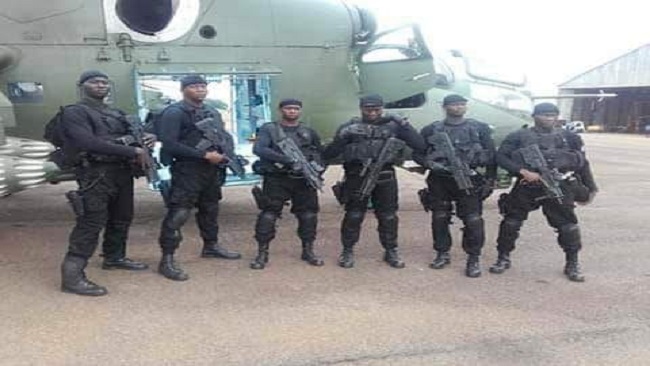
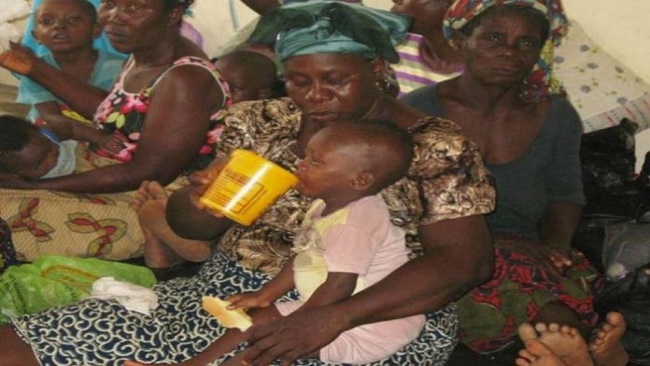
What the Cameroonian government is doing to the Anglophones in Cameroon is criminal, calling them terrorists and all. Citizens can’t step out in the streets to protest for legitimate reasons and you turn your big guns on them, guns bought with their money, money from all the natural resources that are being wantonly exploited in their backyard.
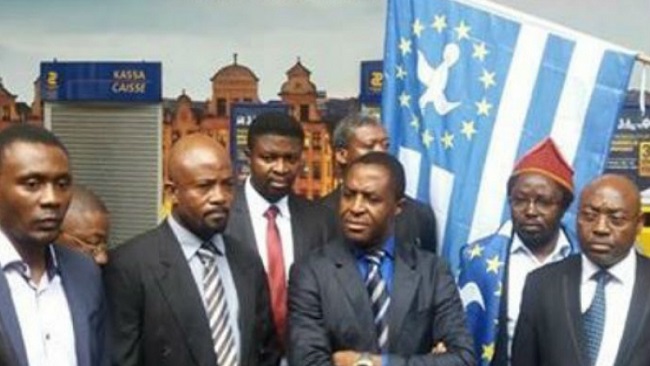
It is this stupidity, lack of vision and diplomacy that sparked the wrath of the Anglophone Cameroonians, now operating under the name of the separate state called, Ambazonia, to retaliate and sought to protect themselves. The Francophone leadership in Yaounde without thinking, joyfully declared outright war against the 8 million Anglophones, add or take, by calling them terrorists, as the most parsimonious way of solving the differences.
The same regime once said when Yaounde is breathing Cameroon is alive when the Anglophone regions were in strife. The same regime at one time or another, called Anglophones enemies in the house. And at the onset of the present conflict, the Francophone led national assembly refused to discuss the problem because Anglophones are supposed to tow the line quietly. How much provocation should a people be subjected to before they break? Even a fool, under these circumstances, is bound to revolt at some point. This is the point where we are unfortunately at now.
No happily married man or woman would deliberately destroy a gratifying union, except they have lost their minds to the devil. Marriages only fall apart because of discontent and an accompanying inability to mend the problem.
Source: Not available

















10, January 2019
Congo-Kinshasa: Felix Tshisekedi from opposition scion to provisional president-elect 0
The son of DR Congo’s veteran opposition leader, Felix Tshisekedi, has taken the prize that long eluded his father – the presidency of sub-Saharan Africa’s largest country – in a surprise result his main opponent has denounced as an “electoral coup”.
On Thursday Tshisekedi was named by election officials as the provisional winner of the country’s long-delayed, chaotic and controversial presidential poll, in a surprise announcement that appeared to contradict both pre-election surveys and the findings of independent monitors.
Runner-up Martin Fayulu, the pre-election favourite, promptly denounced the results as an “electoral coup” that does “not reflect the truth of the ballots”.
In a rare comment on a foreign election, French Foreign Minister Jean-Yves Le Drian also waded into the controversy, describing the results as “the opposite to what we expected”. He added: “The Catholic Church of Congo did its tally and announced completely different results.”
If Tshisekedi’s stunning victory is confirmed by the constitutional court, he will become the first Congolese leader to take power at the ballot box since Prime Minister Patrice Lumumba, who was toppled and killed in a coup shortly after independence in 1960.
‘A historic vote and a historic win’
Tshisekedi is the head of the Union for Democracy and Social Progress (UDPS), a party founded by his father Etienne, who spent decades as the country’s main opposition leader but died in February last year.
Known to his friends as “Fatshi”, the portly 55-year-old is now poised to replace President Joseph Kabila, who has ruled the volatile, poverty-stricken nation with an iron fist since 2001.
But for a while, it looked like he wouldn’t even be on the ballot.
Pentecostal rivals
On November 11, Tshisekedi joined six other opposition leaders in rallying behind Fayulu to take on Kabila’s handpicked successor, Emmanuel Ramazani Shadary.
But the deal drew a furious response from his supporters, prompting him and fellow opposition leader Vital Kamerhe to abandon the deal and run on a joint ticket, weakening and splitting the opposition.
The pair had previously agreed that if they won, Kamerhe would become Tshisekedi’s prime minister.
Profile: Felix Tshisekedi
Since his father founded the UDPS in 1982, the party has served as an opposition mainstay in the former Belgian colony – first under dictator Mobutu Sese Seko, then under Kabila’s father Laurent-Desire Kabila, who ruled from 1997 until his death in 2001. A father of five, Tshisekedi goes to the same Pentecostal church as Fayulu in Kinshasa, the capital.
Although he does not enjoy the same degree of popularity as his father, he has risen steadily through the party ranks. “Etienne was stubborn and proud,” said one keen observer of the country’s opposition. “Felix is more diplomatic, more conciliatory, more ready to listen to others.”
‘Coup’
In 2008, Tshisekedi became national secretary for external relations and was elected to the national assembly in 2011 as representative for Mbuji-Mayi, the country’s third city.
However, he never took up his seat as he did not formally recognise his father’s defeat to Kabila in a presidential election the same year. A month after his father’s death, Tshisekedi was elected as party head.
Although he holds a Belgian diploma in marketing and communication, his opponents point out that he has never held high office or had managerial experience. And some detractors have even suggested his diploma is not valid.
The legacy of DR Congo’s Joseph Kabila
Tshisekedi has promised a return to the rule of law, to fight the “gangrene” of corruption and to bring peace to the volatile east of the country, where several militias remain active more than 15 years after the end of DR Congo’s bloody civil war.
However, the result of the presidential election, which observers said was marred by a spate of irregularities, is certain to fuel suspicions among Fayulu’s supporters that Tshisekedi struck a power-sharing pact with Kabila – suspicions heightened by his victory speech on Thursday, in which he described his former bitter opponent Kabila as a “partner of democratic change”.
Fayulu, who was running well ahead of Tshisekedi in opinion polls ahead of the election, on Thursday called on the Congolese people to “rise as one man to protect victory.” Analysts have warned that any widespread perception the election has been stolen could trigger a cycle of unrest, particularly in the eastern borderlands where Fayulu enjoys some of his strongest support.
(FRANCE 24 with AFP, REUTERS)