22, August 2016
Cameroon Airlines-Camair-Co: From Boom to Bust 0
Some 34 years ago, Cameroon Airline Company was flying high. The Ahmadou Ahidjo responsible leadership led to a booming economy and made Cameroon Airline Company the fastest growing and the city of Douala the most competitive aviation market in West and Central Africa. The company acquired new carriers and bought new jets. To be sure, Cameroon Airlines ordered Boeing and Airbus jetliners worth millions of dollars.
On November the 6th 1982, the office of the president of the republic changed hands from Ahmadou Ahidjo to Biya Paul in a peaceful atmosphere. There was no global recession but a sharp increase in passenger numbers (top CPDM government officials, their wives, children, mistresses and housemaids) traveling to and from Europe without paying a dime to the airlines company. This was bad news for Cameroon Airlines, sad for the Cameroonian people but joy to the new comers in government. It was the beginning of rigor and moralization of the Cameroon airlines company.
Cameroon Airlines was plagued by financial difficulties, which came along with a poor safety and maintenance record. On 16 September 2005, the airline was indefinitely banned by the French Civil Aviation Authority from operating its prestigious Paris route due to safety concerns that had arisen following aircraft check-ups that had revealed failures to meet international norms in the loading, transport of dangerous materials, navigation documentation and tire maintenance.
In an effort to save the airline from bankruptcy, the Biya regime signed an agreement with SN Air holding, the parent company of Brussels Airlines to ensure the future funding. The plans did not materialize, though. Instead, on 11 September 2006, the launch of Camair-Co as new national airline was announced. Cameroon Airlines stayed operational until March 2008, though flight operations had only taken place during irregular intervals over these last years. Things have taken a dramatic u turn and we of this publication can now reveal that the so-called Camair-Co has only two planes. The small flight which runs the Douala-Baffoussam route and the 114 seater that goes to the Northern regions.
Camair-Co’s Boeing 767-300 code named (The Dja), which recently returned to Cameroon after six months of inactivity following a routine technical control with the Ethiopian Airline hangar in Addis Abba, is now stagger-a-staggering. After very intensive and productive investigation following a leak published by Alafnet.com,Cameroon Intelligence Report wishes to sound a note of caution that air passengers should avoid using Camair-Co’s Boeing 767-300.
The aircraft cockpit of the Dja completely destroyed by water which entered through a window that was deliberately left open will cost the company billions of FCFA. We understand that there is a war currently going on between the Minister Edgar Alain Mebo Ngo’o faction and the Akame Mfoumou gang. There are reports that Camair-Co plans to put the Dja back on the skies without proper technical checks. President Biya is aware of the situation through one of his relatives serving with the company in Douala. Camair-Co’s unofficial debt stands at 74 billion FCFA, though Transport Minister Alain Mebo Ngo’o keeps incessantly flashing out signals to the Cameroonian people that it is below 40billions FCFA.
Our intelligence officers who have been working on this Camair-Co saga hinted that the “Dja Window Rain Water” incident remains a diabolic harsh in-house ploy to enable the general manager, Jean Nana Sandjo lease an aircraft through AJW leasing company for the Hajj pilgrimage.
At the time of the window neglect accident in Douala, Jean Nana Sandjo was already in France negotiating with the AJW Group for a plane. Curiously, Nana Sandjo is the representative of the said leasing company and banks a 6 %commission on every deal with Camair-co. Jean Nana Sandjo’s list of financial crimes is long involving too many dodgy deals.
This is more bad news for Cameroon as Jean Nana Sandjo, an acolyte of Eduard Akame Mfoumou-a behind the scene baron of the CPDM regime has pushed Camair-Co to be weighed down by overcapacity, debt and the CPDM government’s willingness to provide bailouts running to the tune of 200 billion FCFA. With just 2 carriers, Camair-Co has been forced to slash their operations and reduce ticket prices. Cameroon aviation is badly in need of a regime change-a decent Anglophone citizen to run the affairs of this company.
The Southern Cameroons change will include deferring aircraft deliveries, cancelling orders, rationalizing routes and trimming staff to stave off financial collapse. Our chief economic correspondent noted that it’s going to be tough, but it can be done if Biya mean business. Our nation is at the mercy of Biya, his family and his appointees. Every aspect of Cameroon’s economic life has been hardest hit by the consortium of CPDM crime syndicates.
CPDM officials say Camair-Co may smile again and resume normal operations once another bailout package is made available by the ministry of transport. But Alfred Bate Bawak former CPDM UK Section Vice President say that it may be difficult because the industry has yet to solve a basic problem: too many airlines such as Air France, Air Brussels, Ethiopian Air Lines flying too many flights in a country that, despite its economic growth, is relatively poor.
Lowering fares may attract more African travellers but it may not improve the overall financial health of the industry controlled by corrupt officials. To make profits, Camair-Co needs an Anglophone marketer at the head to shift business models. Above all, Camair-Co has to think, act, breathe and be low cost. That doesn’t happen overnight with an 84 years old man as chief executive.
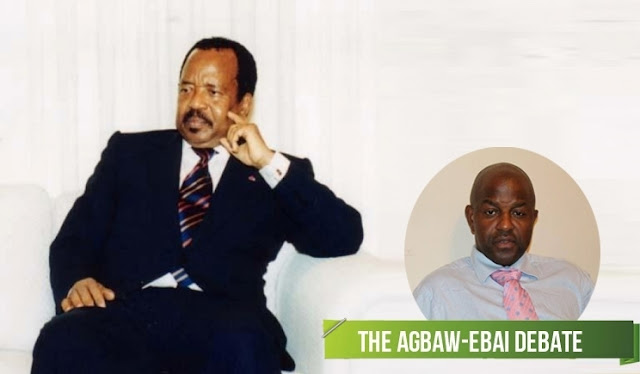
By Soter Tarh Agbaw-Ebai


22, August 2016
Former French President Nicolas Sarkozy announces ambition to reconquer Élysée 0
Nicolas Sarkozy has announced he will seek his party’s nomination to stand in next year’s French presidential election. The rightwinger, who was nicknamed “the hyper-president” for his frenetic term in power from 2007 to 2012, had made no secret of his ambition to reconquer the Élysée palace and avenge his 2012 defeat by the Socialist François Hollande
After weeks of suspense in which he grabbed media headlines by presenting an increasingly hardline stance on national identity and the place of Islam in France, Sarkozy launched his campaign with an announcement on social media and a link to the first chapter of a book, Everything for France, which he will publish this week.
“The next five years will be filled with danger but also with hope,” he wrote. He listed what he said were the five major challenges facing France, including defending French identity, restoring lost competitiveness and enforcing state authority.
Sarkozy said France’s “top battle” was over how “to defend our lifestyle without being tempted to cut ourselves off from the rest of the world”.
In his fight to win his party’s nomination, the 61-year-old candidate is putting forward a platform of policies that veer even further to the far right than in 2012, when he set out to win over voters from Marine Le Pen’s Front National.
He wants to ban the Muslim headscarf from universities and public companies, limit the French nationality rights of children born to foreign parents, and Alain Juppé meaning Muslim and Jewish children would no longer be offered a substitute meal.
He has also scoffed at what he called “legal niceties” in the fight against terrorism, prompting the left to warn that his treatment of suspected jihadis could be akin to that of Guantánamo Bay.
For the first time, the French right and centre is holding an open contest to choose its presidential candidate. Anyone on the electoral register can vote if they pay €2 (£1.72) and sign a pledge saying they adhere to “the values of the right and centre”. Up to three or four million people could turn out to vote in the two-round ballot on 20 and 27 November.
Sarkozy is the challenger and not the favourite in the right’s primary race. The leader in the polls and currently France’s favourite politician is Alain Juppé the mayor of Bordeaux and a former prime minister, who served as Sarkozy’s foreign minister.
Juppé, 71, has undergone a staggering image transformation. Twenty years ago he was the most loathed prime minister in modern times after his pension changes brought 2 million people on to the streets in protest. Now he is seen as a calm, elder statesman and a moderate, pushing pro-business structural reform and less divisive on identity issues.
Sarkozy believes that the climate of fear and anxiety in France after the deaths of more than 230 people in terrorist attack claimed by Islamists in the past 19 months means the nation needs a man of authority such as himself.
One hurdle for Sarkozy beyond winning over right and centre-right sympathisers is his lasting unpopularity among the wider French population who still dislike his abrasive personality and his hard-to-shake-off label of “president of the rich”.
He must also get around his lacklustre economic record in office – he promised to restore the values of work and reward, yet left France with many more unemployed – as well as judicial investigations into party financing relating to his 2012 presidential campaign, in which he denies any wrongdoing.
The Guardian