7, November 2018
Hollow and Symbolic Gesture: Biya Pledges More Powers for Anglophone Regions 0
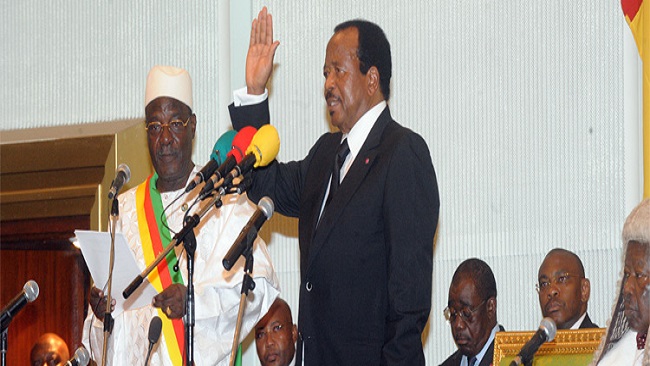
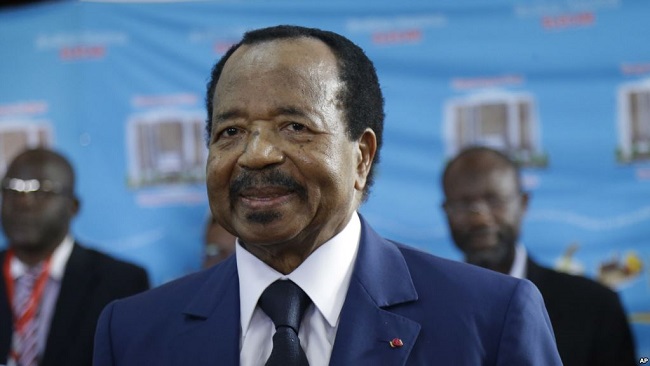
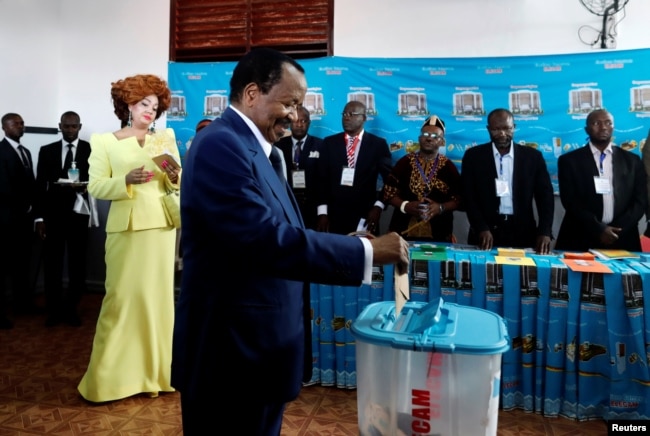
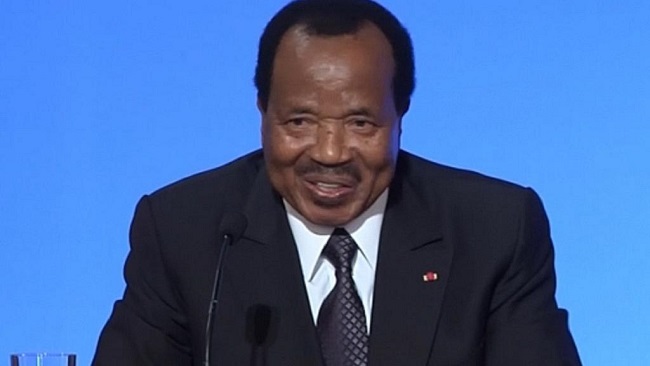
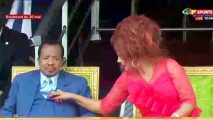
Cameroon’s President Paul Biya pledged to give more powers to the central African nation’s regions, starting his seventh term in office with a call to separatist groups in the country’s English-speaking areas to end a bloody insurgency.
The speech to lawmakers marked only the second time that Biya, 85, publicly addressed the conflict that has left at least 400 people dead since it began two years ago. “I understand your problems, I know them and will do well to solve them,” Biya said Tuesday in the capital, Yaounde. “Government will accelerate the decentralization process in response to the desire of the population to manage their own affairs.”
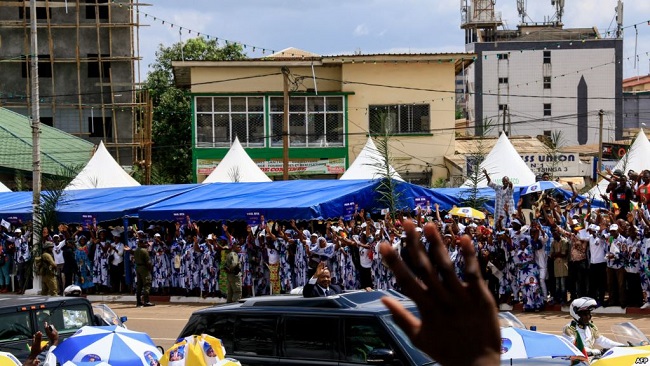
Africa’s second-longest serving head of state easily won presidential elections last month that were overshadowed by the insurgency and a security clampdown that hindered voting in the two Anglophone regions. Cameroon is divided into 10 semi-autonomous regions, which are headed by governors appointed by Biya.
Opposition Arrests
Maurice Kamto, one of Biya’s opponents in the October polls, and some of his supporters were arrested Tuesday when they protested in the capital against the outcome of vote, according to a party official.
“Our president was also arrested but quickly released,” Ndong Christopher, secretary general of the Cameroon Renaissance Movement, said by phone.
Source: Bloomberg
Now that you are here
The Cameroon Concord News Group Board wishes to inform its faithful readers that for more than a decade, it has been providing world-class reports of the situation in Southern Cameroons. The Board has been priding itself on its reports which have helped the world to gain a greater understanding of the crisis playing out in Southern Cameroons. It hails its reporters who have also helped the readers to have a broader perspective of the political situation in Cameroon.
The Board wishes to thank its readers who have continued to trust Southern Cameroon’s leading news platform. It is therefore using this opportunity to state that its reporters are willing to provide more quality information to the readers. However, due to the changing global financial context, the Board is urging its readers to play a significant role in the financing of the news organization. It is therefore calling on its faithful readers to make whatever financial contribution they can to ensure they get the latest developments in their native Southern Cameroons, in particular, and Cameroon in general.
Bank transaction: Soter Tarh Agbaw-Ebai
Banking IBAN: GB51 BARC 2049 1103 9130 15
Swift BIC BARC GB22XX
SORT CODE 20-49-11, ACCOUNT NUMBER – 03913015 Barclay PLC, UK
The Board looks forward to hearing from the readers.
Signed by the Group Chairman on behalf of the Board of Directors
Soter Tarh Agbaw-Ebai
Email: soteragbawebai@gmail.com














7, November 2018
France: 6 far-rightists nabbed over plot against President Macron 0
French domestic intelligence forces have arrested six people linked to ultra-right movements in the country on suspicion of planning a “violent” attack against President Emmanuel Macron.
One female and five male suspects, with ages ranging from 22 to 62, were taken into custody by the agents of France’s DGSI intelligence bureau, which did not identify the detainees, AFP reported Tuesday, citing sources close to the case.
According to the report, four of the suspects were arrested in the northeastern city of Moselle, within a close distance of the city of Verdun, where Macron was on a visit on Tuesday as part of week-long memorial festivities marking the end of World War I.
The other two suspects were seized in southeast and western France.
One source said the investigation of the case — by the Paris Prosecutor’s Office, which handles terrorism inquires — is dealing with “a vague and ill-defined project at this stage.”
The plot was not the first known attempt on the life of the French president. A 23-year-old man was charged in July 2017 with plotting to assassinate Macron at France’s Bastille Day military parade. Three kitchen knives were found in that suspect’s automobile, and analysis of his computer found that he had carried out internet searches as part of his scheme.
Several other suspected far-right members have been arrested since 2017 — the year Macron was elected president — after police found they might be preparing imminent attacks.
Thirteen suspects affiliated with the country’s far-right Action des Forces Operationnelles (Operational Forces Action) group were also arrested by France’s anti-terrorist forces over an alleged plot to wage attacks against Muslims.
Ten more people were also taken into custody in October 2017 over suspicions of aiming to target Muslims as well as politicians such as France’s far-left politicians Jean-Luc Melenchon and Christophe Castaner, who now serves as the country’s interior minister.
Castaner had warned on Monday that the nation remained “on alert” over what he referred to as threats posed by “extremist networks both on the right and left, which are quite active in our country.”
Macron himself warned of the threat from far-right movements across Europe in an interview earlier this week, saying complacency during the 1930s was what opened the way for the rise of Nazi leader Adolf Hitler in Germany and fascist leader Benito Mussolini in Italy.
Culled from Presstv
Now that you are here
The Cameroon Concord News Group Board wishes to inform its faithful readers that for more than a decade, it has been providing world-class reports of the situation in Southern Cameroons. The Board has been priding itself on its reports which have helped the world to gain a greater understanding of the crisis playing out in Southern Cameroons. It hails its reporters who have also helped the readers to have a broader perspective of the political situation in Cameroon.
The Board wishes to thank its readers who have continued to trust Southern Cameroon’s leading news platform. It is therefore using this opportunity to state that its reporters are willing to provide more quality information to the readers. However, due to the changing global financial context, the Board is urging its readers to play a significant role in the financing of the news organization. It is therefore calling on its faithful readers to make whatever financial contribution they can to ensure they get the latest developments in their native Southern Cameroons, in particular, and Cameroon in general.
Bank transaction: Soter Tarh Agbaw-Ebai
Banking IBAN: GB51 BARC 2049 1103 9130 15
Swift BIC BARC GB22XX
SORT CODE 20-49-11, ACCOUNT NUMBER – 03913015 Barclay PLC, UK
The Board looks forward to hearing from the readers.
Signed by the Group Chairman on behalf of the Board of Directors
Soter Tarh Agbaw-Ebai
Email: soteragbawebai@gmail.com