
18, July 2019
Kaput: End of a ‘secret’ German military mission in Cameroon 0
The announcement that Germany has ended its military mission in Cameroon came as a surprise to many who were unaware of the presence of German soldiers in the conflict-torn African country. Besides Cameroon, Niger and Tunisia are two other African countries where Germany has military and police training missions not mandated by its parliament. Germany’s defense ministry confirmed to DW that, according to the law, the government does not have to ask the Bundestag for approval to send military instructors to peaceful countries as long as the German military is not involved in any direct confrontation on the ground.
Berlin also has no obligation to inform deputies about the particulars of these missions. Christoph Hoffmann, head of the parliamentary group for Central Africa and spokesperson for development issues for the liberal Free Democratic Party (FDP), has no problem per se with the procedure, even if it bypasses the elected deputies. After all, no one complains about German soldiers taking part in Canadian training operations. Also, helping other countries militarily makes good sense.
“The mission in Cameroon started four years ago, at a time when there were great problems with Boko Haram in the north of Cameroon. And I think it is a humanitarian act to help Cameroon defend themselves against terrorists and terrorism,” he told DW. But in the meantime the situation changed dramatically: “The German military mission [in Cameroon] should have ended two years ago, after the conflict between the Anglophone and the Francophone communities in the southwest turned violent,” Hoffmann said.
Pressure from the Bundestag If it hadn’t been for another deputy, Stefan Liebich from the opposition Left party, the news that Berlin had ended the mission in Cameroon would most likely not have reached the public.
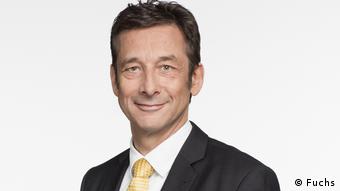
Hoffmann says the mission in Cameroon should have been stopped two years ago
Missions like these are treated almost like state secrets, with only as many people in the know as is strictly necessary. Liebich asked the Defense Ministry directly and was informed that the mission had ended “as scheduled,” information he shared with the media. “The wording ‘on schedule’ was a little bit disingenuous,” Liebich told DW. Only a couple of weeks ago, the government had said that it would decide on whether to prolong the mission by midyear. “That was actually why I asked now, and was then told about the termination. I believe that if it hadn’t been for the public debate and the discussion in parliament, the mission would probably be ongoing,” he said.
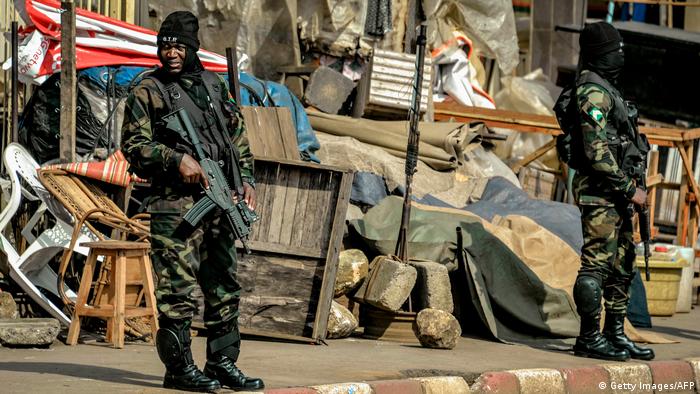
Tensions between the Anglophone and Francophone regions in Cameroon have escalated into a full-blown conflict The debate was launched several months ago by Hans-Peter Bartels, parliamentary spokesperson for matters concerning the Bundeswehr and a member of the Social Democratic Party (SPD), a partner in Chancellor Angela Merkel’s ruling coalition. Bartels’ public criticism of the government for bypassing the Bundestag first called the parliamentarians’ attention to the existence of the ‘secret’ missions, according to Liebich. ‘A good role for Germany‘ Ibrahim Mouiche is not so much interested in Berlin’s secrecy as in Germany’s capacity to help his country. The political scientist from the University Yaounde II in the Cameroonian capital, who is currently a guest lecturer at the Arnold-Bergstraesser-Institute in Germany, points out that there were at any one time at most ten German instructors in Cameroon, who took part in an international mission there. Mouiche believes that such help can be useful. “We have the Anglophone crisis, but also Boko Haram and, in the east, rebels from the Central African Republic who often infiltrate our territory. I think there is an argument for training the security forces,” Mouiche told DW.
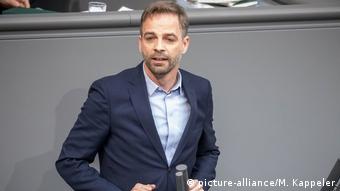
Stefan Liebich’s Left party does not want parliament to be bypassed anymore
Mouiche acknowledged that the Cameroonian army does not seem very motivated to end the conflict “from which they obviously benefit.” But he felt that it was too easy to blame only the government’s side for the abuse and violence. “Some Anglophone separatists have turned to banditry and are causing suffering to the Anglophones themselves.” Germany, Mouiche says, has a bigger role to play in Cameroon: “Yaounde does not have a firm political will to negotiate. Germany and the European Union can help put pressure on the Paul Biya government,” he said. Christoph Hoffmann agrees. On a recent trip to Cameroon he talked to colleagues in the Yaounde parliament. “All of them asked for Chancellor Merkel to come to Cameroon and initiate a mediation process.” German parties have signed a joint letter to the chancellor to this effect. “It would be a good role for Germany,” Hoffmann said.
Culled from DeutcheWelle













18, July 2019
Key steps needed for Cameroon peace talks 0
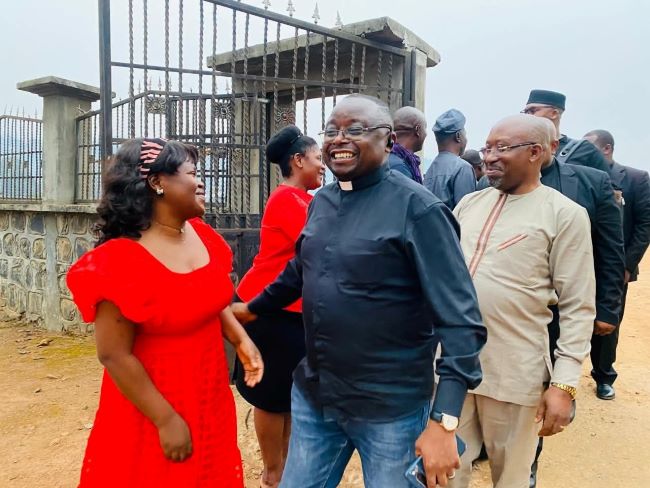
Switzerland has agreed to mediate talks between the government of Cameroon and separatist leaders aimed at faciliating a peaceful resolution to a three-year conflict. This is welcome news, says Nkongho Felix Agbor Balla.
The conflict in Cameroon has engulfed the country’s English-speaking northwest and southwest regions since late 2016. It is one of the world’s most neglected crises, despite a magnitude of violence, inflicted by both military and armed separatist groups, causing unimaginable suffering. The military has committed crimes against humanity against civilians in the English-speaking regions, as documented in a report co-authored by the Cameroon-based Centre for Human Rights and Democracy in Africa (CHRDA) and the Raoul Wallenberg Centre for Human Rights (RWCHR) in Canada.
Soldiers routinely torch entire villages to the ground — this has become an established and systematic military tactic. They indiscriminately shoot at civilians, at times leaving bodies piled in the streets. Astonishingly, more than 200 villages have been set ablaze, with a continuously increasing pace of attacks. As a result, many people are burned alive in their homes, such as a 70-year-old man who did not hear his neighbors’ warnings due to a hearing disability.
Civilians, including journalists covering the crisis, have been rounded up, arbitrarily detained and tortured, without charge or access to lawyers. Sexual and gender-based violence has also become rampant, often targeting girls below the age of 18. Cameroon now has the sixth-largest forcibly displaced population in the world, with approximately half a million people — one tenth of the region’s population — living in the bush without sufficient food, water or protection from exploitation. There are more than 1.3 million Cameroonians in urgent need of humanitarian aid in the English-speaking regions alone.
Nkongho Felix Agbor Balla While the crisis is rooted in a complex colonial history that birthed the current bijural and bilingual country, it is important to consider how the crisis spiralled from its peaceful origins into the catastrophe it is today.
How the crisis began In late 2016, Anglophone lawyers and educators peacefully demonstrated for basic civil and political rights after years of marginalization in the majority French-speaking country. In particular, Anglophone lawyers and educators were protesting the imposition of French-speaking judges and teachers in English-speaking courts and schools. What started as a simple request for the recognition of rights based on legitimate grievances morphed into a conflict enveloping nearly the entire English-speaking region.
Moderate voices were swiftly drowned out by radicalized forces calling for the creation of a separate country. Hate speech surfaced in both media and government discourse in a disturbing trend that, as history warns, can quickly translate into mass atrocity and even genocide. It is, therefore, encouraging that Switzerland has agreed to mediate a dialogue in the pursuit of peace and reconciliation.
However, the conflict’s underlying causes will only be addressed and redressed by an all-inclusive dialogue that represents the various shades of opinion in Anglophone Cameroon. The Swiss mediators should ensure that they invite a variety of Anglophone voices, certainly not just those who have taken up arms. Switzerland should also invite other bodies to participate as mediators, particularly the African Union which recently mediated a power-sharing agreement between military and civilian leaders in Sudan. Canada is also an ideal candidate to lead the process, given its bijural, bilingual character and long-standing bilateral relations with Cameroon.
Role for the UN and AU The dire situation on the ground, however, demands coordinated international attention and action, even if a political solution to the underlying conflict is not imminent. First, the UN Security Council should add Cameroon to its agenda as a regular stand-alone item, as nine different human rights organizations have recommended in an open letter. Second, the African Union should establish a panel of independent international experts to investigate evidence of crimes against humanity in Cameroon, as the Organization of American States did regarding atrocities in Venezuela. Third, states should increase funding for the UN’s Cameroon Humanitarian Response Plan. As it stands, the Response Plan is severely underfunded. Key frontline humanitarian organizations will be forced to withdraw if additional funding does not reach them soon, according to the UN’s Under-Secretary-General for Humanitarian Affairs and Emergency Relief Coordinator.
Finally, individuals and collectives must continue to shine a protective spotlight on the victims of the Cameroon crisis, whose pain and plight can no longer go unheard, unnoticed or unaddressed. The children of Cameroon at the mercy of this raging violence, including the more than 600,000 currently prevented from going to school, deserve no less.
Nkongho Felix Agbor Balla is the founder and director of CHRDA. Culled from DeutcheWelle