2, October 2018
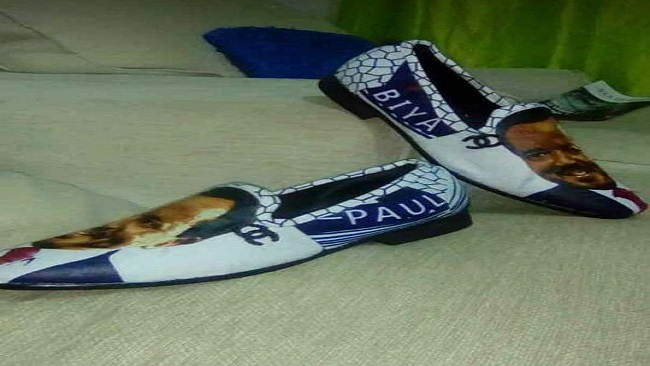
Yaounde: Minister Fame Ndongo CPDM shoes elicits controversial reactions 0
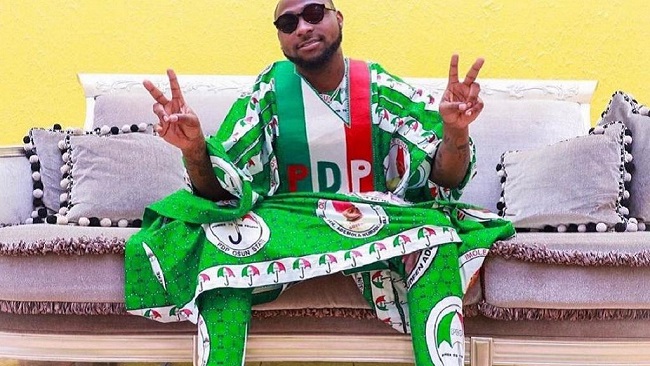
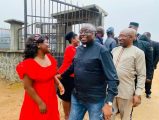
What did you think of those shoes Minister Fame Ndongo wore with his CPDM regalia recently when he participated in a CPDM rally? Cameroonians on social media could not get enough of the Higher Education Minister’s shoes when he went our canvassing for votes for the 85 year old President Biya.
Some thought he had been given a role in Yaoundé wood with Onkle Ochama and Tazibi while others believe it was simply a joke. Some people thought he rocked the look while others thought he’d worn a CPDM “gandula” with his Biya CPDM shoes.
Many pro Biya comedians, however, were impressed by his “shoe code” and expressed pride in the Higher Education anti-Anglophone Minister and his commitment to President Paul Biya. But this is why Southern Cameroonians want to leave the Cameroonian federation.
By Chi Prudence Asong

















16, October 2018
Uganda Hopes Kanye West, Kardashian Visit Boosts Tourism 0
American rapper Kanye West and socialite wife Kim Kardashian are visiting Uganda and bringing some much-wanted, positive attention to the East African country. Deadly election-related violence in August caused many tour groups to cancel trips, dealing a blow to the economy. Uganda’s tourism body is hoping the couple’s stay will attract more visitors.
A cartoon in a Ugandan newspaper depicts Kanye West sipping a local beer and thinking “Uganda is gold,” while wife Kim Kardashian, in a red bikini, takes a selfie under the sunset.
Meanwhile, in a reversed Safari, wild African animals compete to get a good look at the celebrity couple.
The sketch underscores the attention West and Kardashian’s visit is bringing to Uganda, where the rapper says he will record a new album.
Amos Wekesa of Great Lakes Safari said the couple’s superstar presence can be used to boost tourist numbers.
“So we need to be able to exploit that. If 100,000 people came here because of Kim Kardashian and Kanye West, we would probably expect over $200 million and that would probably create not less than 2,000 jobs in the country. Whatever they are filming right now will stay online for a very long time and it will continue to market Uganda as a key destination.”
Tourism groups canceled planned visits to Uganda after violence erupted in August in relation to a local election.
Clashes broke out between security forces and youth supporters of the musician-turned-politician known as Bobi Wine. Wine, whose real name is Robert Kyagulanyi, was arrested and charged with treason for allegedly throwing rocks at President Yoweri Museveni’s car.
West on Monday met Museveni, who has ruled Uganda for three decades, and gave the president a new pair of white sneakers.
Social media posts made fun of the gift, noting the president is known for wearing odd-looking shoes.
Echoing opposition calls for Museveni to step down, one post read, “We hope that this pair of sneakers can inspire him to sneak out of power.”
It was not clear if West would meet fellow musician Wine, who is trying to get permission from authorities to hold a concert while on bail.
West made headlines last Thursday when he met with U.S. President Donald Trump in the White House Oval Office. The rapper stunned reporters by giving Trump a big hug, pounding the president’s desk, and using profanity.
On the streets of Kampala, not everyone was aware of the celebrity couple’s visit to Uganda, but, Leah Kahunde voiced excitement.
“Kim Kardashian herself has a following bigger than Uganda’s population. So imagine a whole country’s population is eyes on Uganda. That means a lot for my country. And also the tax base and maybe more revenue, that way they might stop milking us and trying to tax us just to make up for expenditure. So it’s a plus for our tourism industry.”
While in Uganda, West and Kardashian are staying in the country’s largest national park, Murchison Falls.
John Ssempebwa is the deputy executive director for Uganda’s Tourism Board. He offered an explanation as to why he thought the couple chose Uganda.
“The Murchison Falls National Park is where the River Nile squeezes into the narrowest of rocks. And makes this thundering sound that can be heard kilometers away. It’s the only place in the world, where it’s actually raining fish. Fishes coming in pushed by this speed of water, so huge, falling. And guess what’s down there waiting for them? The fattest crocodiles in the world.”
Posting on her snapchat, Kardashian wrote, “Dear world, there is another heaven in Uganda.”
Culled from the VOA