12, November 2020
Covid-19 vaccine ‘best science news’ of 2020 0
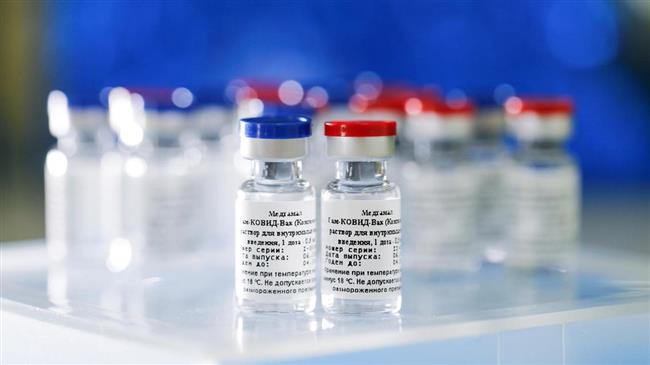
Data indicating that a vaccine being developed against Covid-19 is highly effective is the “best science news of the year”, a pharmaceutical industry association chief said, voicing hope that other vaccine candidates would show equally good results.
“A vaccine that has 90 percent efficacy and is pretty safe, that is a historic breakthrough,” the head of the International Federation of Pharmaceutical Manufacturers and Associations (IFPMA), Thomas Cueni, said.
American pharmaceutical giant Pfizer and its German partner BioNTech announced Monday that their vaccine had proven 90 percent effective in preventing Covid-19 infections in ongoing Phase 3 trials involving more than 40,000 people.
“This was the best science news of the year,” IFPMA’s director general told AFP in an interview.
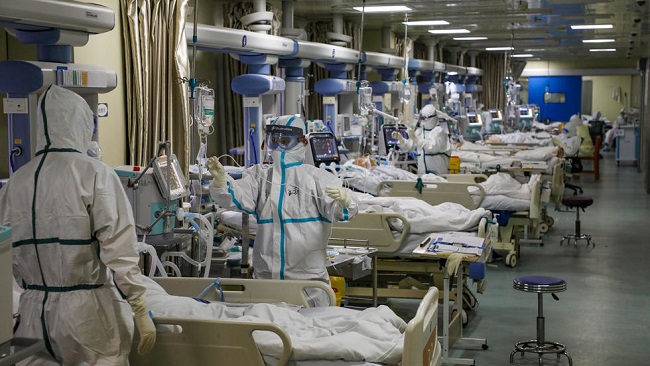
Hopes are also high that one or several of the vaccines under development will also help rein in the Covid-19 pandemic, which has killed nearly 1.3 million people out of the over 51.5 million infected.
There are currently more than 40 candidate vaccines against Covid-19 being tested on humans, with a handful in the most advanced Phase 3 trials.
Cueni acknowledged that more data was needed on the Pfizer and BioNTech candidate, which is based on an innovative technology that has never been approved for use before.
The companies based their announcement on interim results from the last step in their clinical trial before officially applying for approval.
– ‘Reason for optimism’ –
Cueni voiced confidence that any major safety concerns with the Pfizer-BioNTech vaccine would have been known.
“We still need to see the (full) efficacy and the safety data,” Cueni said, but stressed: “There is now genuine reason for optimism that these vaccines are basically considered safe.”
He said there is still a long list of unknowns about the vaccine’s protection, including whether it will be equally effective in all age groups and how long the protection might last.
Another pressing question is whether it will not only protect a person from Covid-19 infection but also prevent that person from transmitting the virus.
But Cueni said the data so far indicated the vaccine candidate was far more effective in preventing Covid-19 infections than the 50-percent efficacy threshold required by some regulators before considering authorisation.
This was “big news”, he said, particularly “since I think there is reason to hope it won’t be the only one.”
“We will see more good results.”
Cueni said safety and efficacy data on at least four other vaccine candidates, being developed by Moderna, AstraZeneca, Novavax and Johnson & Johnson, would be known within the next few months.
– Vaccine hesitancy –
He was optimistic that enough data would soon be available to win approval for using one or more of the Covid-19 vaccines.
And the large developers had already scaled up their manufacturing capacities, and were each in a position to produce upwards of a billion doses next year, he said.
But Cueni acknowledged there were numerous logistical challenges to actually inoculating the huge numbers of people it would take to bring the pandemic to a halt.
And he voiced concern about high levels of vaccine hesitancy in many countries.
Pharmaceutical companies were taking that challenge particularly seriously, he said, insisting they were going “way above and beyond the normal regulatory requirements” in terms transparency and data-sharing from trials.
The industry understood the importance of ensuring any authorised vaccine is trusted, he said.
“This is not only about Covid-19.”
Without trust, “the negative spillover on vaccination overall would be disastrous.”
Source: AFP






















13, November 2020
Germany: No return to normal by Jan. even if infections fall 0
Germany’s health minister said on Thursday he expects restrictions imposed to curb the coronavirus pandemic will continue through winter, with life unlikely to get back to normal in December or January even if infections fall.
“I don’t see events with more than 10 or 15 people happening this winter,” Jens Spahn told RBB broadcaster.
Germany reported 21,866 new coronavirus cases on Thursday, bringing the total to 727,553 and jumping back above 20,000 after four days below that figure, while the death toll rose by 215 to 11,982, according to the Robert Koch Institute (RKI) for infectious diseases.
Chancellor Angela Merkel and the leaders of Germany’s states are due to meet on Monday to review whether partial lockdown measures imposed on Nov. 2 have been enough to slow a steep rise in new infections that risks overwhelming hospitals.
Merkel said on Thursday there were hopeful signals that a coronavirus vaccine could be on the horizon, but warned it would take time. She declined to say whether Germany might allow bars and restaurants to open again in December.
“We all have to be sensible, we have to get down to 50 cases per 100,000 people over 7 days,” she said in response to a question on whether the lockdown would end this month. The figure is currently 139 per 100,000.
Unlike its first lockdown earlier this year, Germany is keeping its schools and daycare centers open so that parents can go to work, limiting damage to the economy, although at least 300,000 pupils and 40,000 teachers are currently in quarantine.
A survey for broadcaster ARD showed 54% of 1,004 Germans polled believed the partial lockdown measures were appropriate. Separately, the Constitutional Court rejected an appeal to overturn the closure of restaurants, in force this month.
As the number of cases rises, the source of infection is unknown in most instances, the court reasoned. “This means that it cannot be ruled out that restaurants also contribute to the occurrence of infection,” it said in its ruling on Thursday.
RKI head Lothar Wieler said on Thursday that he expected rules to slow the spread of the pandemic in Germany to remain in place for a long while as a vaccination would take time and there was likely to be an uncontrolled spread of COVID-19 in some parts of the country.
The slowing dynamic of infections gives ground for cautious optimism, but it is not yet clear whether this is a stable development, and hospitals are still expected to reach capacity, Wieler added.
Ute Rexroth, the head of RKI’s surveillance unit, said the pandemic would have a reproduction rate, or “R,” of 3 to 4 without current measures on limiting social contact while the factor currently stands at around 1 in Germany.
She said case numbers might not be rising as steeply as in October because of the new lockdown measures, but it might also be due to testing labs reaching capacity.
Wieler noted that there was currently a high incidence of COVID-19 in those aged 10 to 19.
(Source: Reuters)