16, February 2019
Ambazonia Crisis: Cameroon Medical Council Demands Tighter Security 0
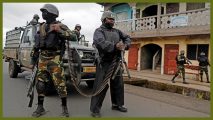
Cameroon National Medical Council on Tuesday urged the government to strengthen security in health centers in the two war-torn English-speaking regions of Southwest and Northwest following an attack on a hospital that resulted in four deaths.
“The National Medical Council has made the Ministry of Public Health and higher authorities of our land to understand that in situation of conflict, the first place to secure is the health center. This is why we are appealing to the high authorities of this country for tight security in all the hospitals in the area,” Vice-President of the National Medical Council Tetanye Ekoe told reporters in the capital Yaounde.
The council reacted following a hospital fire that killed four patients early Monday in southwestern Cameroon. “We are really shocked because up till now the National Medical Council has respected the neutrality of the parties in conflict. We have placed emphasis on the role of the medical personnel to give care equally to all the parties in conflict,” Ekoe said, noting that the council was putting measures in place to cater to the stranded patients after the tragedy. The Cameroonian government has said separatists were responsible for the fatal hospital fire.
Separatists have denied the claiming, saying it was staged by government forces to tarnish their image internationally. Fighting between government forces and armed separatist groups has been going on since November 2017 after the separatists declared the independence of a nation called “Ambazonia” in Northwest and Southwest.
Xinhuanet




















30, March 2019
Kenya: Authorities burn ‘weak’ condoms worth $100,000 0
Kenya’s pharmacy and poisons regulator on Friday destroyed packs of condoms deemed to be unsafe for public use. The product is said to have failed quality tests prompting a recall.
The Pharmacy and Poisons Board said its drug inspectors supervised the destruction of the Fiesta condoms valued at 10 million Kenyan shillings (which comes up to over $100,000). The incarceration took place at the facility located in Athi River, a town located outside the capital Nairobi.
The authorized market dealers of the product were listed as Deep Kumar Tyagi Healthcare International Limited. Apparently, the board had ordered a recall of all the affected consignments.
“The recall of the affected batches of the fiesta condoms was concluded on 11th March, 2019 upon which Pharmacy and Poisons Board Kenya directed the market authorization holder to carry out destruction of the recalled consignment under PPB supervision,” they said in a tweet.
Workers in protective are seek unpacking the products and hurling them into a fire place. The Board has meanwhile urged vigilance on the part of the public to identify any sub-standard health products on the market.
Reports indicate that it is not the first time such an incident is taking place. In 2018, the Health Ministry did order a recall of some condom brands on the same grounds.
The Fiesta Stamina and Fiesta Big Black products were said to have failed thickness tests in November 2018 hence the recall.
Source: Africa News