
22, May 2024
Russia begins tactical nuclear weapons drills near Ukraine 0
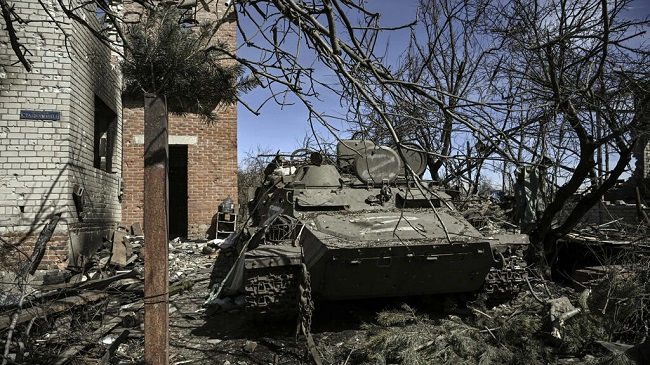
Russia on Tuesday announced the start of tactical nuclear weapons drills close to Ukraine, in what it said was a response to Western “threats”.
Throughout its two-year offensive on Ukraine, Moscow has repeatedly talked-up its arsenal of nuclear weapons and its readiness to deploy them if it senses an existential threat.
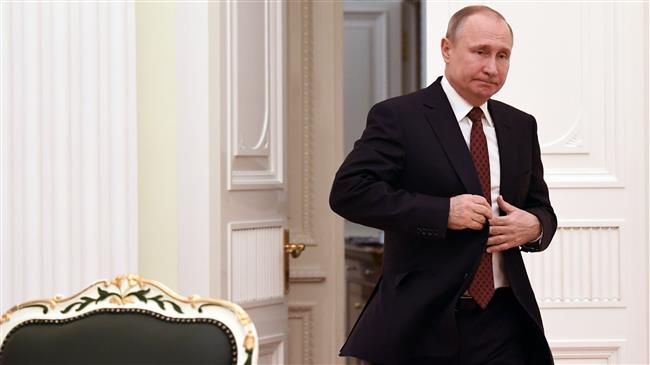
The West has accused President Vladimir Putin of irresponsible nuclear sabre-rattling.
Russia’s defence ministry said Tuesday the drills were taking place in its Southern Military District, which borders and includes parts of Ukraine that Moscow claims to have annexed. It did not specify exactly where.
The drills are designed to test “the readiness of personnel and equipment of non-strategic nuclear weapons combat units to respond and to unconditionally ensure the territorial integrity and sovereignty of the Russian state,” the defence ministry said in a statement.
It added they were a “response to provocative statements and threats by certain Western officials.”
Putin ordered the drills earlier this month after a series of Western statements on the Ukraine conflict drew scorn in Moscow.
Russian officials pointed to comments by French President Emmanuel Macron about NATO countries needing to not rule out deploying troops to Ukraine and British Foreign Minister David Cameron saying Kyiv had the right to fire Western missiles at Russian territory.
Russia’s Southern Military District is the command centre for its offensive on Ukraine. It is headquartered in Rostov-on-Don, 60 kilometres (40 miles) from the border with Ukraine and also includes parts of the country Russia says it has annexed—the Crimea, Donetsk, Kherson, Lugansk and Zaporizhzhia regions.
The defence ministry published footage showing trucks carrying missiles to a field where launch systems were prepared and troops at an airfield readying a bomber to carry a nuclear warhead.
It said this was the “first stage” of the drills, which involved practicing the loading of launch vehicles, driving to designated launch sites and loading planes with hypersonic Kinzhal missiles.
It did not indicate whether any test firings had taken place.
Tactical nuclear weapons, also known as non-strategic nuclear weapons, are designed for use on the battlefield and can be delivered via missiles.
Source: AFP













15, June 2024
World leaders meet at Swiss peace conference on Ukraine – without Russia 0
The presidents of Ecuador, Ivory Coast, Kenya and Somalia will join many Western heads of state and government and other leaders at a conference this weekend aimed to plot out first steps toward peace in Ukraine – with Russia notably absent.
Swiss officials hosting the conference say more than 50 heads of state and government, including Ukrainian President Volodymyr Zelenskyy, will join the gathering at the Bürgenstock resort overlooking Lake Lucerne. Some 100 delegations including European bodies and the United Nations will be on hand.
Who will show up – and who will not – has become one of the key stakes of a meeting that critics say will be useless without the presence of Russian President Vladimir Putin’s government, which invaded Ukraine in February 2022 and is pushing ahead with the war.
U.S. Vice President Kamala Harris is set to attend while Turkey and Saudi Arabia have dispatched their foreign ministers. Key developing countries like Brazil, an observer at the event, India and South Africa will be represented at lower levels.
China, which backs Russia, is joining scores of countries that are sitting out the conference, many of whom have more pressing issues than the bloodiest conflict in far-away Europe since World War II. Beijing says any peace process needs to have the participation of both Russia and Ukraine, and has floated its own ideas for peace.
Russian troops who now control nearly a quarter of Ukrainian land in the east and south have made some territorial gains in recent months. When talk of a Swiss-hosted peace initiative began last summer, Ukrainian forces had recently regained large swaths of territory, notably near the cities of southern Kherson and northern Kharkiv.
Against the battlefield backdrop and diplomatic strategizing, summit organizers have presented three agenda items: nuclear safety, such as at the Russia-controlled Zaporizhzhia power plant; humanitarian assistance and exchange of prisoners of war; and global food security – which has been disrupted at times due to impeded shipments through the Black Sea.
That to-do list, encapsulating some of the least controversial issues, is well short of proposals and hopes laid out by Zelenskyy in a 10-point peace formula in late 2022.
Putin’s government, meanwhile, wants any peace deal to be built around a draft agreement negotiated in the early phases of the war that included provisions for Ukraine’s neutral status and limits on its armed forces, while delaying talks about Russia-occupied areas. Ukraine’s push over the years to join the NATO military alliance has rankled Moscow.
With much of the world’s focus recently on the war in Gaza and national elections in 2024, Ukraine’s backers want to return focus to Russia’s breach of international law and a restoration of Ukraine’s territorial integrity.
The International Crisis Group, an advisory firm that works to end conflict, wrote this week that “absent a major surprise on the Bürgenstock,” the event is “unlikely to deliver much of consequence.”
“Nonetheless, the Swiss summit is a chance for Ukraine and its allies to underline what the U.N. General Assembly recognised in 2022 and repeated in its February 2023 resolution on a just peace in Ukraine: Russia’s all-out aggression is a blatant violation of international law,” it said.
Source: AP