10, June 2020
For many African Americans, nothing has changed since civil rights movement 0
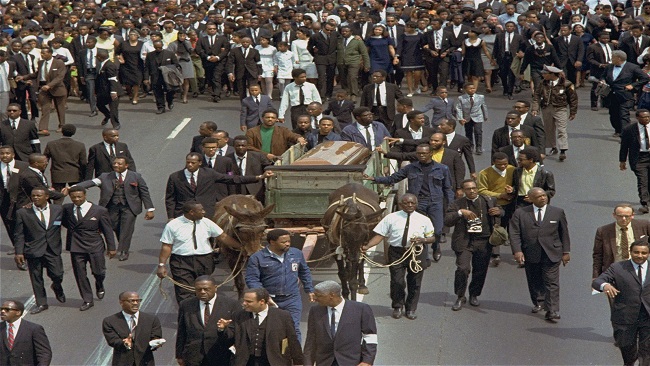
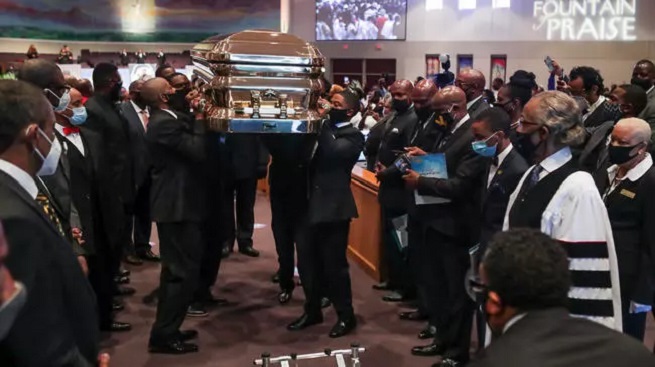
For three generations, black Americans have learned the same cautionary tale about the police. And many, speaking on the fringes of George Floyd’s memorial ceremonies, say that nothing has changed in the US since the mid-20th century struggle for civil rights.
“Some things have changed, but not enough has changed,” Norman Mitchell told AFP during a memorial service for Floyd at his former school, Jack Yates High, in Houston’s predominantly black Third Ward neighborhood.
He acknowledged political advances made for the African American community, such as the election of Barack Obama as the first black president in the history of the US, but at the same time recounted the discrimination he and his children continue to face because of the color of their skin.
“It took an individual kneeling on someone’s neck for eight minutes, 46 seconds for the world to see the issue that we’ve been fighting for the last 100 years,” said the 55-year-old.
“When I was a young man, my father used to tell me to be very careful when I went out because there was a possibility that I could be stopped by the police,” Mitchell added.
He said he “had this exact same conversation with” his sons, whose ages range from 17 to 32.
Floyd’s agony as a white police officer knelt on his neck in a Minneapolis street hit Mitchell’s youngest son particularly hard. He “did not think it was real until May 25, and he knew the stories we had been sharing for years,” Mitchell said, whose own brother was killed by a Houston police officer in 1991.
At 63 years old, Laura Allen was a child when marches and protests against police brutality started in the Texan city’s streets.
“I was three or four years old with my family down (in) the streets, and we’re having to march for the same civil rights that we did years ago,” she said.
“Not much has changed at all.”
The former Yates student — class of 1975 — slammed the inequality and “double standard” of police policies in Houston, where “almost every black male I know have been profiled.”
– Scared of cops –
Like many others, Allen has countless stories of arbitrary arrests and intimidation. In 1980, she was detained by park police “for carrying a glass.”
This year, she was pulled over during a trip to Alabama with her husband and daughter.
“As soon as we crossed the Alabama border, we were instantly stopped. They ask, ‘Is this your car?'” recalled the small, gray-haired woman.
Just as her father brought her to protests, so Allen accompanied her daughter, Leah, last week to a massive rally in Houston, where 70,000 people demanded justice for Floyd.
At 28, Leah Allen has the same distrust of police officers as her mother, since “you never know what could happen.”
“I’m very scared of cops,” she said, recounting how police officers have followed her or leered sexually at her.
Tragedy can strike at any moment. Syreeta Polley, 38, points to the death in 2016 of black motorist Philando Castile, who was shot by a police officer during a traffic stop near Saint Paul, Minnesota.
As with Floyd, his shocking final moments were caught on video.
Polley has taught her teenage daughter, Nia Madison, to “respect authority figures” and be “cautious.”
The 17-year-old has started driving, and the lesson is clear: “Make sure you’re prepared if you’re being pulled over,” said Polley.
“It’s 2020 and it’s a big step back, it pushes us back to the 50s and 60s and the stories my 92-year-old grandmother would tell,” Polley added.
Even the Houston police chief, Art Acevedo, admitted that “there is a lot of work to do” to change the police force’s mindset.
Houston-based rapper William James Dennis — or “Willie D” — hopes that Floyd’s death will serve as a catalyst.
The black community “can use (the death of George Floyd) as a short window of opportunity to move America forward,” the artist and activist told AFP on Tuesday, during Floyd’s funeral.
Source: AFP












11, June 2020
Journalist Wazizi’s death in custody shines light on Cameroon’s war on media 0
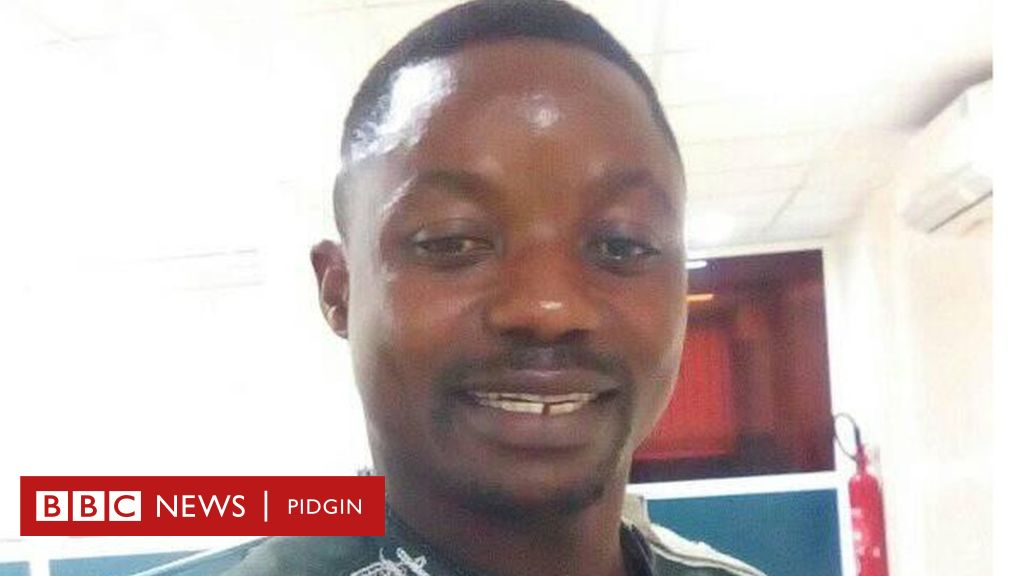
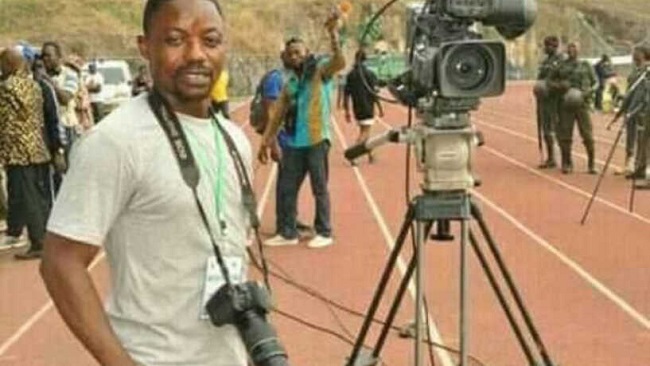
In August 2019, Journalist Samuel Wazizi was arrested by the Cameroonian government and held without charge. More than 10 months after the arrest, the military confirmed Wazizi had died in their custody. Amid attacks, arrests and kidnappings of journalists, lawyers for the late Wazizi applied for the government to release his body. On 9 June, the High Court dismissed the application as colleagues and allies protested across the country.
When broadcast journalist Samuel Ajiekah Abuwe was arrested in August 2020, the circumstances surrounding his captivity remained a mystery to his family and colleagues. The Pidgin reporter, popularly known as Samuel Wazizi, had been reporting on the conflict in the country’s Northwest and Southwestern regions. While at the time of his arrest Wazizi was held without charge, Cameroon Association of English-Speaking Journalists (CAMASEJ) recently learned that, along with announcing Wazizi’s death, the government decided on a terrorism charge. This was 10 months after the initial arrest.
For many months after the arrest of Wazizi, president of the journalists’ association, Jude Viban, tried to acquire information on his colleague’s arrest and place of detention, to no avail.
“The government has not been transparent in the way the government has handled the issue about the arrest, detention, and death of our colleague,” Viban told Daily Maverick.
“All offices I went to remained mute – they kept sealed lips. Nobody told me exactly where and why our colleague was arrested.”
According to Viban, the lawyers for Wazizi presented in court on numerous occasions since August 2019 asking for the government to produce Wazizi to them – “alive or dead”.
After mounting pressure from local journalists, unions and international allies, the country’s Defence Ministry, on 5 June, finally revealed that Wazizi had died in their custody. While the announcement of the broadcast reporter’s death came just two months shy of a year after his arrest, reports reveal that he died just two weeks after the government took him into custody.
The Cameroon Journalists Trade Union (SNJC) has echoed the sentiment that the government has been evasive since the arrest of Wazizi and, to date, has kept details of his detention and death sparse.
Denis Nkwebo, president of the trade union, said the government was at no point transparent on the matter.
“No information ever filtered on the place and condition of detention. It has been opacity over 10 months just to be told Wazizi had died. When, where and how? Nobody knows.”
“[Samuel Wazizi] died as a result of severe sepsis,” said Ministry of Defence Colonel Cyrille Atonfack in a statement issued on 5 June. Atonfack also claimed that Wazizi’s family had been in constant communication with the reporter while he was held in military detention. This claim has been refuted by Wazizi’s lawyers and in a joint statement by the SNJC and the journalists’ association.
“I have been in contact with four of the family members and what they told me is that the government never contacted them,” said the journalists’ association’s Viban.
The news of Wazizi’s death comes amid a growing war against journalists in the West African nation.
Recently, BBC Pidgin reported that the seven Cameroonian journalists were held in governmental custody 2019 – a notable increase from just one journalist in 2015.
“The war in the two English-speaking regions of Cameroon has been a very difficult moment for journalists – and it is, as I speak to you,” said Vidan.
“Journalists are habitually arrested and detained incommunicado. But we also have cases of journalists who have been beaten up, journalists who have been threatened [and] journalists who have had their work tools taken away,” he added.
As the Cameroon Association of English-Speaking Journalists keeps up with its members in the country, Vidan said he knew of at least four journalists who are currently in detention for reporting on the conflict in Anglophone Cameroon.
In a subsequent article, BBC Pidgin reported on the arrest of freelance journalist, Njoka Kinglsey. Twenty-three days after his mysterious disappearance, Njoka’s family and colleagues finally came to know of his whereabouts.
According to BBC Pidgin, Njoka’s lawyers said he appeared frail and seemed traumatised when they saw him at the Defence Forces Headquarters where he is being held in the Capital, Yaounde.
A number of civil organisations have come out against the Cameroonian’s government’s war on journalism after the announcement of Wazizi’s death.
In South Africa, the South African National Editors’ Forum (SANEF) issued a statement condemning the death in detention of Wazizi. “SANEF calls on the President of Cameroon, Paul Biya, as well as the African Union to launch an independent investigation into the death of Wazizi and the subsequent cover-up by the army,” the statement reads.
Wazizi’s lawyers said they will be contesting the High Court’s decision to dismiss their appeal to independently confirm Wazizi’s death.
“On the totality of the foregoing, we have instituted an appeal against the decision. And giving the contradictory facts surrounding the death of Samuel Wazizi, we shall be taking steps to request for an inquiry into the cause of death,” wrote Nkea Emmanuel and Edward Lying Ewule in a media statement on 9 June.
Wazizi’s death has joined a list of growing social media calls for justice as his colleagues raise awareness using the hashtag #JusticeForWazizi. DM
Source: Daily Maverick