29, December 2024
President Putin apologises to Azerbaijani president for ‘tragic’ plane crash 0
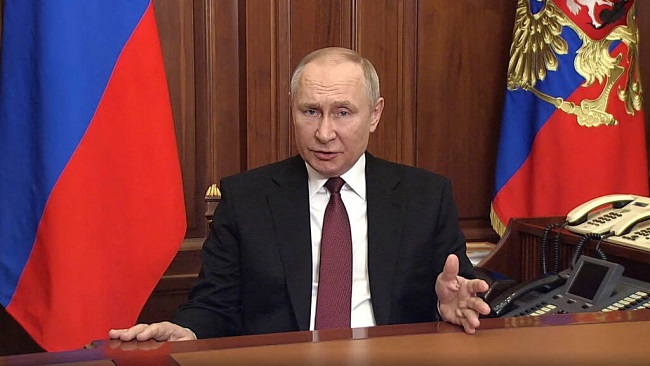
Russian President Vladimir Putin on Saturday apologized to his Azerbaijani counterpart for what he called a “tragic incident” following the crash of an Azerbaijani airliner in Kazakhstan that killed 38 people, but stopped short of acknowledging that Moscow was responsible.
Putin’s apology came as allegations mounted that the plane had been shot down by Russian air defenses attempting to deflect a Ukrainian drone strike near Grozny, the regional capital of the Russian republic of Chechnya.
An official Kremlin statement issued Saturday said that air defense systems were firing near Grozny airport as the airliner “repeatedly” attempted to land there on Wednesday. It did not explicitly say one of these hit the plane.
The statement said Putin apologized to Azerbaijani President Ilham Aliyev “for the fact that the tragic incident occurred in Russian airspace.”
The readout said Russia has launched a criminal probe into the incident, and Azerbaijani state prosecutors have arrived in Grozny to participate. The Kremlin also said that “relevant services” from Russia, Azerbaijan and Kazakhstan are jointly investigating the crash site near the city of Aktau in Kazakhstan.
The plane was flying from Azerbaijan’s capital, Baku, to Grozny when it turned toward Kazakhstan, hundreds of kilometers (miles) across the Caspian Sea from its intended destination, and crashed while making an attempt to land. There were 29 survivors.
According to a readout of the call provided by Aliyev’s press office, the Azerbaijani president told Putin that the plane was subject to “external physical and technical interference,” although he also stopped short of blaming Russian air defenses.
Aliyev noted that the plane had multiple holes in its fuselage and that the occupants had sustained injuries “due to foreign particles penetrating the cabin mid-flight.”
He said that a team of international experts had begun probing the incident at Azerbaijan’s initiative, but provided no details. Earlier this week, the Azerbaijani Prosecutor General’s office confirmed that investigators from Azerbaijan are working in Grozny.
On Friday, a U.S. official and an Azerbaijani minister made separate statements blaming the crash on an external weapon, echoing those made by aviation experts who blamed the crash on Russian air defense systems responding to a Ukrainian attack.
Passengers and crew who survived the crash told Azerbaijani media that they heard loud noises on the aircraft as it was circling over Grozny.
Dmitry Yadrov, head of Russia’s civil aviation authority Rosaviatsia, said Friday that as the plane was preparing to land in Grozny in deep fog, Ukrainian drones were targeting the city, prompting authorities to close the area to air traffic.
Yadrov said that after the captain made two unsuccessful attempts to land, he was offered other airports but decided to fly to Aktau.
Earlier in the week, Rosaviatsia had cited unspecified early evidence as showing that a bird strike led to an emergency on board.
In the days following the crash, Azerbaijan Airlines blamed “physical and technical interference” and announced the suspension of flights to several Russian airports. It didn’t say where the interference came from or provide any further details.
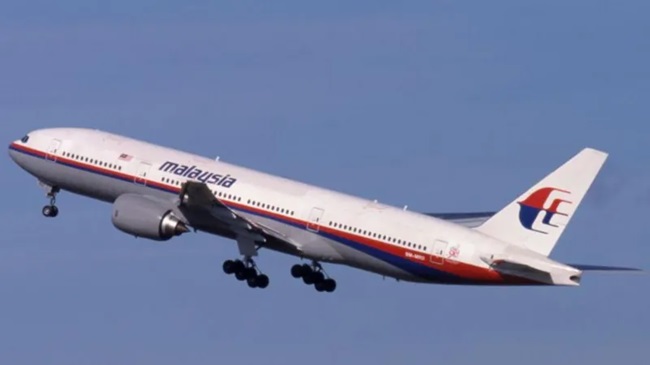
If proven that the plane crashed after being hit by Russian fire, it would be the second deadly civil aviation accident linked to fighting in Ukraine. Malaysia Airlines Flight 17 was downed with a Russian surface-to-air missile, killing all 298 people aboard, as it flew over the area in eastern Ukraine controlled by Moscow-backed separatists in 2014.
Russia has denied responsibility, but a Dutch court in 2022 convicted two Russians and a pro-Russia Ukrainian man for their role in downing the plane with an air defense system brought into Ukraine from a Russian military base.
Following Wednesday’s suspension of flights from Baku to Grozny and nearby Makhachkala, Azerbaijan Airlines announced Friday that it would also halt service to eight more Russian cities.
Several other airlines have made similar announcements since the crash. Kazakhstan’s Qazaq Air on Friday said it would stop flying from Astana to the Russian city of Yekaterinburg in the Ural Mountains for a month.
Turkmenistan Airlines, the Central Asian country’s flagship carrier, on Saturday halted flights to Moscow for at least a month, citing safety concerns. Earlier this week, Israel’s El Al carrier suspended service from Tel Aviv to the Russian capital, citing “developments in Russia’s airspace.”
Source: AP
















29, December 2024
Former US president Jimmy Carter dies at 100 0
James Earl Carter, Jr. was the first US president to be popularly elected after Watergate forced the resignation of former president Richard Nixon. As the 1976 election season got under way, a US electorate wearied by political scandal and the ceaseless grind of the Vietnam War decided to take a chance on a virtually unknown peanut farmer from Georgia running as a folksy, centrist Democrat who was untainted by insider Washington politics.
But Carter’s one-term presidency was destined to preside over a challenging period both at home and abroad, from the US energy crisis and the runaway inflation of the 1970s to the 1979 Iranian Revolution and the start of the Iranian hostage crisis as well as the Soviet invasion of Afghanistan late that same year.
Carter’s commitment to public service did not end when he left the White House, however; he and his wife remained active in humanitarian causes, global health issues and international election-monitoring in the decades that followed. They founded the non-partisan Carter Center in Atlanta based on a “commitment to human rights and the alleviation of human suffering” in 1982.
The Nobel Committee recognised Carter’s lifetime of service by awarding him the 2002 Peace Prize “for his decades of untiring effort to find peaceful solutions to international conflicts, to advance democracy and human rights, and to promote economic and social development”.
Early life
Carter was born in the farming town of Plains, Georgia, on October 1, 1924, the first US president to be born in a hospital rather than at home. He grew up in the nearby town of Archery, where his father was a peanut and cotton farmer who owned a local store while his mother, born Bessie Lillian Gordy, was a registered nurse who crossed racial lines in the segregated South to counsel Black women on healthcare matters.
Carter attended Georgia Southwestern College and the Georgia Institute of Technology before earning a Bachelor of Science degree from the US Naval Academy in 1946.
He was stationed on submarines in both the Atlantic and Pacific US fleets while serving in the Navy, eventually rising to the rank of lieutenant. He was subsequently stationed at Schenectady, New York, where he took graduate classes at Union College in reactor technology and nuclear physics before serving as the senior officer for the pre-commissioning crew of the Seawolf nuclear submarine.
Carter married Eleanor Rosalynn Smith on July 7, 1946. “She’s the girl I want to marry,” he reportedly told his mother after their first date. Smith had been a Carter family friend and neighbour in Plains when the two were growing up.
When his father died in 1953, the younger Carter faced the difficult choice of whether to pursue his Naval career or return to his hometown to run the family business. He chose to resign his naval commission and took over the family farm, eventually opening Carter’s Warehouse, a seed and farm supply company. He soon became a community leader, serving on county boards that oversaw the administration of schools and hospitals as well as the local library.
Entry into politics
Carter soon set his sights on bigger ambitions, and in 1962 he was elected to the Georgia state Senate. He lost his first gubernatorial campaign in 1966 but tried again a few years later, becoming Georgia’s 76th governor in 1971.
In a first foray into national politics, in 1972 he became chairman of the Democratic Governor’s Campaign Committee and then chairman of the Democratic National Committee’s campaigns for the congressional and gubernatorial elections of 1974. These positions gave him access to influential Democrats nationwide but he still remained a relative unknown. On December 12, 1974, Carter announced his candidacy for the US presidency, which seemed a rather lofty ambition for a former farmer and one-term governor.
But his timing proved right on target. The US electorate approached the 1976 election season wearied by a decade of division over the Vietnam War and still angered by the Watergate scandal that had engulfed former president Richard Nixon. Running as a centre-right Democrat, Carter’s simple message was one of honesty and integrity.
“The fact that he was unknown was part of his appeal,” Carter’s former speechwriter, Hendrik Hertzberg, told PBS.
Carter was elected by a razor-thin margin on November 2, 1976, beating out incumbent Gerald Ford, who had taken office in the wake of Nixon’s resignation.
Mideast peace, energy reform
Among the most significant foreign policy successes of the Carter administration was the 1978 signing of the Framework for Peace in the Middle East by Israeli premier Menachem Begin and Egyptian president Anwar el-Sadat, known as the Camp David Accords, which paved the way for a peace treaty between the two countries the following year.
On January 1, 1979, Carter reversed longstanding US policy by granting China full diplomatic recognition. He also concluded the Panama Canal treaties, which agreed to return authority over the canal to Panama after 1999, thus ending 96 years of US control.
At the height of the Cold War, Carter also signed an arms-reduction treaty with the Kremlin. On June 17, 1979, Carter and former Soviet leader Leonid Brezhnev signed the SALT II (Strategic Arms Limitation Treaty) agreement, which banned new missile programmes and placed other restrictions on both nations’ deployed nuclear capabilities. The deal was short-lived, however, as the Soviets invaded Afghanistan on Christmas Day; a little more than a week later, Carter asked the Senate not to review SALT II and it was never ratified. Nevertheless, both Washington and Moscow pledged to adhere to the terms of the agreement.
Domestically, the energy crises of the 1970s had highlighted the need for a centralised national energy authority, which Carter established in 1977 with the creation of the Department of Energy. He pushed through deregulation of the transportation, communications and finance industries, and launched comprehensive education programmes under the newly created Department of Education.
Carter also introduced significant environmental protection legislation, including an expansion of the protected national parks system and passing the Alaska National Interest Lands Conservation Act, which designated 27.5 million acres as protected wilderness areas. He put solar panels on the roof of the White House to encourage the then nascent industry and to serve as an example to other Americans. His Republican successor subsequently had the panels removed.
Iran hostage crisis
Carter’s political star began to dim on November 4, 1979, when a group of Iranian students stormed the US embassy in Tehran and took 66 people, mainly diplomats and embassy staff, as hostages. The stated motive for the attack was Carter’s decision to allow the deposed pro-Western Shah – who had gone into exile following the Iranian revolution months before – to receive cancer treatment in the United States. But tensions with Iran had long been simmering.
Thirteen of the hostages, mostly women, were soon released and a 14th was subsequently freed for health reasons. An ill-fated April 1980 mission to free the hostages resulted in the deaths of eight US military personnel but no freed hostages, overshadowing Carter’s administration just as he was seeking re-election that November against a challenge from Republican Ronald Reagan.
The release of the 52 remaining hostages on January 20, 1981 – after 444 days in captivity and just hours after Reagan delivered his inaugural address – has prompted much media speculation in subsequent years that Reagan’s backers had a hand in the timing and that it was the hostage crisis that cost Carter a second term.
In his farewell address, Carter warned against some of the looming threats he saw facing humanity: nuclear war and environmental degradation.
“There are real and growing dangers to our simple and our most precious possessions: the air we breathe, the water we drink, and the land which sustains us,” Carter said. But he went on to add that there was “no reason for despair”.
“Acknowledging the physical realities of our planet does not mean a dismal future of endless sacrifice. In fact, acknowledging these realities is the first step in dealing with them. We can meet the resource problems of the world – water, food, minerals, farmlands, forests, overpopulation, pollution – if we tackle them with courage and foresight.”
Nobel Peace Prize
Carter remained active in humanitarian causes and global election-monitoring even after leaving office. He and Rosalynn founded the non-partisan Carter Center in Atlanta in 1982 with a mission to “prevent and resolve conflicts, enhance freedom and democracy, and improve health”. The center has spearheaded international efforts to eradicate Guinea worm disease, which is set to become only the second human disease in history to be eradicated (after Smallpox).
The Carters also volunteered one week a year for Habitat for Humanity, a non-profit organisation that helps homeless people in the United States and abroad build homes.
The Norwegian Nobel Committee awarded Carter the 2002 Nobel Peace Prize “for his decades of untiring effort to find peaceful solutions to international conflicts, to advance democracy and human rights, and to promote economic and social development”.
In conjunction with the Carter Center, the former president has shown “outstanding commitment to human rights”, the Nobel Committee said in announcing the award.
Latter-day diplomacy
Since its founding in July 2007, Carter has been a member of The Elders, an independent organisation that unites retired world leaders and other influential people seeking to advance the cause of peace and human rights. The brainchild of billionaire Virgin founder Richard Branson and musician Peter Gabriel, The Elders was formally inaugurated by Nelson Mandela in Johannesburg.
In 2010 Carter successfully negotiated the release of Aijalon Gomes, a US citizen who was held for seven months in North Korea. Gomes had been sentenced to eight years of hard labour for illegally crossing into the country from China.
Carter and the Carter Center have continued to take part in conflict mediation and election monitoring around the world, including in Sudan (2010), Tunisia (2011), Egypt (2011-2012) and Myanmar (2020).
As a lifelong Baptist and church deacon, for decades Carter volunteered to teach Sunday school at the Maranatha Baptist Church in Plains, Georgia.
He was the author of 32 books including his 2015 memoir, “A Full Life: Reflections at 90,” and a 1995 children’s book about a boy being raised by a single mother “in a small house near the sea”. He won Grammy Awards (best non-musical albums) for his memoir and two other books: “Faith – a Journey for All” and “Our Endangered Values: America’s Moral Crisis.”
Carter was diagnosed in 2015 with melanoma, which eventually spread to his liver and brain, and began receiving end-of-life care in February 2023.
A tried-and-true Democrat, it was reported in August that he had told his family he was holding out to vote for Kamala Harris for president. He did so in mid-October after early voting opened in Georgia.
Rosalynn Carter predeceased him on November 19 at the age of 96. They had been married for 77 years.
“Rosalynn was my equal partner in everything I ever accomplished,” Carter said after his wife’s passing. “She gave me wise guidance and encouragement when I needed it. As long as Rosalynn was in the world, I always knew somebody loved and supported me.”
The Carters are survived by four children: John William, James Earl, Donnel Jeffrey and Amy Lynn, who as the youngest spent part of her childhood in the White House.
They are also survived by more than 20 grandchildren and great-grandchildren.
Source: France 24