
9, May 2019
Withdrawal from nuclear deal on Iran’s agenda 0
A senior Iranian diplomat says the Islamic Republic has put a “step-by-step” withdrawal from the 2015 nuclear deal, known as the Joint Comprehensive Plan of Action (JCPOA), on the agenda.
“We have not left the JCPOA so far, but we have put such a move on our agenda and that would happen step-by-step,” Iranian Deputy Foreign Minister for Political Affairs Abbas Araqchi said in an interview on Wednesday.
“No country can accuse Iran of breaching or leaving the nuclear deal,” the diplomat noted, adding that all the measures Tehran has adopted so far, including Wednesday’s move, has been within the deal’s framework.
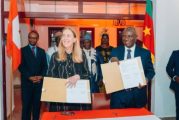
The ambassadors of the countries remaining in the nuclear deal — France, Britain, Germany, Russia and China — on Wednesday received a letter penned by Iranian President Hassan Rouhani elaborating the suspension of some of Iran’s commitments under the accord, officially called the JCPOA.
The letter was handed over by Araqchi to the ambassadors of the five countries, who had been invited to the Foreign Ministry. The document specifies the details of the decision taken by Iran’s Supreme National Security Council, which is chaired by Rouhani himself.
The document says Tehran has exercised utmost self-restraint and patience since Washington’s exit from the deal last May, and has given the remaining signatories “considerable” time at their own request to compensate for Washington’s withdrawal and guarantee Iran’s interests.
Nevertheless, the other parties have failed to adopt any “practical measures” to blunt the impact of the economic sanctions that were re-imposed against Tehran by the US following its withdrawal, the statement said.
The Islamic Republic is thus entitled to restore the balance between its rights and obligations under the JCPOA, and has no option but to “reduce its commitments” within the framework of the deal, it added.
At the current stage, the statement said, Iran will no longer consider itself committed to the limits agreed under the deal on its stocks of enriched uranium and heavy water stocks.
Under the JCPOA, Iran is allowed to keep 300 kilograms of uranium enriched up to 3.67 percent. The deal requires Tehran to sell off any enriched uranium above the limit on international markets in return for natural uranium.
Tehran’s stock of heavy water is also restricted to 130 tonnes under the deal, which also calls for Iran’s excess heavy water to be sold to a foreign buyer.

The council has given Iran’s partners in the deal “60 days to meet their commitments, especially in the banking and oil sectors,” said the statement.
If they fail to address Iran’s concerns, Tehran will suspend the implementation of two more commitments under the JCPOA, according to the statement.
In the next stage, Tehran will no longer be bound by its commitment to enrich uranium up to 3.67 percent and will also begin developing its Arak heavy water reactor based on its pre-JCPOA plans, it added.
Source: Presstv














11, May 2019
US passes phone number to Swiss in case Iran wants to call 0
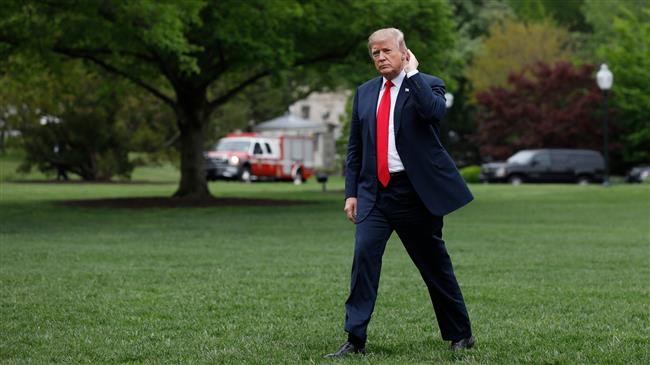
The White House has contacted Swiss authorities to share a telephone number with Iran in hopes that Tehran will contact US President Donald Trump, CNN reports.
The White House contacted the Swiss on Thursday, the same day Trump publicly appealed to Iran to call him amid heightened tensions, the broadcaster cited a source as saying.
The source, however, said Iran was “highly unlikely” to demand the number from Swiss authorities.
The Swiss embassy represents US interests in Tehran, where Washington has had no mission since 1980.
While Trump called for talks on Thursday, he did not rule out military action against Iran.
Earliest this week, hawkish national security adviser John Bolton announced that the US was deploying an aircraft carrier strike group and a bomber task force to the Middle East in a bid to send a “message” to Iran.
Asked about the deployment decision on Thursday, Trump said Iran had been “very threatening.”
“We have information that you don’t want to know about. They were very threatening, and we just want to have — we have to have great security for this country,” Trump said.
On Friday, a senior commander of Iran’s Islamic Revolution Guards Corps (IRGC) stressed that Tehran would not engage in talks with the Americans.
IRGC’s deputy head for political affairs, Brigadier General Yadollah Javani, said the US thinks it can intimidate Iran into negotiations with a combination of military threats and sanctions, but to no avail.
The senior military commander also said the US will not dare to wage a war on Iran despite its deployment of bombers and an aircraft carrier to the Persian Gulf.
In a further provocative move Friday, the Pentagon announced that it would deploy an amphibious assault ship and a Patriot missile battery to the Middle East to counter the “Iranian threat”.
Many observers have questioned the US administration’s sudden and vague assertions about Iran in the region, citing contradictory remarks made by US intelligence officials and politicians.
Iranian officials have also dismissed the allegations as part of the US administration’s “psychological warfare” against the country.
Speaking on Thursday, Iran’s envoy to the United Nations Takht Ravanchi slammed the Trump administration’s allegations of rising Iranian threats, saying they were based on “fake intelligence”.
Tensions rose after the US said last month that it would not renew waivers allowing Tehran’s eight largest customers to purchase oil from Iran in order to bring Iranian oil exports to zero.
Washington withdrew from the Joint Comprehensive Plan of Action (JCPOA) last year and reimposed unilateral sanctions that had been lifted under the landmark 2015 agreement.
Iran on Wednesday informed the UK, France, China, Russia and Germany — the remaining five signatories to the deal — that it was suspending some of its commitments under the deal.
Tehran also gave the three European signatories 60 days to meet their commitments, especially in the banking and oil sectors, and guarantee Iran’s interests in the face of US sanctions.
US unilateralism
Countries affected by US sanctions have expressed discontent, citing tight market conditions and high fuel prices that harm oil-dependent industries.
Last month, Iran’s Foreign Minister Mohammad Javad Zarif said the US decision to end sanctions waivers had even angered Washington’s allies.
“People are not happy. China is not happy, Turkey is not happy, Russia is not happy. France is not happy. US allies are not happy that this is happening and they say that they will find ways of resisting it,” said Zarif.
On Friday, Germany’s leading news weekly Der Spiegel published an article highlighting how Washington’s bid to pressure Iran had endangered Washington’s European allies, specifically Germany.
“Trump’s confrontational Middle Eastern policy has exacerbated the tensions between the US and its European allies, because, unlike the situation in Venezuela, Europe would be directly affected. The continent’s very security is at stake,” read the article.
“Washington is exacerbating regional tensions with its policy of applying maximum pressure on Iran,” Niels Annen, a high-ranking official at the German Foreign Ministry, told the publication.
Member of the German parliament with the Green Party and member of the Foreign Affairs Committee Jürgen Tritten said, “The US appears to be looking for a pretext to escalate the conflict with Iran.”
The paper also said the Europeans are in disarray in the face of Washington’s bid to pressurize Iran, with German foreign policy agreeing more with Tehran than its ally in Washington.
Deputy parliamentary group leader for the German SPD party, Rolf Mützenich, urged the German government to push for a UN Security Council resolution “requiring strict compliance with international law in the Middle East”.
The move, Mützenich said, will seek to counter US policies in the Middle East which disregard international law, notably in the case of Trump’s recent dealings over Palestine and Iran’s nuclear deal.
Source: Presstv