
19, October 2019
What limits? How African leaders cling to power for decades 0
Guinea erupted in protest this week over proposals to draft a new constitution that could allow President Alpha Conde to extend his legal mandate and run for a third term in 2020.
If Conde tries to stay, he would be copying from an established playbook in Africa, where incumbent presidents have sought, often successfully, to remain in power by massaging, bending or outright breaking laws often meant to ensure democratic handovers of power.
Below are details on how some of Africa’s longest-serving leaders have managed to stay in power, or are trying to do so, denting hopes of a dawn of democracy across the region.
* BURUNDI – President Pierre Nkurunziza
Nkurunziza, in power since 2005, announced in 2015 he would run for a third term in what his opponents saw as a breach of the constitution which only allowed leaders to rule for two terms. Since his re-election, hundreds of Burundians have been killed in clashes with security forces and half a million have fled abroad.
A referendum in May 2018 overwhelmingly approved changes that extended the length of presidential terms to seven years. Under the new constitution, Nkurunziza is now able serve a further two terms, potentially extending his rule until 2034. The opposition rejected the results and the United States said the process had been marred by voter intimidation.
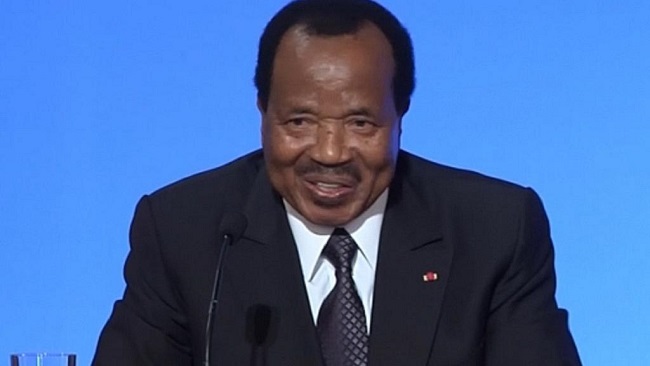
* CAMEROON – President Paul Biya
Biya, 86 and sub-Saharan Africa’s oldest leader, took over the presidency in 1982. The national assembly adopted a constitutional bill in April 2008, removing a two-term presidential limit to allow him to extend his rule past 2011. He has won two elections since then that opposition candidates have said were fraudulent.
* CHAD – President Idriss Deby
Deby has ruled Chad since coming to power after a 1990 coup. A 2005 referendum removed a two-term limit from the constitution. Parliament approved a new constitution in 2018 reimposing the two-term limit, but it will not be applied retroactively, meaning Deby could serve two terms after the next election in 2021, potentially ruling until 2033.
* COMOROS – President Azali Assoumani
The president, a former military officer who first seized power in a coup in 1999, won a referendum in 2018 to extend term limits and end a system of rotating power among the archipelago’s three main islands off Africa’s east coast. The vote allowed him to run for two more five year-terms. The opposition dismissed the referendum as illegal.
* CONGO REPUBLIC – Denis Sassou Nguesso
The constitution in Congo Republic was changed by referendum in 2015, lifting term and age limits that would have excluded Nguesso from running again. He won a new five-year term in a 2016 election, although the opposition rejected the outcome, alleging fraud. He has ruled for all but five years since 1979.
* DJIBOUTI – President Ismail Omar Guelleh
Lawmakers in Djibouti approved a constitutional amendment in 2010 that paved the way for Guelleh, in power since 1999, to run for a third term. He has won two subsequent elections.
* GUINEA – President Alpha Conde
Conde’s second and final five-year term expires in 2020, but the 81-year-old leader has refused to rule out running again. In September, he asked his government to look into drafting a new constitution, raising concerns he might use it as a reset button on his presidency and run again. Conde was first elected in 2010.
* IVORY COAST – President Alassane Ouattara
Ouattara, in power since 2010, has claimed the adoption of a new constitution in 2016 would allow him to run for a third term in the 2020 presidential race because a new constitution would mean the first two terms did not count. He has not yet said if he will stand for re-election.
* RWANDA – President Paul Kagame
In 2015, Rwandans voted to extend the constitution’s two-term limit. Under the changes, Kagame could seek another seven-year term and two five-year terms after that, potentially remaining in power until 2034.
Kagame, who won a third term in 2017, has faced mounting criticism for what human rights groups say are widespread abuses, a muzzling of independent media, and suppression of political opposition. He denies wrongdoing. He first came to power in 2000.
* TOGO – President Faure Gnassingbe
Togo changed its constitution in 2019 to cap the presidential mandate at two five-year terms ostensibly in response to opposition calls for an end to a political dynasty that started when Gnassingbe’s father seized power in a 1967 coup.
However it does not take into account the three terms Gnassingbe has already served since coming to power in 2005, the latest of which ends in 2020. Gnassingbe could therefore remain in power until 2030.
* UGANDA – President Yoweri Museveni
Museveni has ruled Uganda since 1986. A term-limiting clause that would have prevented him from seeking re-election was deleted from the constitution in 2005.
In 2017, lawmakers voted to remove a constitutional limit on the age of presidential candidates, paving the way for 75-year-old Museveni to stand again in the 2021 election.
Source: Reuters













20, October 2019
Ceding of Bakassi: 13 years on, Greentree agreement unratified, unimplemented 0
Thirteen years after oil and natural gas-rich Bakassi Peninsula was ceded to the Republic of Cameroon, the United Nations (UN)-backed Greentree Agreement, which both countries signed on June 12, 2006, to formalise the exercise has neither been ratified nor implemented.
The development, which has left returnees and those who chose to stay back in Cameroon disconsolate, is also in clear violation of Section 12 of the 1999 Constitution, which spells out how treaties could be ratified and given the force of law.
The failure to ensure that the agreement is given the force of law, has had dire implications on the Cross River state’s economy, created a protracted humanitarian crisis by compromising the wellbeing of the returnees, as well as failed to bring the matter to a logical conclusion.
The Greentree Agreement was the formal treaty, which resolved the Cameroon-Nigeria border dispute that had roots in armed clashes between both countries in Bakassi dating back to 1913, 1981, 1994, and 1996.
The dispute, which was referred to the International Court of Justice, was on October 10, 2002, resolved in favour of Cameroon. And on June 12, 2006, former President Olusegun Obasanjo and President Paul Biya signed the agreement, concerning the withdrawal of troops and the transfer of authority in the Peninsula.
The withdrawal of Nigerian troops was set for 60 days, and room made for a possible 30-day extension, while Nigeria was allowed to keep its civil administration and police in Bakassi for another two years.
A follow-up committee, comprising representatives from Nigeria, Cameroon, Germany, United Kingdom, United States, France, and the United Nations, was set up to monitor the implementation of the agreement.
Eleven years after the signing of the agreement, precisely on July 27, 2017, the National Assembly, in the wake of an alleged attack and killing of 97 Nigerians over failure to pay a discriminatory boat levy of N100, 000, resolved to investigate the killings, and also directed the Ministry of Foreign Affairs to urgently submit the 2006 agreement for ratification.
While deploring the executive’s failure to ensure that the agreement, which includes an outline of Cameroon’s commitment towards Nigerians who decided to remain in the Peninsula, was adhered to, the Senate called on the Federal Government to come up with a clear policy on the protection of indigenes of Bakassi in the Diaspora, including those residing in Cameroon.
It also urged the Cameroonian government to comply with the terms of the agreement.
According to the Special Adviser on Media/Chief Press Secretary to Governor Ben Ayade, Mr. Christian Ita, “the Greentree Agreement has been observed more in breach. Indeed, we don’t know any part of that agreement regarding the welfare of the affected people and the state that has been upheld or carried out. It is a very sad commentary.”
He said the state government has been saddled with the task of continually sending food and medicals to the returnees. “But we can’t do it alone as we have constraints with funds. More so, the state is also grappling with refugees from Southern Cameroon, who fled the Ambazonian clashes. There are approximately 50, 000 of them in the state. Cross River state needs help,” he added.
On the mouthwatering N3tr suit against the Federal Government, for the loss of the peninsula, which the state government said it was instituted two years ago, Ita said, “we are still getting the counsel of our lawyers, looking at the possibility of a non-sovereign state bringing an action at the International Court of Justice. However, we remain firm in our conviction that the ceding of the Bakassi Peninsula was illegal. Section 12 of the 1999 Constitution of the Federal Republic of Nigeria (as amended) clearly spells out how treaties can be ratified and given the force of law. What was done with Bakassi contravened not only the provisions of section 12 of the Constitution, but it was also at variance with all known norms regulating issues of this nature.”
Asked why the returnees were still living as Internally Displaced Persons (IDPs) in schools despite all what the Obasanjo administration promised them, he said: “I do not know why, but the reality is that the displaced people of Bakassi are still in temporary accommodation, which is a primary school in Akpabuyo Local Council. Their condition is dire, with only the state reaching out to them at intervals. However, the Ben Ayade-led administration has just completed the construction of social housing for these displaced people. The housing estate will soon be unveiled and commissioned.”
Ita added that the fact that the state belongs to the minority bloc might have also contributed to the poor treatment meted to its people.
He said: “A number of reasons have been advanced for this treatment, including the fact that maybe because we are a minority. We wish that just a fraction of the help being extended to Boko Haram IDPs in the Northeast, by both the Federal Government and international humanitarian organisations, could be given to the Bakassi returnees. It is said that while everything is being done to ameliorate the sufferings of IDPs in the Northeast, the people of Bakassi appear to have been abandoned by the rest of the world.”
As of 2017, the Federal Government claimed it had paid about N38b to Cross River State as special allocation to the state (over a period of 11 years), as compensation for the loss of Bakassi, and by extension the 76 oil wells. But the CPS said: “I am not in a position to know how the said money was expended since you’re talking about money that was spread over 11 years. Suffice it to say that the Supreme Court had directed the Federal Government to help cushion the effect of the loss of the territory and the attendant loss of oil wells in the state. So, the money was more like a stabilisation fund given the disruption it caused to the economy of the state.
“I must emphasis here that it is even saddening that we are talking about N38b paid over 11 years. When you do the mathematics, this money amounts to nothing. This is what some states in the region get in a month as revenue allocation from the Federal Government. Cross River State is supposed to be compensated in perpetuity.
“As I mentioned earlier, the state government has just completed a social housing project for them. The project has been completed, and the commissioning will take place soon. Importantly also, the state government is constructing a deep seaport in Bakassi. This project is symbolic, as well as economic. Symbolic in the sense that by situating the project in Bakassi, the state government is sending a message to the people that, ‘the world may have abandoned you, Nigeria may have forgotten you, but we are one with you.
“Economically, this project will create thousands of employment opportunities for people. Indeed, in a recent interaction with the media, the displaced persons were categorical that the realisation of the project will wipe away their tears occasioned by years of neglect. With a proposed depth of about 20 meters, and sitting on approximately 36, 000 hectares of land, the port will be the deepest and largest in Africa. It will also be the first agro seaport in sub-Saharan Africa. The economic spin off for the locals, the state and Nigeria as a whole is unimaginable. So, this project will empower people economically.”
Source: The Guardian, Nigeria